
The automotive industry is experiencing a profound operational shift. Driven by the rapid adoption of electric vehicles, such as the upcoming 2026 Toyota C-HR EV, facilities are moving away from traditional business hours.
Dealerships and charging hubs are now expected to function as 24/7 operational centers. This transition places unprecedented stress on physical infrastructure, requiring upgrades that go far beyond superficial aesthetics.
Around-the-clock operations demand a physical environment that can secure high-value inventory while remaining accessible to consumers at all hours. As a result, facility managers are completely rethinking their approach to nighttime operations and site safety.
The Role of Advanced Illumination in Facility Security
As automotive facilities transition to round-the-clock operations, standard lighting is no longer sufficient to protect high-value inventory. Exotic car dealerships and unmanned EV charging stations rely heavily on pristine visibility to deter theft and vandalism.
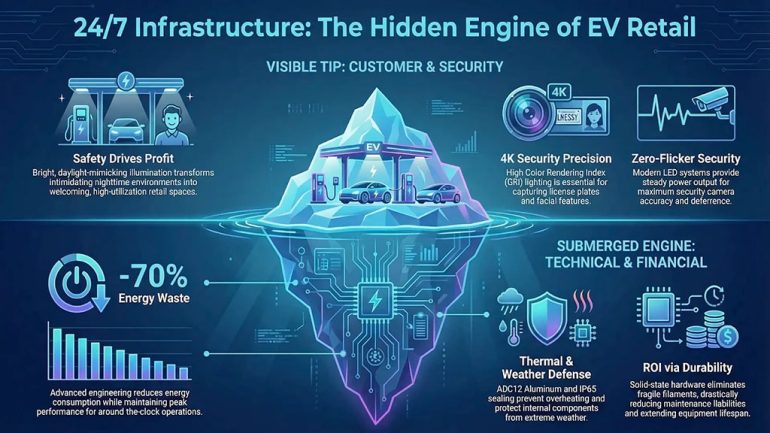
Upgrading outdoor infrastructure ensures crisp, daylight-like visibility for modern 4k security cameras. High Color Rendering Index (CRI) output is essential for accurately capturing license plates and facial features in low-light conditions.
According to manufacturing and engineering specs from industry leaders like WOSEN, modern Wosenled offer steady power output and superior heat control. This reduces energy waste by up to 70% while maintaining zero-flicker performance for maximum security accuracy.
Thermal Management and Equipment Longevity
Modern infrastructure must also survive the elements without constant maintenance. Automotive facilities cannot afford downtime due to weather-related equipment failures.
Advanced engineering in facility hardware guarantees consistent performance during freezing winters and torrential downpours. Key technical upgrades include:
- ADC12 Aluminum Housing: Provides rapid thermal dissipation to prevent overheating during continuous night operations.
- IP65+ Weatherproofing: Completely seals internal components against dust, heavy rain, and snowmelt.
- Solid-State Durability: Eliminates fragile filaments, dramatically extending the operational lifespan of the equipment.
- Smart Grid Integration: Allows for automated dimming protocols based on real-time site occupancy.
Enhancing the Customer Experience at EV Hubs
The success of a public EV charging network relies heavily on the psychology of safety. Consumers are highly reluctant to spend 30 minutes charging a luxury electric vehicle in a poorly lit, isolated parking lot.
Upgraded facility infrastructure directly correlates with higher utilization rates. Bright, daylight-mimicking illumination transforms an intimidating nighttime environment into a welcoming, secure retail space.
When EV drivers feel physically safe, they are more likely to return to the same hub, effectively boosting the long-term profitability of the charging location.
The Financial Impact of Upgrading Infrastructure
The push for upgraded automotive facilities is not just about aesthetics; it is a vital adaptation to modern automotive market dynamics. With massive capital pouring into the electric vehicle sector, physical infrastructure must keep pace with technological advancements.
According to the International Energy Agency’s recent global reports, EV infrastructure investments are accelerating at an unprecedented rate worldwide. This makes baseline upgrades like advanced security and high-efficiency commercial lighting critical first steps.
While overhauling a dealership’s infrastructure requires upfront capital, the return on investment is undeniable. Facilities routinely see a massive drop in baseline energy consumption, alongside drastically reduced maintenance and security liabilities.
Key Takeaways
| Area | Key Takeaway | Impact/Data |
| Security | Upgrade to high-CRI lighting | Enables pristine 4K camera capture |
| Efficiency | Install smart-grid LED systems | Slashes energy waste by 70% |
| Hardware | Deploy IP65+ ADC12 fixtures | Eliminates weather-related downtime |
| Revenue | Brighten 24/7 charging zones | Directly boosts utilization rates |
Conclusion: The Road Ahead for Automotive Retail
The future of the automotive industry is not solely defined by the software and batteries inside the vehicles. It is equally dependent on the physical environments that house, sell, and power them.
By investing in high-grade infrastructure and advanced security protocols, facility owners protect their bottom line while meeting the 24/7 demands of the modern consumer.


