
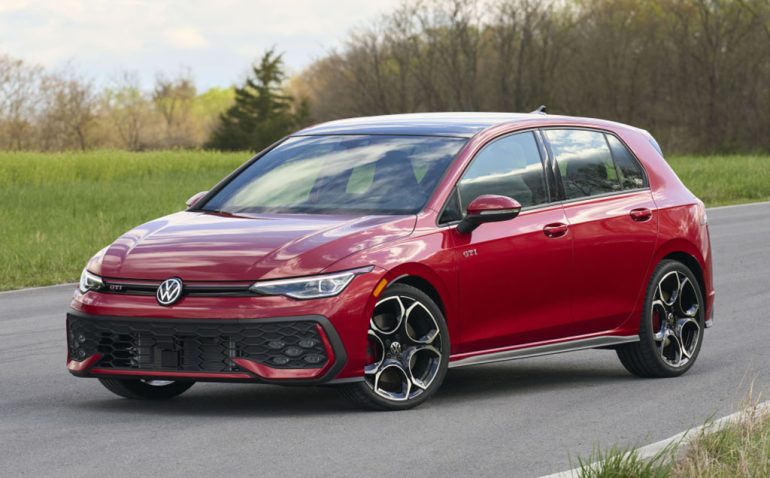
In an era when nearly every mainstream brand is rushing harder toward SUVs, Volkswagen is making it clear that it still sees real value in the cars that helped shape its identity. Even with utilities doing most of the heavy lifting in the U.S. sales mix, VW says sedans and hatchbacks are not going anywhere anytime soon. That matters because for a lot of buyers, and especially for longtime enthusiasts, a Volkswagen lineup without the Jetta, Golf GTI, and Golf R would feel like a company forgetting what made it interesting in the first place.
What makes this stance refreshing is that Volkswagen is not pretending those cars dominate the sales charts. They do not. But the company appears to understand that not every important vehicle has to be measured by raw volume alone. The GTI and Golf R still carry a ton of emotional weight for the brand, and that counts for something. They are the kinds of vehicles that keep Volkswagen connected to drivers who care about steering feel, daily usability, and the simple joy of driving something that feels sharper and more alive than the average crossover. In a market that can feel increasingly homogenized, those models still give VW character.
The Jetta plays a different role, but an equally important one. It remains a solid option for buyers who want better fuel efficiency, a lower seating position, cleaner driving dynamics, and a more traditional compact-car experience without being pushed into an SUV they never wanted in the first place. That kind of customer still exists in meaningful numbers, and Volkswagen seems smart enough not to walk away from them. The Jetta may not get the same enthusiast spotlight as the GTI and Golf R, but it continues to serve as a reminder that practical sedans still deserve a place in the conversation.
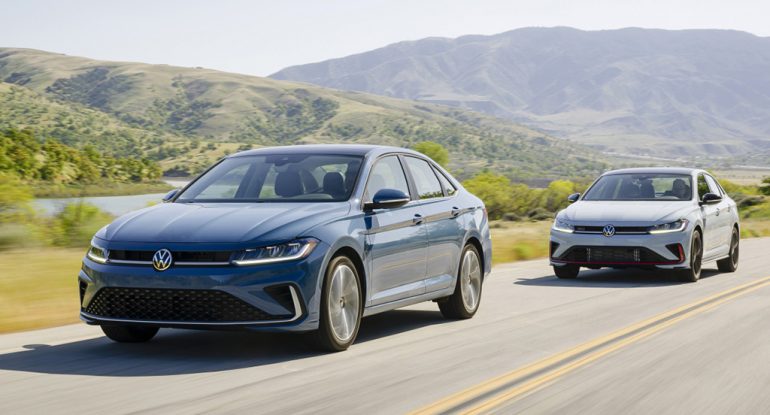
At the same time, nobody should mistake this for a grand return to an expansive Volkswagen car lineup in America. This is more about preservation than expansion. The Passat is gone, the Arteon is gone, and the Beetle is long gone, too. What VW appears committed to doing now is protecting the few core car nameplates that still make sense, while letting its SUV lineup handle the bulk of the business. Honestly, that is probably the realistic play in today’s market, and it is a lot better than seeing those remaining cars disappear altogether.
There is also something bigger here than product planning. Volkswagen keeping the GTI, Golf R, and Jetta around says the brand still believes there is room for vehicles built around personality, not just packaging. The hot hatch may not be the default choice for the average family buyer, but it remains one of the purest expressions of what Volkswagen does well. And the sedan, even in a crossover-heavy market, still offers advantages that a taller, heavier utility vehicle simply cannot replicate. That variety is part of what keeps a lineup healthy and a brand recognizable.
For now, that should be enough to make VW fans breathe a little easier. The SUVs are not going to stop coming, and the business case for them is obvious. But if Volkswagen follows through on this promise, the cars that give the brand its pulse will still be along for the ride. In a market that too often treats enthusiast-friendly models like disposable leftovers, that is a welcome bit of reassurance.

Lloyd Tobias is a seasoned automotive journalist and passionate enthusiast with over 15 years of experience immersed in the world of cars. Whether it's exploring the latest advancements in automotive technology or keeping a close pulse on breaking industry news, Lloyd brings a sharp perspective and a deep appreciation for all things automotive. His writing blends technical insight with real-world enthusiasm, making his contributions both informative and engaging for readers who share his love for the drive. When he's not behind the keyboard or under the hood, Lloyd enjoys test driving the newest models and staying ahead of the curve in an ever-evolving automotive landscape.

Lloyd Tobias is a seasoned automotive journalist and passionate enthusiast with over 15 years of experience immersed in the world of cars. Whether it’s exploring the latest advancements in automotive technology or keeping a close pulse on breaking industry news, Lloyd brings a sharp perspective and a deep appreciation for all things automotive. His writing blends technical insight with real-world enthusiasm, making his contributions both informative and engaging for readers who share his love for the drive. When he’s not behind the keyboard or under the hood, Lloyd enjoys test driving the newest models and staying ahead of the curve in an ever-evolving automotive landscape.