
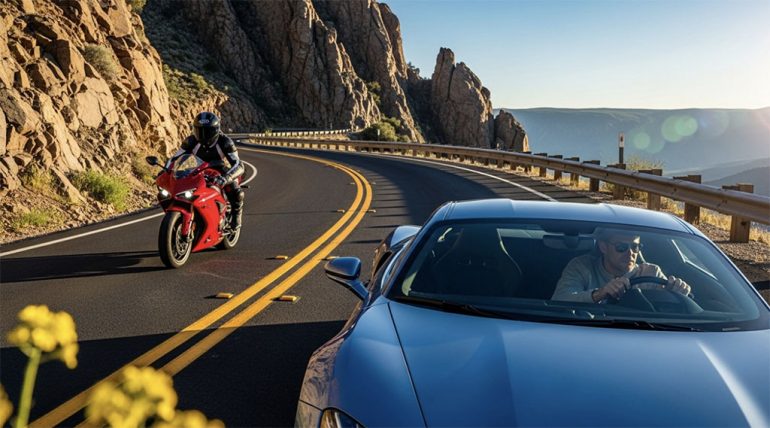
Spring brings sports cars and motorcycles back to winding canyon roads. That seasonal convergence sounds exciting, but it creates serious, sometimes fatal, safety risks for everyone involved.
Transportation officials have called the early spike in motorcycle deaths “beyond concerning”, driven by warm weather that fills these technical routes much faster than normal traffic patterns expect. High-speed mountain passes leave almost no room for driver error, especially when unexpected apexes hide oncoming riders.
Preventing collisions in these environments takes more than basic lane discipline. Drivers of four-wheeled vehicles must recognize the unique physics and vulnerabilities of motorcycles to navigate canyon roads safely.
Why the Risk Is So Uneven
Braking and Cornering Physics
Sports cars rely on four wide tires and advanced electronic controls. Motorcycles depend on lean angles and rider input to manage a tiny patch of road contact.
Sudden braking in a sports car just shifts the weight forward over the front axle. Grabbing the brakes mid-corner on a motorcycle is a completely different story; it can force the bike to stand upright and push wide, sending the rider straight into opposing traffic lanes.
Modern automotive engineering hides these differences from the driver’s seat. Features like Forward Emergency Braking create a misleading sense of security for passenger car operators that doesn’t translate to the analog world of motorcycles. These optical and radar sensors often struggle to accurately map the narrow profile of a bike leaned deep through a blind curve, leaving the driver solely responsible for avoiding a collision.
The Numbers Don’t Lie
When sports cars and motorcycles share technical canyon routes, the margin for error essentially disappears. National safety data paints a brutal picture: the motorcyclist fatality rate is nearly 28 times higher than for passenger car occupants per 100 million vehicle miles traveled. Nationwide, that vulnerability resulted in an estimated 82,564 motorcyclists injured over a single annual tracking period.
Canyon topography makes those numbers even worse. Authorities consistently report fatal crashes on canyon routes like Rainbow Canyon Road, underscoring how quickly a single misjudgment or loss of traction can turn tragic when sheer drop-offs replace standard highway run-off areas.
| Dynamic Comparison: High-Performance Cars vs. Motorcycles in Canyon Environments | |||
| Vehicle Type | Corner Entry Physics | Mid-Corner Adjustability | Hazard Vulnerability |
| High-Performance Car | Immense lateral grip across four wide contact patches | High; electronic stability control corrects oversteer/understeer mid-apex | Low; enclosed cabin and crumple zones absorb impact forces |
| Motorcycle | Precise lean angles, trail-braking, and body positioning required | Low; braking forces the bike upright, losing the cornering line | Extreme; direct impact with terrain or oncoming vehicles |
Staying Alert on Canyon Roads
Blind Corners and Road Hazards
Technical canyon carving poses environmental hazards for two-wheeled machines, fundamentally changing how riders navigate. As winter recedes, early spring conditions leave behind sand, salt, and “road grime” that kills motorcycle traction. These slick patches force riders to abandon traditional racing lines in favor of safer, unconventional paths through blind corners. The result? Bikes end up in unpredictable positions relative to oncoming or trailing sports cars.
How to Share the Road Safely
Driving a high-performance vehicle alongside vulnerable riders demands awareness well beyond what standard driver’s ed covers. Emergency medical personnel actively warn automotive enthusiasts about the spike in spring motorcycle crashes. And nationwide initiatives like the “Look Twice, Save a Life” campaign stress active observation and strategic spacing in high-risk environments.
Here are specific habits that make a real difference on canyon roads:
Legal and Financial Fallout of At-Fault Canyon Crashes
Liability in Multi-Vehicle Crashes
Misjudging a corner or failing to yield to a motorcycle in a canyon carries devastating legal and financial consequences for the at-fault driver. State-level data highlights just how lopsided these outcomes can be. In Virginia, motorcycles account for just 1.7% of all traffic collisions but a staggering 13.8% of all traffic fatalities.
The bodily harm associated with these incidents almost guarantees complex, high-stakes litigation. Within a single tracking year in Virginia, 2,127 motorcycle crashes generated 1,719 recorded injuries. Incidents like these rapidly exhaust standard auto insurance policy limits, exposing at-fault drivers to significant personal liability for a rider’s medical bills, lost wages, and long-term rehabilitation costs.
Why Specialized Legal Help Matters
When multi-vehicle collisions occur on technical canyon roads, pinpointing liability requires sophisticated accident reconstruction and a solid understanding of vehicle dynamics. High-speed impacts scatter evidence across wide areas, complicating standard police reports and initial insurance assessments. For riders suffering severe trauma, getting the right legal representation early isn’t optional; it’s what separates a lowball settlement from fair compensation.
That’s where working with an experienced Huffman & Huffman motorcycle accident lawyer can make a real difference. The family-owned firm brings over 150 years of combined legal experience to personal injury claims, deploying accident reconstruction experts who analyze tire skid marks, examine vehicle maintenance records, and interpret traffic laws to build a strong case for liability. Their team also focuses on protecting victims against aggressive insurance tactics that often unfairly target motorcyclists.
Canyon road collisions frequently produce catastrophic injuries that demand immediate, specialized advocacy. Huffman & Huffman evaluate the complex physical evidence unique to motorcycle crashes (from calculating speed discrepancies to determining right-of-way infractions on blind corners) so that victims can pursue maximum compensation and long-term financial stability.
Making Enthusiast Culture Safer
Enjoying high-performance vehicles on canyon roads requires genuine respect for the physics, mechanical limits, and vulnerabilities of motorcycles. The tarmac is a shared arena where the thrill of automotive performance has to coexist with safety and mutual awareness.
Sound idealistic? It doesn’t have to be. Drivers who sharpen their situational awareness and adjust their techniques for two-wheeled traffic play a direct role in reducing fatalities. That kind of disciplined, defensive mindset is what keeps weekend canyon runs exhilarating instead of tragic.

Automotive Addicts Contributors are a collective of guest writers, industry professionals, and passionate enthusiasts who bring fresh perspectives to the Automotive Addicts platform. Focused on delivering timely news, in-depth reviews, and unique insights, these contributors help keep the site dynamic and engaging. Many use the platform to expand their reach and build credibility within the automotive media world, adding depth and variety to the content that drives the Automotive Addicts community.


