For many years, dealership service departments had one major advantage over independent repair shops: access to manufacturer-level diagnostic systems.
While independent technicians often had strong mechanical experience and troubleshooting skills, many advanced diagnostic functions remained locked behind OEM software platforms and dealer-only service environments.
That gap is beginning to change.
As modern vehicles become increasingly dependent on electronics, software systems, communication modules, and digital calibration procedures, more independent repair facilities are investing in dealer-level diagnostic tools that allow deeper access to modern vehicle systems.
Today, advanced diagnostics is no longer limited to dealerships alone.
Modern Vehicles Depend Heavily on Software
Vehicle technology has changed dramatically over the last decade.
What was once primarily mechanical now depends heavily on:
- electronic control units
- software-based communication
- networked vehicle modules
- emissions management systems
- digital calibration procedures
- manufacturer-specific programming environments
Modern vehicles constantly exchange information between multiple systems at once. A single fault may involve communication between engine controls, transmission systems, aftertreatment modules, braking systems, sensors, and body electronics.
Because of this, diagnostics has become far more advanced than simply reading fault codes.
In many cases, technicians now need direct access to OEM-level software environments in order to fully communicate with the vehicle.
Why Generic Scan Tools Are Becoming More Limited
Universal scan tools still play an important role in modern workshops. They are often useful for:
- basic diagnostics
- fault code reading
- service resets
- quick inspections
However, many advanced repair procedures now require functions that generic systems cannot always perform completely.
This may include:
- injector coding
- module initialization
- ECU programming
- forced DPF regeneration
- transmission adaptations
- calibration procedures
- parameter configuration
- advanced OEM service routines
As vehicle manufacturers continue developing proprietary software systems, access to deeper diagnostic functionality is becoming increasingly important.
For many repair facilities, generic scan tools alone are no longer enough for handling modern vehicles efficiently.
Independent Repair Shops Are Evolving Quickly
The image of the traditional independent garage has changed significantly.
Today’s professional repair facilities often work with:
- OEM software platforms
- dedicated diagnostic laptops
- manufacturer communication interfaces
- factory service systems
- advanced calibration environments
- integrated repair information platforms
This shift is especially visible in workshops handling:
- diesel trucks
- European vehicles
- commercial fleets
- construction machinery
- agricultural equipment
- mixed-brand service operations
Instead of outsourcing complex electronic repairs to dealerships, many independent shops are investing in more advanced diagnostic capabilities internally.
This allows technicians to take on more complicated repairs while maintaining greater control over the repair process.
Dedicated Diagnostic Workstations Are Becoming More Common
Another noticeable trend inside modern workshops is the growing use of dedicated diagnostic workstations.
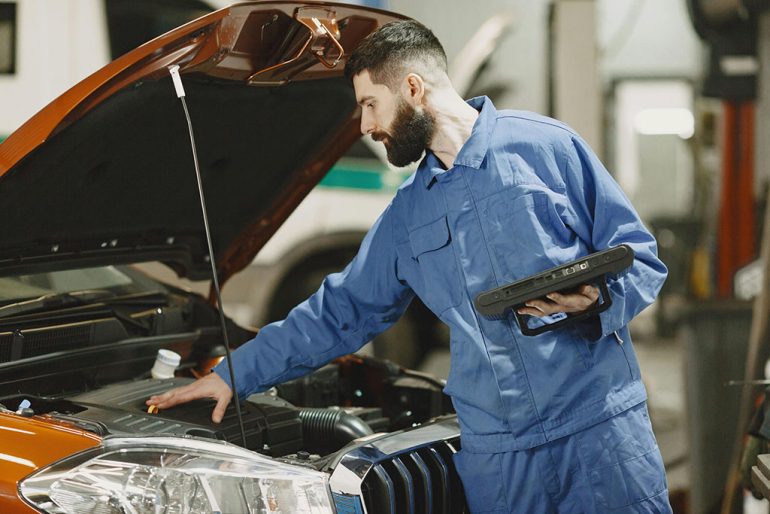
Rather than relying only on handheld devices, many technicians now work from laptops configured specifically for OEM diagnostics and manufacturer-level communication.
A dedicated setup helps technicians manage:
- multiple software environments
- OEM communication protocols
- service applications
- diagnostic interfaces
- calibration procedures
- repair documentation
This can significantly reduce the time spent switching between tools or configuring systems during repairs.
Many repair facilities now use dealer-level diagnostic tools that combine multiple OEM environments into one organized platform designed for professional workshop use.
Commercial Vehicle Diagnostics Are Becoming More Demanding
The demand for advanced diagnostics is especially strong in commercial vehicle repair.
Modern heavy-duty trucks now depend on sophisticated electronic systems controlling:
- emissions equipment
- engine performance
- transmission behavior
- fuel management
- communication networks
- safety systems
Repairs often require direct interaction with manufacturer-specific software systems in order to:
- perform calibrations
- clear inactive restrictions
- run service routines
- configure replacement components
- verify communication between modules
For fleet operators, downtime is extremely expensive. As a result, repair shops are under increasing pressure to complete repairs accurately and efficiently.
This has accelerated the demand for more advanced OEM diagnostic access outside traditional dealership environments.
The Industry Is Moving Toward OEM-Level Access
As vehicles continue becoming more software-centered, the repair industry itself is evolving.
Technicians today are expected to understand not only mechanical systems, but also:
- software behavior
- module communication
- network diagnostics
- electronic calibration
- OEM service logic
Because of this, access to professional OEM diagnostics is becoming increasingly valuable for independent workshops that want to remain competitive.
The goal is no longer simply reading fault codes.
Modern diagnostics often requires the ability to interact with vehicles at a much deeper level.
Independent Shops Are Closing the Gap
Dealerships will always maintain certain manufacturer advantages, but the gap between dealer and independent diagnostics is becoming smaller than it once was.
Many professional repair facilities are now building advanced diagnostic environments that support:
- multi-brand diagnostics
- OEM software access
- manufacturer communication
- advanced service functions
- integrated repair workflows
As automotive technology continues advancing, dealer-level diagnostics is no longer viewed as a luxury available only to dealerships.
For many independent technicians and repair facilities, it is rapidly becoming an essential part of modern vehicle repair.


