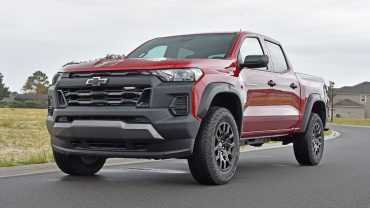
The Colorado simplifies one part of midsize truck shopping that trips people up on almost every other pickup in this guide series: there’s no engine decision to make. Every 2026 Colorado, from the work-focused WT to the trail-ready ZR2, runs the same 2.7-liter TurboMax turbocharged four-cylinder producing 310 horsepower and 430 lb-ft of torque, paired with the same 8-speed automatic transmission. That means the trim ladder here isn’t about finding enough power, it’s entirely about choosing the truck’s personality, work-ready simplicity, everyday comfort, factory off-road lift, or serious trail hardware, while the underlying mechanical foundation stays identical. This guide breaks down what Chevrolet dealers actually pay across the Colorado’s five trims, how to think about that personality decision before you compare prices, current incentives, and how to get real competing dealer quotes before you negotiate.
The 2026 Colorado starts at $34,495 for the WT in two-wheel-drive form, with four-wheel drive adding roughly $3,300 to reach $37,795. The LT follows at $38,095 for 2WD and $41,395 for 4WD, while Trail Boss, Z71, and ZR2 are all four-wheel-drive only, climbing from the mid-$40,000s through the ZR2’s roughly $52,595 starting point before options, all before destination charges. TrueCar’s transaction data shows real buyers currently paying about 4.8 percent below MSRP on the base WT, translating to real savings of around $1,645 based on recent transactions, a healthy discount that suggests genuine room to negotiate across the lineup.
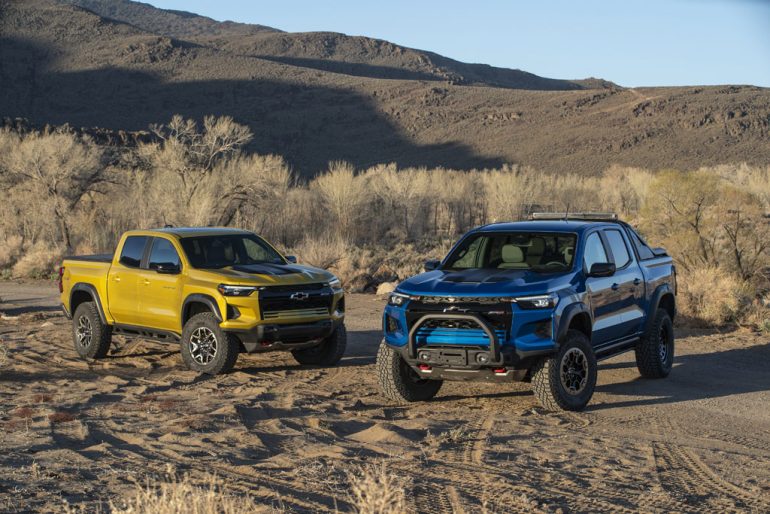
The Colorado’s closest rivals are the Toyota Tacoma, Ford Ranger, and its own corporate cousin, the GMC Canyon, which TrueCar specifically recommends cross-shopping and test-driving back to back, particularly comparing the Z71 and Trail Boss trims directly against each other to find your actual sweet spot. That kind of direct cross-shopping, especially against the Canyon, gives you real leverage at a Chevrolet dealership, since a salesperson aware you’re also considering the mechanically related GMC has direct incentive to make sure their offer holds up. That’s exactly the kind of leverage our Insider Access to Dealer Pricing tool is built to help you use, putting real competing local dealer quotes in front of you before you ever step onto a lot.
The invoice price is what a Chevrolet dealer actually paid General Motors for the truck on their lot, and on the 2026 Colorado, that gap from MSRP typically runs $1,500 to $2,800 depending on trim and drivetrain, with the wider dollar gap appearing on Z71 and ZR2, where off-road hardware and premium equipment widen the total spread even at a comparable percentage margin.
GM’s dealer holdback adds roughly 2 to 3 percent of base MSRP back to the dealer after a sale closes, which on a $41,395 LT 4WD represents approximately $830 to $1,240 in additional margin sitting beneath the invoice figure entirely. Combine that with TrueCar’s own data already showing nearly 5 percent coming off sticker in real transactions, and the Colorado shows genuine, healthy negotiating room, closer in spirit to the GM heavy-duty trucks covered elsewhere in this guide series than to a tightly-held vehicle with limited dealer flexibility.
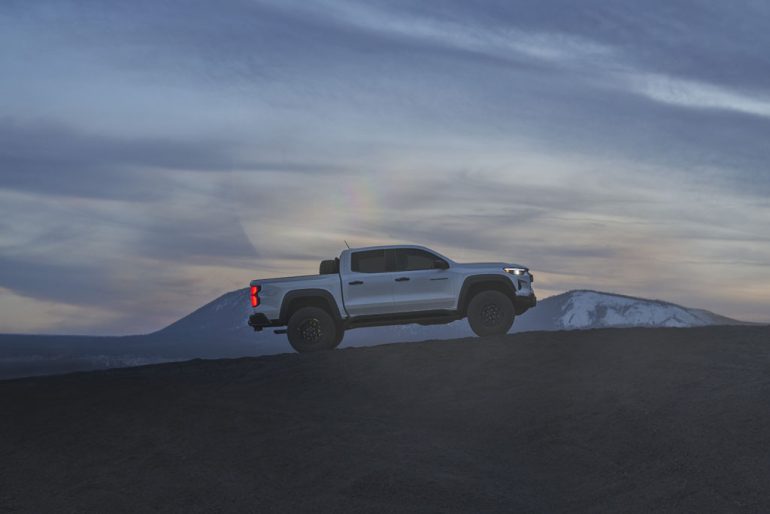
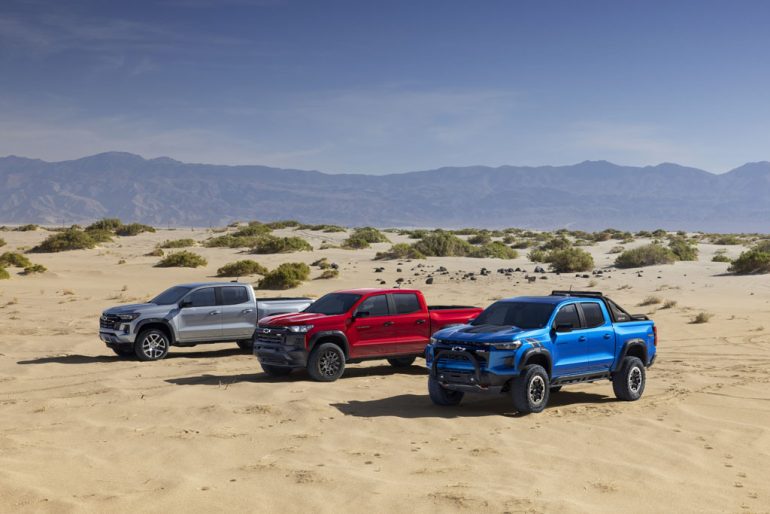
Because every trim shares identical mechanical DNA, the real decision facing Colorado shoppers is which version of that truck actually fits how you’ll use it. It’s worth grouping the lineup the way the truck itself is built: a practical, value-focused tier and a capability-focused tier, rather than treating all five trims as one continuous price ladder.
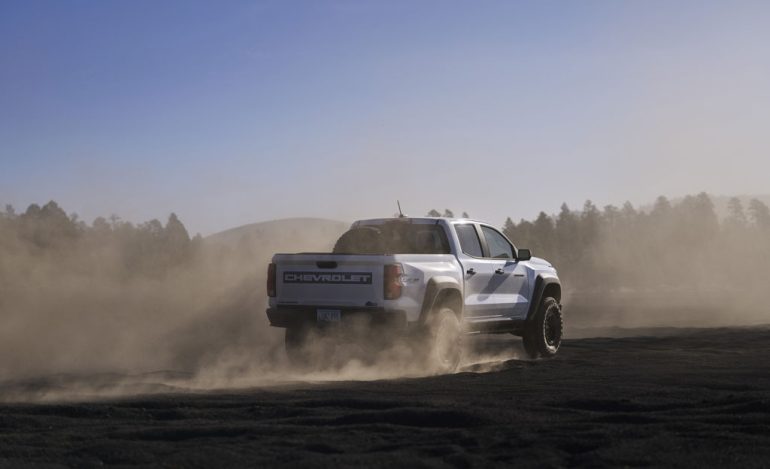
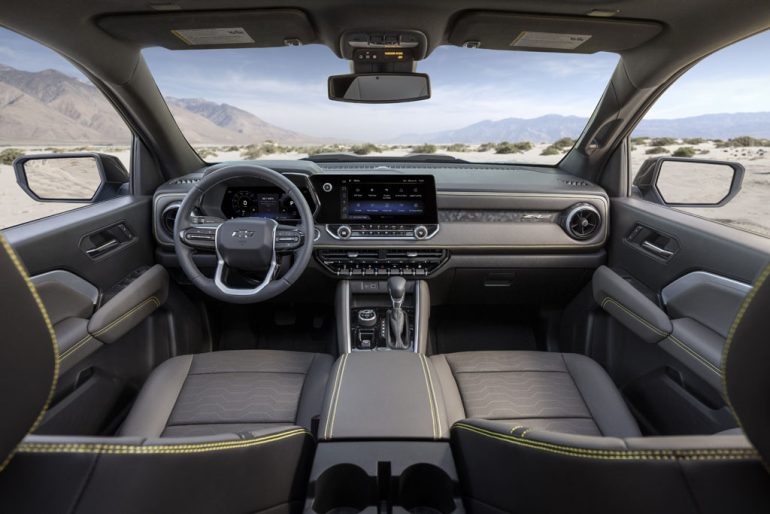
WT, Work Truck ($34,495 2WD, $37,795 4WD) is the cleanest entry point, giving you the full TurboMax torque output, the same large 11.3-inch touchscreen and 11-inch digital driver display found across the lineup, and Chevy Safety Assist standard. This trim works best when the truck’s job is clearly defined, commuting, jobsite use, light trailering, and hauling gear without paying for styling or off-road equipment you won’t use.
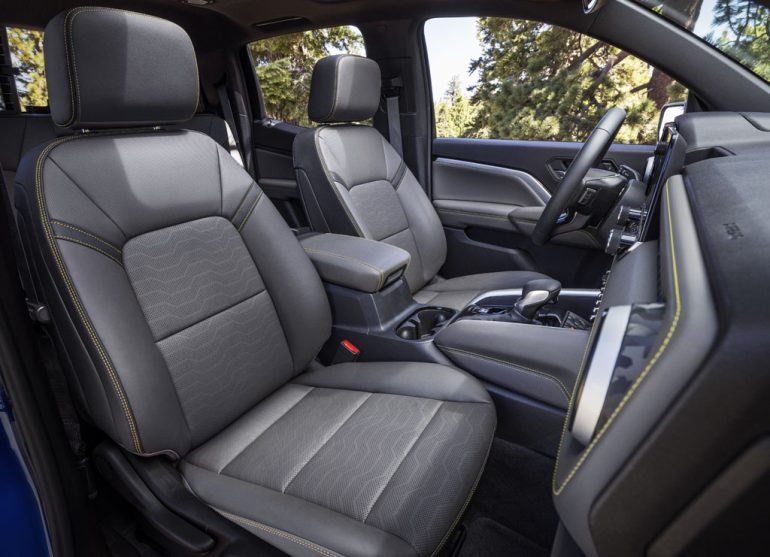
LT (starting at $38,095 2WD, $41,395 4WD) is the trim Edmunds explicitly recommends considering first, citing its reasonable starting price and broad customization potential through available packages. It keeps the WT’s core strengths while adding meaningfully more comfort and convenience for buyers who’ll spend real daily time behind the wheel rather than using the truck purely as a tool.
Trail Boss (starting in the mid-$40,000s) introduces factory-lifted off-road attitude, four-wheel drive only, with a raised suspension and off-road-oriented equipment for buyers who want genuine trail capability without committing to the ZR2’s full price and hardware package.
Z71 (starting in the upper $40,000s) feels noticeably more polished and adventure-ready than Trail Boss while staying short of ZR2 territory, making it the trim TrueCar specifically suggests test-driving back to back against Trail Boss to find your actual preference between the two, since they occupy similar price and capability territory with different personalities.
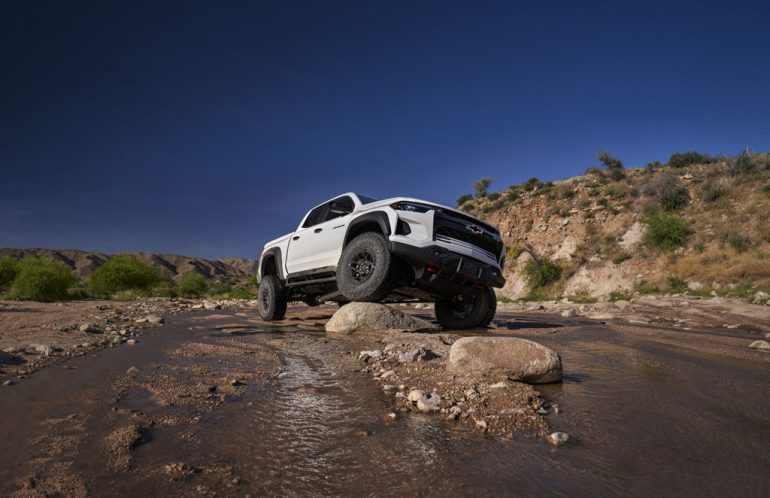
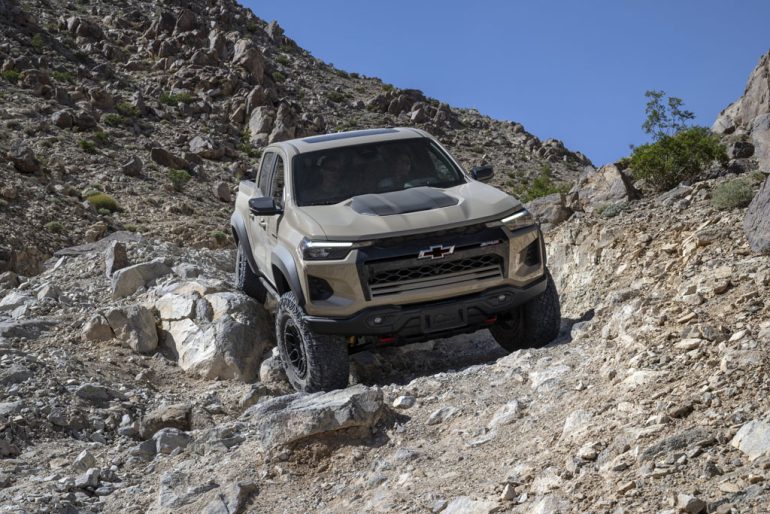
ZR2 (starting at approximately $52,595) sits at the top with the most serious factory trail hardware Chevrolet offers on this platform, exclusive off-road drive modes including a sand-specific tuning mode, and the most capable suspension and tire package in the lineup, trading a bit of fuel economy and on-road manners for genuine off-road performance.
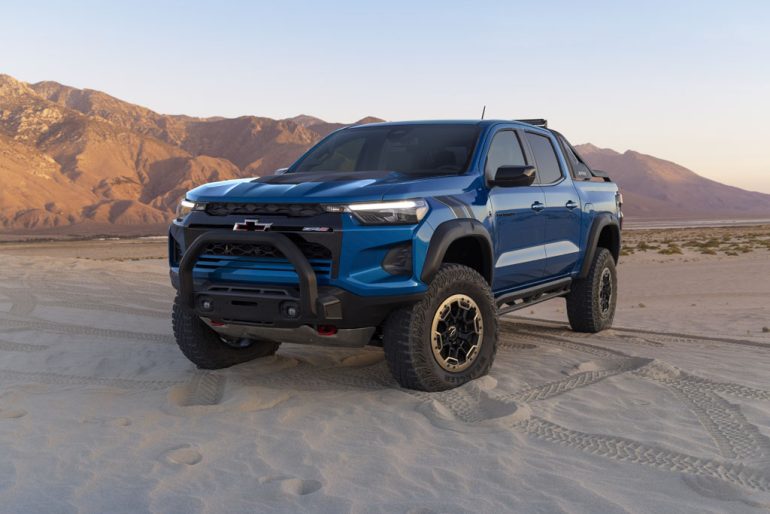
Because every Colorado shares the same engine, it’s the numbers around that engine, towing, payload, and fuel economy, that genuinely shift as you move through the lineup, and they’re worth understanding before you commit to a trim based on styling alone. Towing capacity reaches up to 7,700 pounds on most trims when properly equipped, though the off-road-focused ZR2 is capped lower at 6,000 pounds given its different suspension and tire setup, a real trade-off worth weighing if you tow regularly and were leaning toward the ZR2 primarily for its looks.
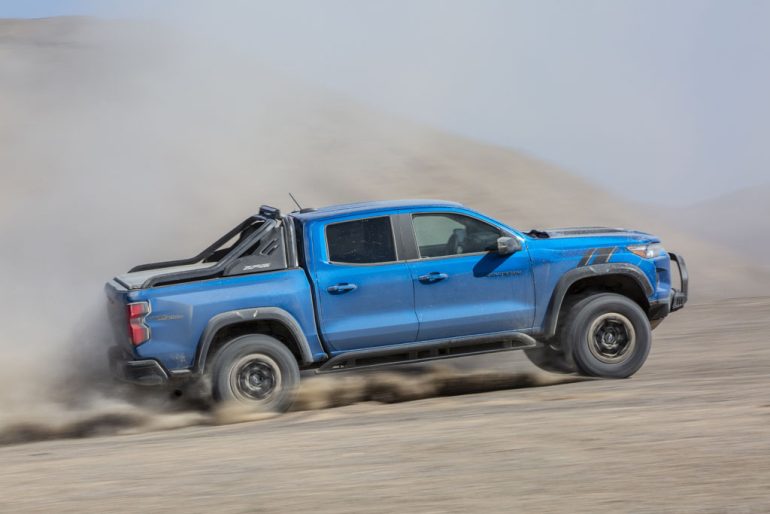
Payload capacity runs from roughly 1,445 to 1,846 pounds depending on configuration, and fuel economy shifts meaningfully by trim despite the shared engine: WT and LT trims return about 20 mpg combined, Trail Boss and Z71 drop slightly to 19 mpg combined, and the ZR2 comes in at 17 mpg combined given its off-road tires and equipment. None of these differences come from the engine itself, they come entirely from weight, tire choice, and gearing, which is exactly why confirming the specific configuration behind any dealer quote matters more on this truck than comparing trim names alone.
Manufacturer incentives on the Colorado stack on top of any negotiated price reduction below MSRP, and GM Financial regularly offers promotional APR financing for qualified buyers, particularly on WT and LT trims given their volume in the lineup.
Chevrolet also maintains military appreciation pricing for active duty and veteran buyers, along with discount programs for first responders including police officers, firefighters, EMTs, and paramedics. These programs stack directly on top of any negotiated dealer discount and aren’t always advertised prominently at the dealership level, so confirming your eligibility directly is worth the few minutes it takes. The Colorado’s warranty coverage runs three years or 36,000 miles on the basic limited warranty, with five years or 60,000 miles specifically on the powertrain, worth factoring into your total ownership picture alongside the upfront price. Getting a real local dealer quote that reflects both negotiated pricing and current incentives through our Insider Access to Dealer Pricing tool gives you the clearest picture of your actual out-the-door cost before visiting a single dealership.
Based on TrueCar’s transaction data already showing buyers nearly 5 percent below MSRP, here’s a realistic target range across the 2026 Colorado lineup. On the WT 2WD, $32,700 to $33,400 reflects a strong outcome, consistent with the roughly $1,645 in average savings TrueCar reports on this trim specifically. On the WT 4WD, target $35,800 to $36,700. On the LT 2WD, $36,200 to $37,100 is achievable with competing quotes in hand. On the LT 4WD, target $39,300 to $40,300. Trail Boss, Z71, and ZR2 vary considerably by options and packages, but the same roughly 4 to 5 percent off-MSRP benchmark should apply directionally across all three.
These targets assume you’ve gathered competing quotes from multiple local Chevrolet dealers, confirmed drivetrain and exact trim before comparing any two quotes, and kept trade-in negotiations completely separate from the new truck price discussion.
With real transaction data already showing nearly 5 percent off sticker price, shopping multiple Chevrolet dealers against each other is a reliable way to find out how much further your specific configuration can move. Click the “Get Prices” button above, select the 2026 Colorado trim and drivetrain you’re considering, and you’ll receive real pricing from local Chevrolet dealers competing directly for your purchase, typically within minutes and without visiting a single showroom.
Whether you need the WT’s straightforward work-truck value, the LT’s recommended everyday comfort, the Trail Boss or Z71’s off-road attitude, or the ZR2’s serious trail hardware, getting competing offers first means you walk into any final negotiation already knowing what other dealers in your area are willing to offer for the exact personality of Colorado that fits how you’ll actually use it.

Darryl Taylor Dowe is a seasoned automotive professional with a proven track record of leading successful ventures and providing strategic consultation across the automotive industry. With years of hands-on experience in both business operations and market development, Darryl has played a key role in helping automotive brands grow and adapt in a rapidly evolving landscape. His insight and leadership have earned him recognition as a trusted expert, and his contributions to Automotive Addicts reflect his deep knowledge and passion for the business side of the car world.