
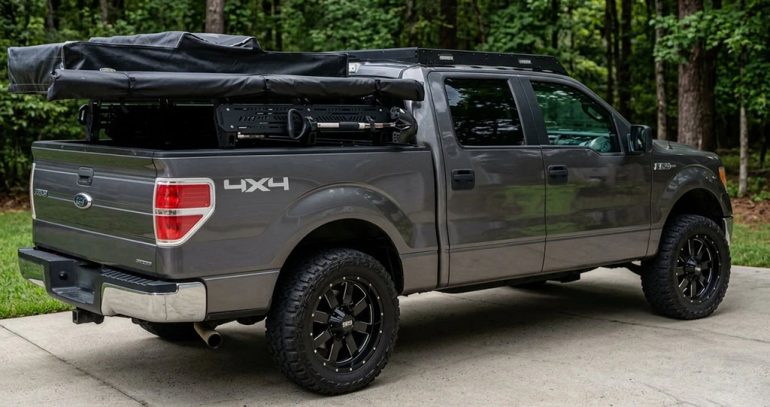
Ask ten F-150 owners what “overland ready” means and you’ll get ten different answers. Bigger tires. A winch. A rooftop tent. But talk to anyone who’s actually spent a week off-grid and the conversation always circles back to the same problem: where does everything go?
The bed fills up fast. Recovery boards, fuel cans, a fridge, water jugs, tools — by the time you’re done, there’s barely room for a duffel bag. That’s the real ceiling on overland capacity for most trucks, F-150 included. It’s not horsepower or ground clearance. It’s cargo real estate.
A few things worth knowing before you start building:
That’s the whole argument for moving gear up top. It’s not about looking rugged. It’s about freeing up the bed for the stuff that actually needs to sit low.
Most rack failures don’t happen because someone bought bad gear. They happen because two decent pieces of gear were never designed to work together.
A common mistake: bolting a rooftop tent onto crossbars rated for a light bar and maybe a kayak. That combination might survive the driveway. It will not survive a rutted forest road at 40 mph with 130 lbs of tent flexing against four small mounting points.
Before buying anything roof-mounted, check three numbers:
This is why a lot of serious builds skip the factory crossbars entirely and go straight to a platform-style rack. For F-150 and Raptor owners running the SuperCrew cab, the Hooke Road roof rack is one of the more common upgrades for exactly this reason — a low-profile steel platform that mounts through the factory drip rail points and spreads load across the whole roof structure instead of a few stress points. That distribution is the difference between a rack that holds up over years of washboard roads and one that starts creaking after a season.
Not every trip needs the same rooftop load-out, and it’s worth being honest about that before spending money.
A weekend trip usually needs:
A multi-week expedition usually needs:
The tent weight alone is why dynamic load rating matters so much — a rack rated for 150 lbs static but only 75 lbs dynamic will hold a tent fine while parked and then bounce that same tent loose on a rough road.
A few tradeoffs nobody mentions until they’ve lived with them:
None of these are dealbreakers. They’re just planning inputs — especially for longer routes where gas stations thin out.
A rack is only as good as the bolt torque holding it on. The issues that show up months later — squeaks, leaks, a rack that shifts slightly under load — almost always trace back to install day:
None of this is complicated, but it’s easy to rush through on a Saturday afternoon when you just want the tent on and the truck packed. Worth slowing down for. If you’re doing the install yourself, it’s worth reading through more tips on torque specs and common mounting mistakes before the first bolt goes in — the kind of thing that’s obvious in hindsight and expensive to learn on the road.
The F-150 has earned its reputation as a solid overland platform, but the engine and suspension get most of the credit while the roof rack does most of the actual work. Get that piece right, and the rest of the build tends to fall into place on its own.

Automotive Addicts Contributors are a collective of guest writers, industry professionals, and passionate enthusiasts who bring fresh perspectives to the Automotive Addicts platform. Focused on delivering timely news, in-depth reviews, and unique insights, these contributors help keep the site dynamic and engaging. Many use the platform to expand their reach and build credibility within the automotive media world, adding depth and variety to the content that drives the Automotive Addicts community.


