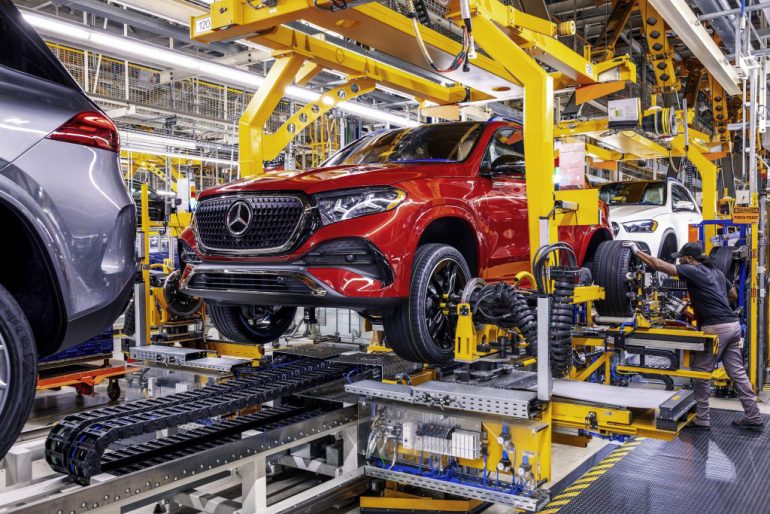
A bill designed to keep Chinese automakers out of the U.S. market has created an unexpected problem for one of Germany’s best-known luxury brands. The bipartisan Connected Vehicle Security Act of 2026 includes language that could restrict automakers with more than 15 percent Chinese ownership from selling vehicles in the United States. Mercedes-Benz happens to sit above that threshold, with nearly 20 percent of the company held by Chinese investors. Republican Senator Bernie Moreno of Ohio, one of the bill’s sponsors, now says lawmakers are working to make sure Mercedes-Benz does not get caught in a net primarily intended for Chinese-controlled automakers.
The ownership numbers explain how the issue surfaced. Chinese state-owned BAIC Group holds 9.98 percent of Mercedes-Benz Group, while Tenaciou3 Prospect Investment Limited, associated with Geely founder Li Shufu, holds another 9.69 percent. Together, those investments amount to roughly 19.7 percent of Mercedes-Benz, even though the company itself remains headquartered in Stuttgart, Germany. Moreno has made it clear that the intention is not to remove Mercedes-Benz vehicles from American showrooms, but lawmakers still have to determine how the legislation can distinguish passive investments from the type of Chinese ownership or control the bill is targeting.
Mercedes-Benz isn’t the only familiar automaker that could be affected by the language as currently structured. Volvo Cars is majority owned by China’s Geely Holding, while Geely also owns about 17 percent of Aston Martin and controls Lotus through its ownership structure. Moreno said lawmakers are considering several ways to address those situations. Senator Rand Paul of Kentucky has opposed moving the bill forward in its present form, arguing that its treatment of Mercedes-Benz is unfair. Moreno and Democratic Senator Elissa Slotkin of Michigan, the bill’s other chief sponsor, have been pushing to move the legislation through the Senate, where it has attracted broad bipartisan support.
The debate is part of a much larger effort in Washington to limit the presence of Chinese automotive companies and technology in the American market. Regulations finalized under the Biden administration already placed extensive restrictions on connected vehicle hardware and software linked to China over concerns involving sensitive vehicle and driver data. Chinese EVs also face tariffs exceeding 100 percent in the United States. More recently, President Donald Trump has said he would be open to Chinese automakers producing vehicles on American soil, while a coalition representing automakers, suppliers and dealers has urged the administration and Congress to maintain restrictions on Chinese automotive companies entering the U.S. market. Chinese officials, meanwhile, have criticized such restrictions and argued that Chinese automakers’ global competitiveness comes from innovation and intense competition in their home market.
For Mercedes-Benz buyers, there is no indication that vehicles are about to disappear from U.S. dealerships. The more interesting question is how lawmakers rewrite or refine the legislation so that ownership thresholds aimed at Chinese automotive influence do not unintentionally sweep up established global manufacturers with minority Chinese shareholders. That distinction becomes increasingly complicated in a modern auto industry where investments, suppliers, software and manufacturing operations routinely cross national borders. With the Senate bill gaining momentum and a House version attracting more than 100 co-sponsors, the final language could have implications extending well beyond Mercedes-Benz and provide a clearer picture of how Washington intends to define Chinese influence in the automotive industry.

Lloyd Tobias is a seasoned automotive journalist and passionate enthusiast with over 15 years of experience immersed in the world of cars. Whether it’s exploring the latest advancements in automotive technology or keeping a close pulse on breaking industry news, Lloyd brings a sharp perspective and a deep appreciation for all things automotive. His writing blends technical insight with real-world enthusiasm, making his contributions both informative and engaging for readers who share his love for the drive. When he’s not behind the keyboard or under the hood, Lloyd enjoys test driving the newest models and staying ahead of the curve in an ever-evolving automotive landscape.