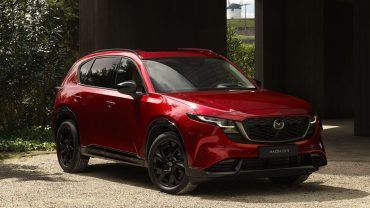
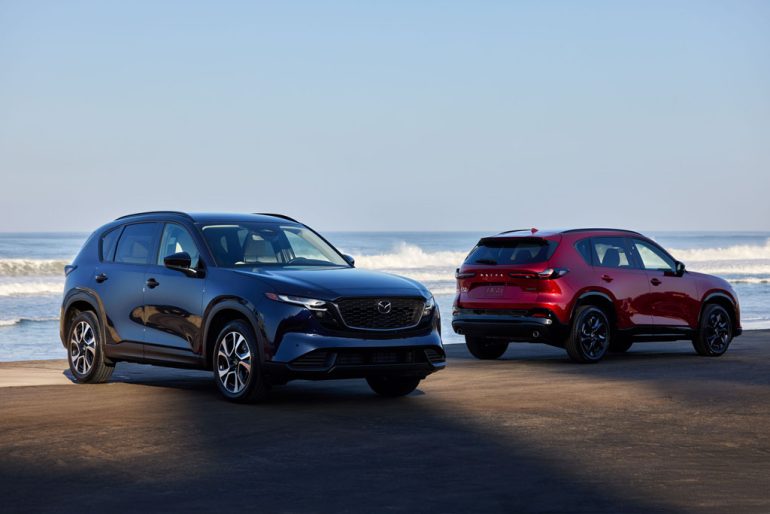
The 2027 Mazda CX-5 is a near-direct carry-forward of the redesigned model that debuted for 2026, with the main addition being Google built-in with Gemini AI across all trims. The 2026 CX-5 was a significant update — expanded rear-seat legroom, a larger cargo area, a larger touchscreen, and a refreshed interior — and the 2027 builds on that foundation without changing the fundamentals. All-wheel drive remains standard across all five trim grades, the 2.5-liter naturally aspirated four-cylinder carries over, and pricing increases are modest with the base 2.5 S holding its 2026 MSRP unchanged. The lineup runs from $29,990 to $39,440 pre-destination, all with standard AWD. This guide covers invoice prices for every 2027 CX-5 configuration, what each trim delivers, and how to approach a Mazda negotiation effectively.
The table below shows MSRP alongside the dealer invoice price for all five 2027 CX-5 trims. AWD is standard on every configuration — there is no FWD option in the CX-5 lineup. Prices are pre-destination. Mazda’s destination and delivery charge on the 2027 CX-5 is $1,595.
| Trim | MSRP | Dealer Invoice | Dealer Margin |
|---|---|---|---|
| 2.5 S | $29,990 | $29,240 | $750 |
| 2.5 S Select | $32,140 | $31,336 | $804 |
| 2.5 S Preferred | $34,550 | $33,686 | $864 |
| 2.5 S Premium | $37,450 | $36,514 | $936 |
| 2.5 S Premium Plus | $39,440 | $38,454 | $986 |
The CX-5’s dealer margins are among the tightest in the compact crossover segment, running from $750 on the base 2.5 S to under $1,000 on the top Premium Plus. These are front-end figures before dealer holdback, which Mazda pays to dealers quarterly and adds a small additional cushion below invoice. Even with holdback factored in, total room per unit rarely exceeds $1,200 to $1,500 on any CX-5 trim. Mazda dealers operate on volume and efficiency rather than per-unit margin, which means buyers are unlikely to find aggressive discounts through direct negotiation on fresh inventory. The leverage in a CX-5 purchase comes from competing dealer quotes and purchase timing rather than starting well below MSRP on a single-dealer negotiation.
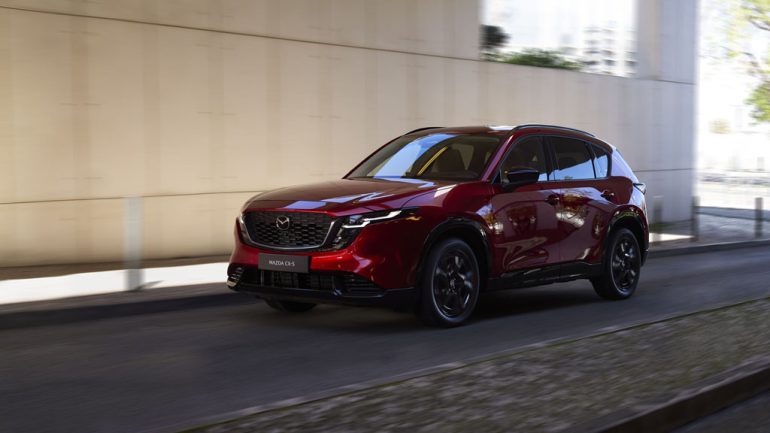
Every 2027 CX-5 uses a 2.5-liter naturally aspirated four-cylinder producing 187 horsepower and 186 lb-ft of torque on regular 87-octane fuel, routed through a 6-speed automatic transmission and Mazda’s i-Activ AWD system. The i-Activ system is a full-time AWD setup that proactively adjusts torque distribution front to rear before wheel slip occurs, using data from 27 sensors to anticipate grip conditions rather than simply reacting after traction is lost.
The CX-5’s 2.5-liter SkyActiv-G is naturally aspirated rather than turbocharged, which means its power delivery is linear and predictable rather than peaky. It is not a fast vehicle by modern standards, but the powertrain is well-matched to the CX-5’s overall character: composed, smooth, and confidence-inspiring in everyday driving. Mazda’s G-Vectoring Control Plus (GVC+) system manages micro torque adjustments to sharpen cornering response and stability, contributing to the CX-5’s reputation as one of the more engaging compact crossovers to drive. Mi-Drive modes — Normal, Sport, and Off-Road — are standard across all trims.
EPA fuel economy is 25 city / 31 highway / 27 combined on most configurations. Regular 87-octane fuel is acceptable; premium is not required or recommended. A hybrid variant of the CX-5 is expected to be announced later in 2027, though pricing and availability have not been confirmed as of this writing.
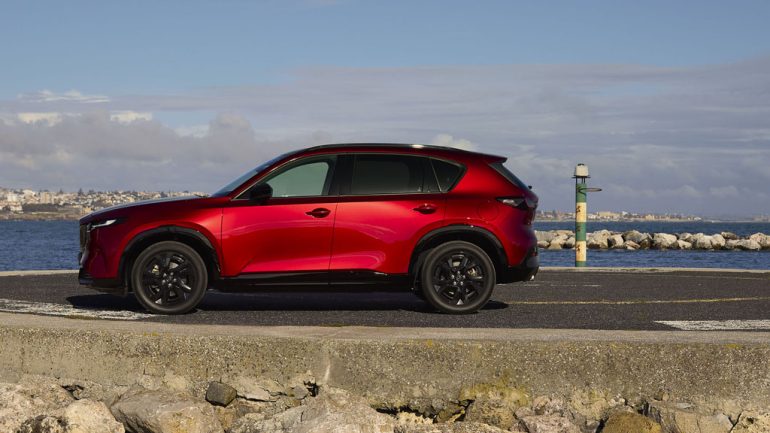
The 2.5 S is the entry point, and it enters at a meaningfully equipped level for the price. Standard across all 2027 CX-5 trims: i-Activ AWD, Mazda’s i-Activsense safety suite (automatic emergency braking with pedestrian and cyclist detection, adaptive radar cruise control with Speed Limit Assist, lane departure warning with lane-keep assist, driver attention alert), a 12.9-inch center touchscreen with Google built-in and Gemini AI voice assistant, dual-zone automatic climate control, a 10-way power-adjustable driver’s seat, keyless push-button start, and LED headlamps. The base 2.5 S rides on 17-inch alloy wheels and uses wired Apple CarPlay and Android Auto on the base grade. At a $29,240 invoice, the 2.5 S is the entry point for buyers who want CX-5 quality and standard AWD at the lowest available transaction price. The 2027 2.5 S holds its 2026 MSRP unchanged, which is a meaningful value hold in a segment where prices have broadly increased.
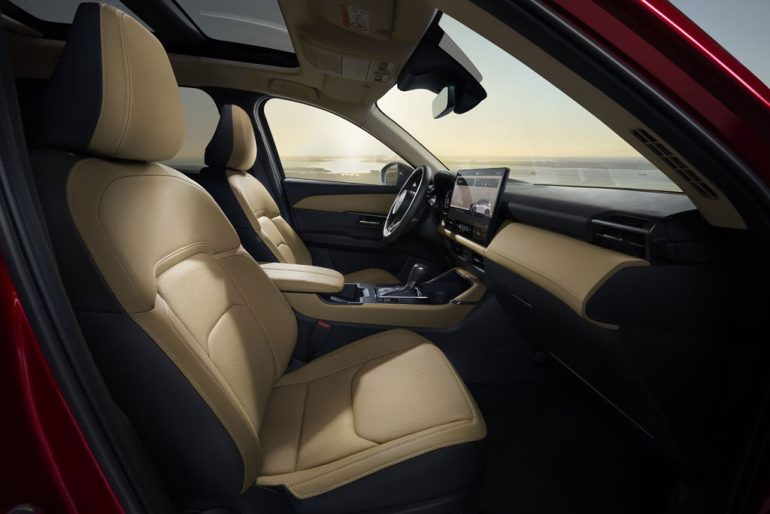
The 2.5 S Select adds the daily-use comfort features that most buyers notice most. The Select gains leatherette seating surfaces (a step up from the base fabric), heated front seats, a heated steering wheel, wireless Apple CarPlay and Android Auto (replacing wired connections on the base trim), wireless phone charging, power-folding and heated exterior mirrors, and rear privacy glass. At a $31,336 invoice, the Select is a $2,096 step up from the base 2.5 S at invoice — a reasonable premium for the content added. The Select is the volume trim of the CX-5 lineup in most markets and the right choice for buyers who want leatherette seating and heated seats without paying for the Preferred’s larger wheels and power liftgate.

The 2.5 S Preferred upgrades the driving and convenience experience meaningfully from the Select. The Preferred gains 19-inch alloy wheels (up from 17-inch units on the lower trims), a power liftgate, roof rails, a full-color head-up display, and ventilated front seats. The larger wheels change the CX-5’s visual stance noticeably and affect ride quality — the 19-inch setup is firmer than the 17-inch setup on the lower trims, though Mazda’s suspension tuning keeps the trade-off manageable. At a $33,686 invoice, the Preferred sits at the midpoint of the CX-5 lineup and represents the first trim where the driving and convenience experience is appreciably different from the entry configurations.
The 2.5 S Premium is where the CX-5 steps into near-luxury territory. Standard additions over the Preferred include a panoramic power moonroof, heated rear outboard seats in addition to the heated fronts, a 12-speaker Bose audio system, ambient interior lighting, and driver assistance technology upgrades. The Premium is the trim for buyers who want the CX-5’s driving character paired with premium interior comfort and an elevated audio experience. At a $36,514 invoice, it carries $936 of front-end margin — still modest in absolute terms, but the highest dollar room in the lineup outside the Premium Plus.
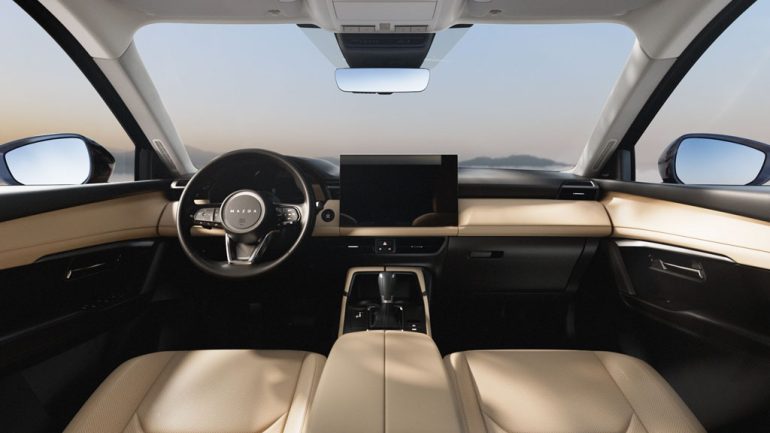
The 2.5 S Premium Plus is the top configuration and the most technology-forward trim in the CX-5 lineup. Standard additions over the Premium include the upgraded 15.6-inch center display (up from 12.9 inches on all lower trims), paddle shifters, a hands-free power tailgate, a 360-degree camera with underfloor view capability, and Cruising and Traffic Support with automated lane changes on the highway. The Premium Plus also gains the Driver Personalization System with facial recognition, borrowed from the larger CX-90, which learns individual driver preferences for seat position, climate settings, and audio and applies them automatically at vehicle start. At a $38,454 invoice and $986 of front-end margin, the Premium Plus is the ceiling of the standard CX-5 lineup and positions the vehicle directly against premium compact crossovers from BMW, Audi, and Volvo at a meaningfully lower price point.
The CX-5’s standard AWD across every trim is a genuine differentiator in the compact crossover segment, where competitors often charge $1,500 to $2,000 as an AWD option on base and mid trims. Mazda’s i-Activ system uses predictive torque management rather than reactive slip detection, which gives the CX-5 a traction advantage in marginal conditions — light snow, wet pavement, loose gravel — compared with FWD-only vehicles. For buyers in year-round warm-weather markets where traction is rarely a concern, the standard AWD is essentially a free resale value enhancement. For buyers in markets with actual winter weather, it eliminates the AWD upgrade decision entirely.
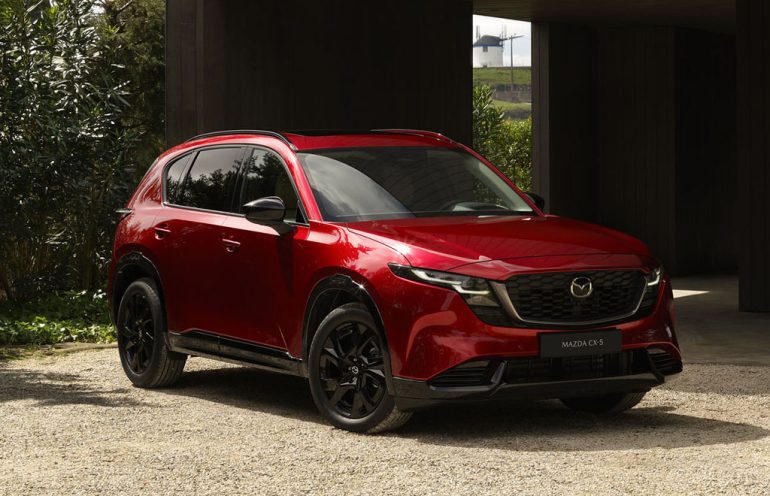
The headline technology addition for 2027 is Google built-in with Gemini AI, standard across all five trim grades. This replaces the previous Google Assistant integration with Gemini’s broader conversational AI capabilities, extending voice control to navigation, climate, media, and general queries through the vehicle’s native system rather than requiring a connected phone. The base through Premium trims use a 12.9-inch center touchscreen; the Premium Plus upgrades to a 15.6-inch display that fills the center stack with a larger interface. Over-the-air update capability allows Mazda to push software updates to the infotainment system without requiring a dealer visit.
The 2027 CX-5 carries forward the generation redesigned for 2026 with limited changes. Google built-in with Gemini AI is the primary technology addition, replacing the previous Google Assistant integration across all trims. The 2.5 S base trim holds its 2026 MSRP at $29,990; Select, Preferred, Premium, and Premium Plus trims saw price increases ranging from $150 to $550. The powertrain, platform, dimensions, and core feature structure carry over unchanged.
Buyers comparing 2026 and 2027 CX-5 models will find the two nearly identical outside of the Gemini AI update. For buyers cross-shopping a 2026 on a dealer lot against a new 2027, the 2026 is a compelling value if the dealer is willing to discount remaining inventory — the vehicles are mechanically identical and the technology difference is a software integration, not a hardware capability gap.
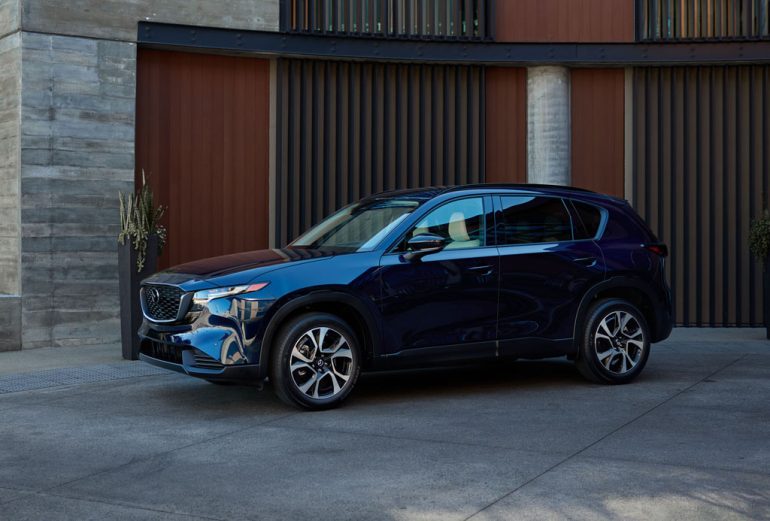
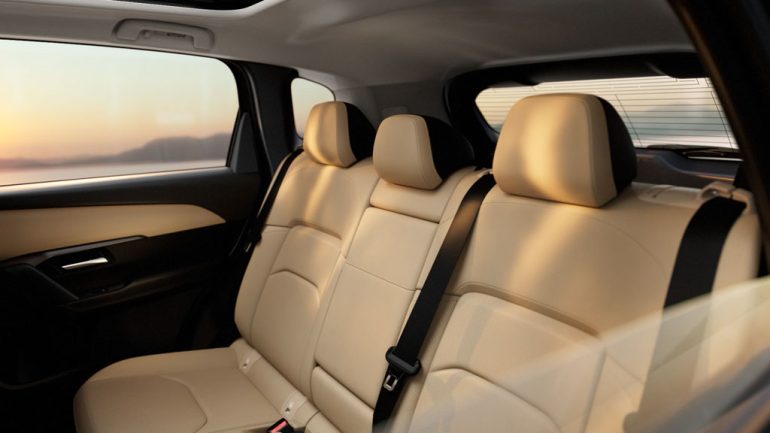
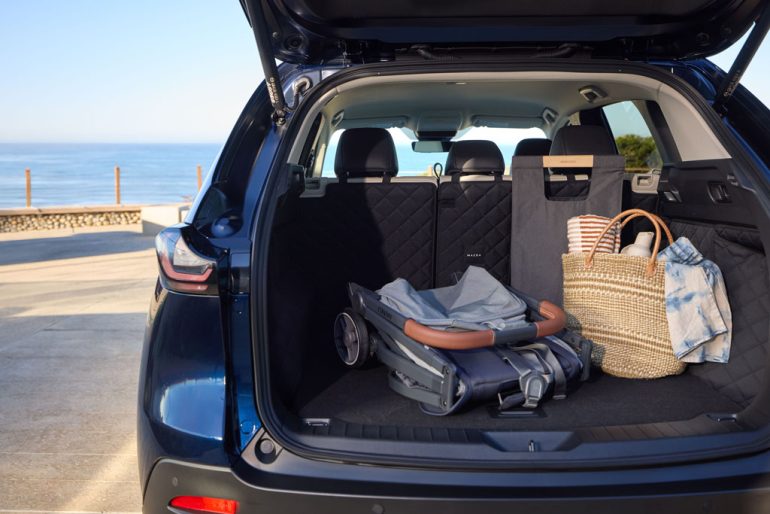
The 2027 CX-5 is rated to tow up to 2,000 pounds with the proper hitch equipment — adequate for a small utility trailer, a lightweight boat, or a jet ski, but not a serious towing configuration. Cargo volume is 30.9 cubic feet behind the rear seats and 59.6 cubic feet with the rear seats folded. The 2026 redesign added meaningful rear seat legroom compared with the previous generation, addressing one of the outgoing model’s most common criticisms. The CX-5 is a five-passenger vehicle; buyers who need three rows should look at the CX-90 or CX-70.
The 2027 Mazda CX-5 carries a 3-year/36,000-mile bumper-to-bumper warranty and a 5-year/60,000-mile powertrain warranty. Roadside assistance is provided for 3 years with no mileage limitation. Mazda also includes complimentary scheduled maintenance for the first 3 years or 30,000 miles. The 3-year maintenance coverage is competitive in the mainstream compact crossover segment and reduces the first-owner total cost of ownership compared with brands that charge separately for maintenance.
The CX-5’s thin dealer margins — $750 to under $1,000 of front-end margin depending on trim — change the negotiating math compared with higher-margin vehicles. There is simply less room between MSRP and dealer floor on a CX-5 than on most competitors. Buyers expecting to negotiate $2,000 or $3,000 off MSRP on a fresh-to-lot CX-5 through direct negotiation will generally be disappointed. The dealer has less room to give.
That does not mean you should pay MSRP. Competing quotes from multiple Mazda dealers are your primary tool. Mazda has sufficient dealer density in most metro markets that two or three dealers will be competing for the same buyer. Email or phone quote requests across multiple dealers before visiting in person, with identical vehicle specifications, let you identify which dealer is most motivated to close the sale. Dealers who know you have a written offer from a competitor will work with the room they have. Even a few hundred dollars off MSRP on a vehicle with $750 of front-end margin is a meaningful percentage of the available room.
Timing matters significantly on a low-margin vehicle. End-of-month and end-of-quarter periods, when Mazda dealers are managing volume targets and regional incentive thresholds, are when buyers find the most flexibility. A dealer who needs two more units to hit a quarterly volume bonus has real financial motivation to work within thin margins in a way that a dealer who has already hit target does not.
Know the competitive context. The CX-5 competes with the Honda CR-V, Toyota RAV4, Subaru Forester, and Volkswagen Tiguan in the mainstream compact crossover segment, and positions itself against the BMW X1, Audi Q3, and Volvo XC40 on the near-premium end. The CX-5’s standard AWD and Mazda’s reputation for interior quality relative to price are genuine differentiators that dealers are aware of and that you can use as cross-shopping leverage.
In the finance and insurance office, the CX-5’s 3-year complimentary maintenance coverage and competitive powertrain warranty reduce the value of extended service contracts during the initial ownership period. Prepaid maintenance packages and appearance protection products are low-value purchases at typical F&I pricing. Decide in advance what you want, price anything you are considering separately before you sit down, and treat the F&I discussion as its own buying decision rather than a continuation of the vehicle negotiation.

Darryl Taylor Dowe is a seasoned automotive professional with a proven track record of leading successful ventures and providing strategic consultation across the automotive industry. With years of hands-on experience in both business operations and market development, Darryl has played a key role in helping automotive brands grow and adapt in a rapidly evolving landscape. His insight and leadership have earned him recognition as a trusted expert, and his contributions to Automotive Addicts reflect his deep knowledge and passion for the business side of the car world.