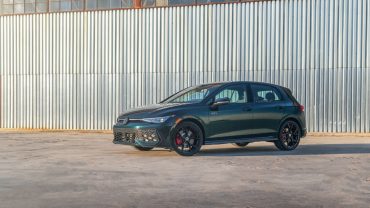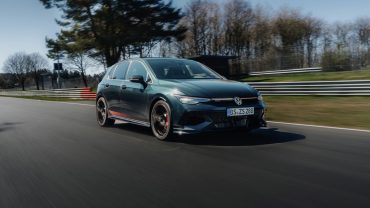
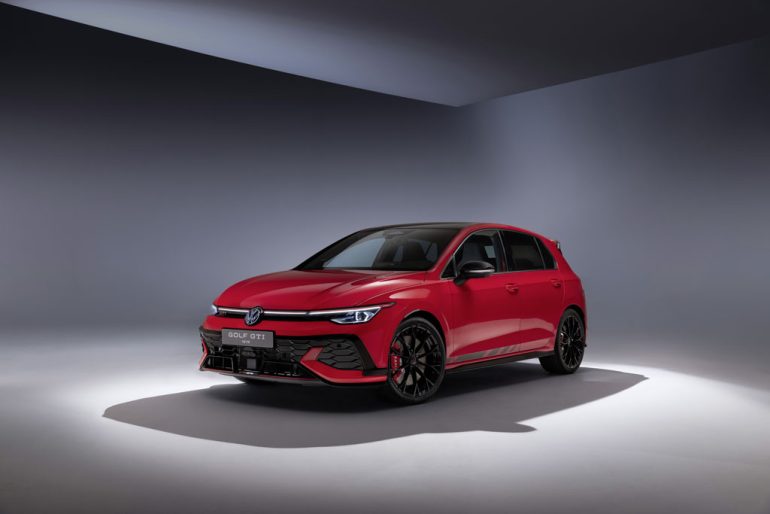
Just when we thought Volkswagen had officially closed the book on the manual transmission in the Golf GTI, the German automaker has given enthusiasts something worth celebrating. Making its debut at the Essen Motor Show in Germany, the new Volkswagen Golf GTI 1976 commemorates 50 years of one of the most influential hot hatches ever produced. However, instead of simply slapping a few commemorative badges on a GTI and calling it a day, Volkswagen is bringing back the six-speed manual transmission. It’s the sort of move that makes us wonder why Volkswagen ever abandoned the third pedal in the first place, especially in a car that has built much of its reputation on making everyday driving entertaining.
Unfortunately, there’s a rather significant catch for those of us here in America. Volkswagen will produce just 1,976 examples of the Golf GTI 1976, with the production number paying homage to the year the original Golf GTI went on sale. The special edition is destined for the European market, where deliveries are expected to begin in the first quarter of 2027. Each example will feature a numbered commemorative plaque, and perhaps the most satisfying part of the whole announcement is that buyers won’t even have the option of a DSG automatic. This particular GTI is exclusively a three-pedal affair.
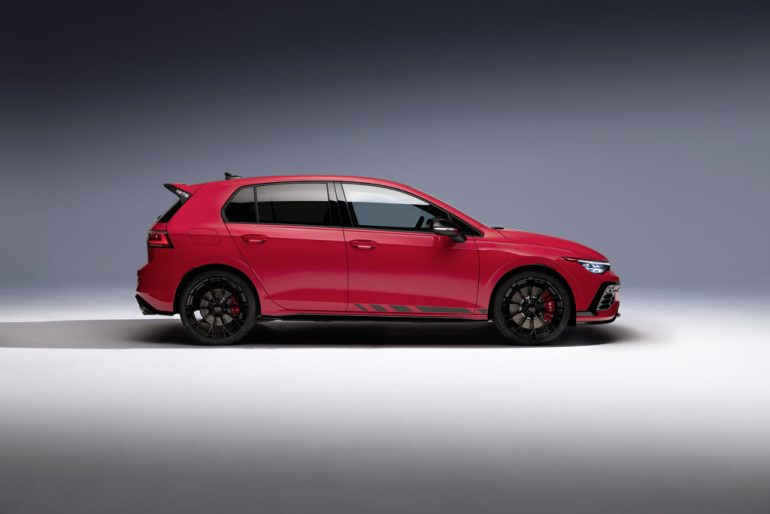
What makes the GTI 1976 even more intriguing is that Volkswagen hasn’t relegated the manual transmission to a lesser-performing version of the hot hatch. The familiar turbocharged 2.0-liter four-cylinder engine pumps out 321 horsepower and 280 lb-ft of torque, matching the output of the GTI Edition 50 and delivering 25 more horsepower than the European GTI Clubsport. That makes the anniversary model the most powerful production Golf GTI ever offered with a manual transmission. Considering how often automakers cite performance advantages as justification for eliminating manual gearboxes, it’s rather satisfying to see Volkswagen pair one of its most potent front-wheel-drive offerings with a stick shift.
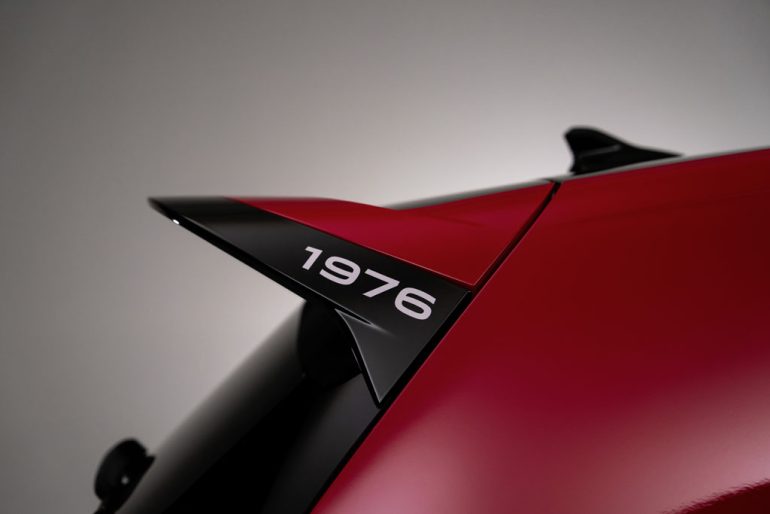
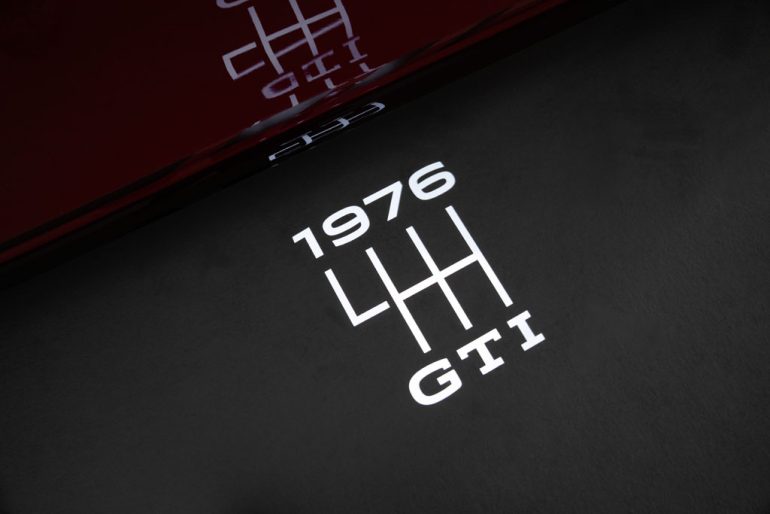
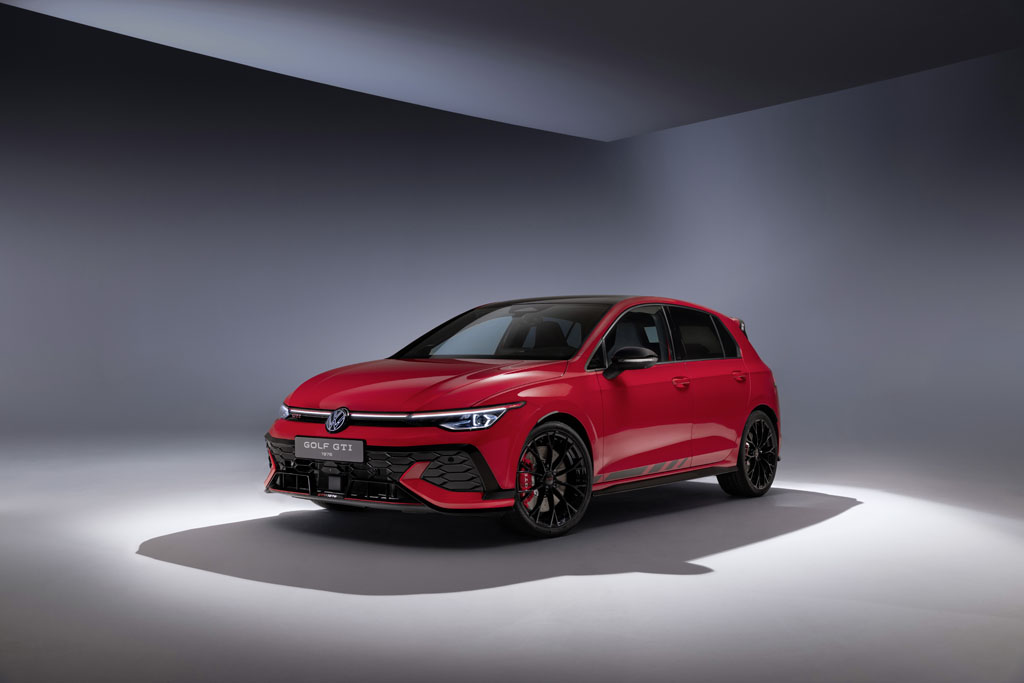
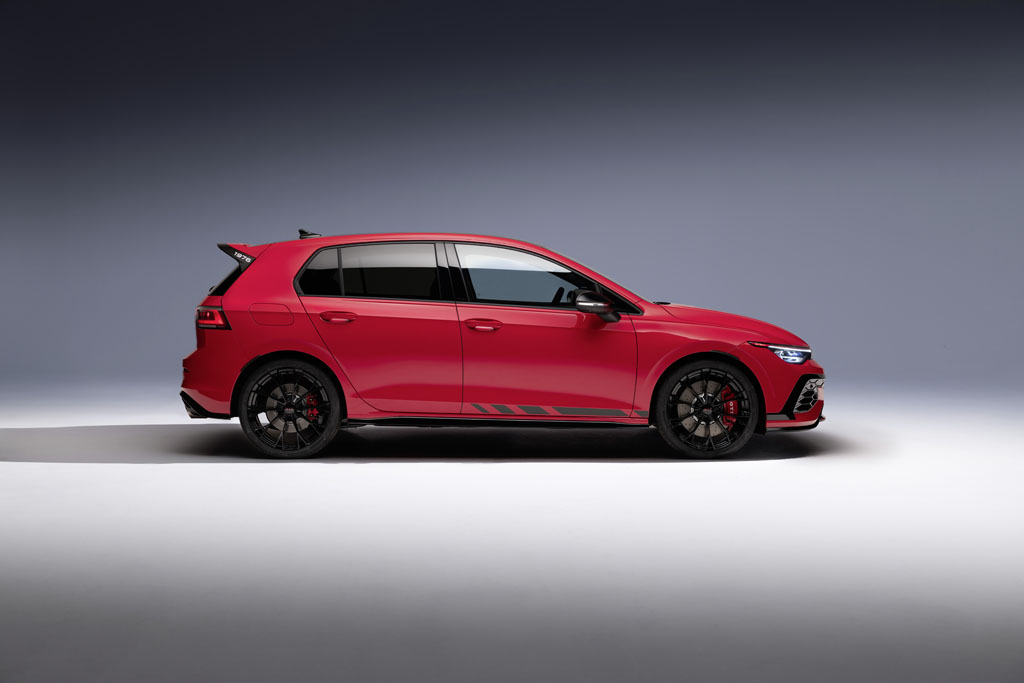
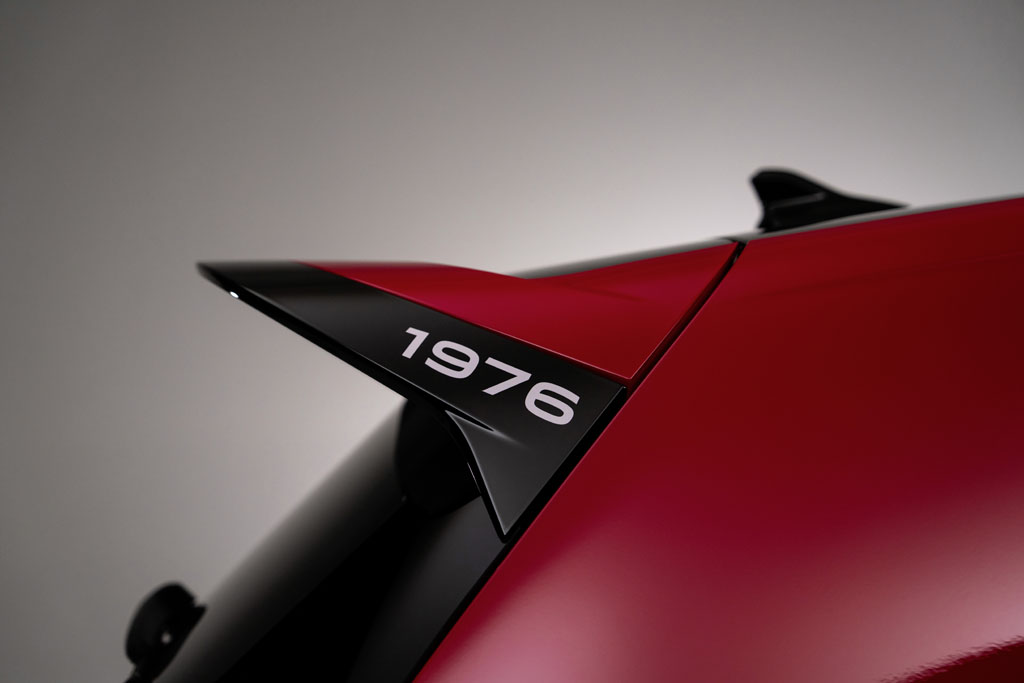
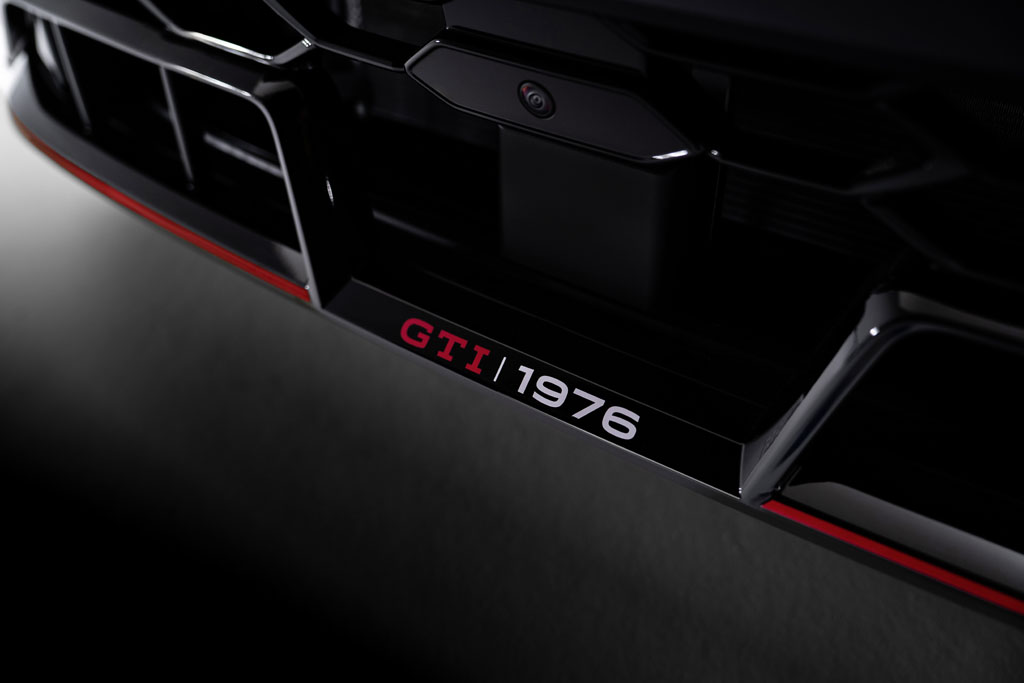
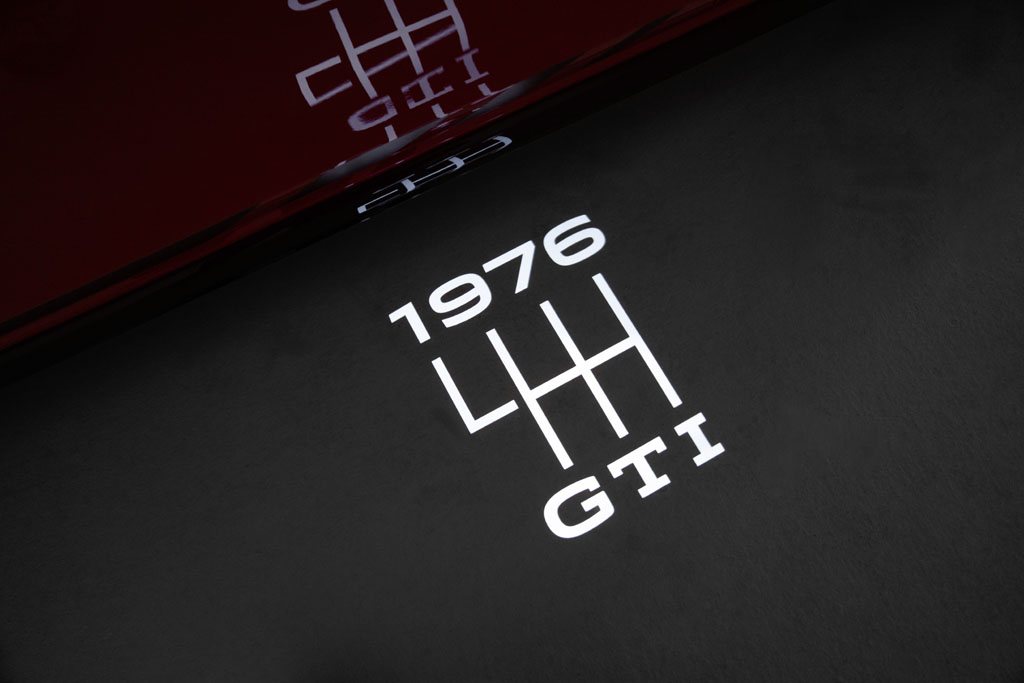
Visually, Volkswagen has exercised a reasonable amount of restraint with the GTI 1976. There are additional red accents along the front splitter, blacked-out Volkswagen emblems, commemorative graphics, and a set of 19-inch Queenstown alloy wheels that take inspiration from GTIs of the past. Even the exterior mirrors project special anniversary lettering onto the ground. Buyers will have their choice of Pure White, Grenadilla Black Metallic, or Tornado Red, the latter of which would probably be our pick given its historical significance within the GTI family.
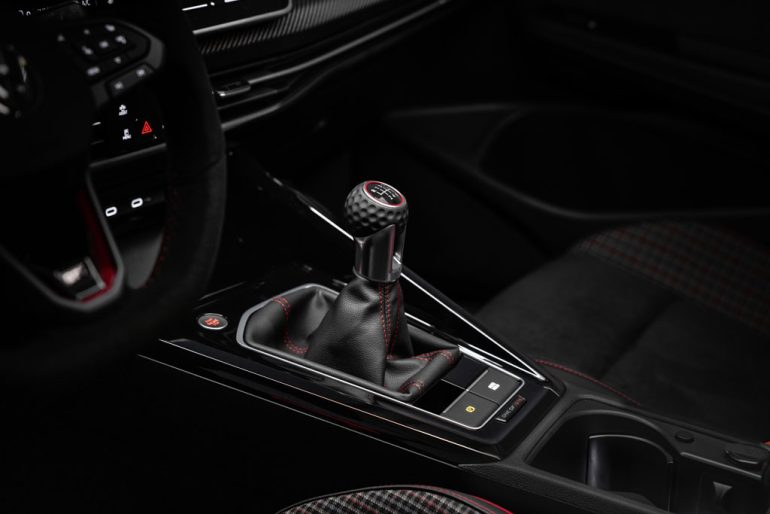
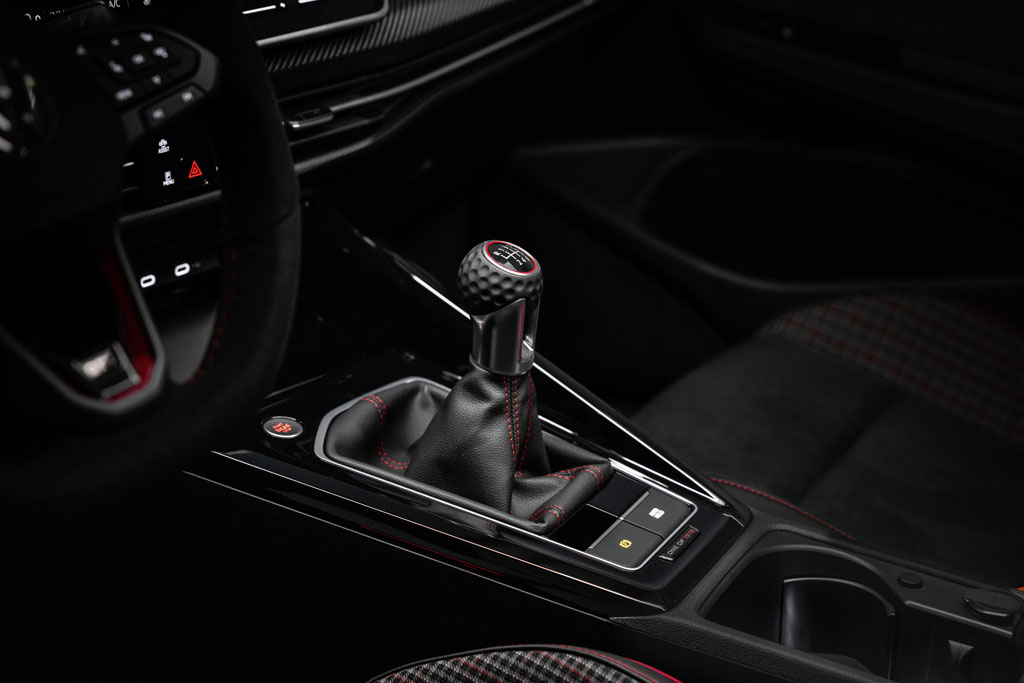
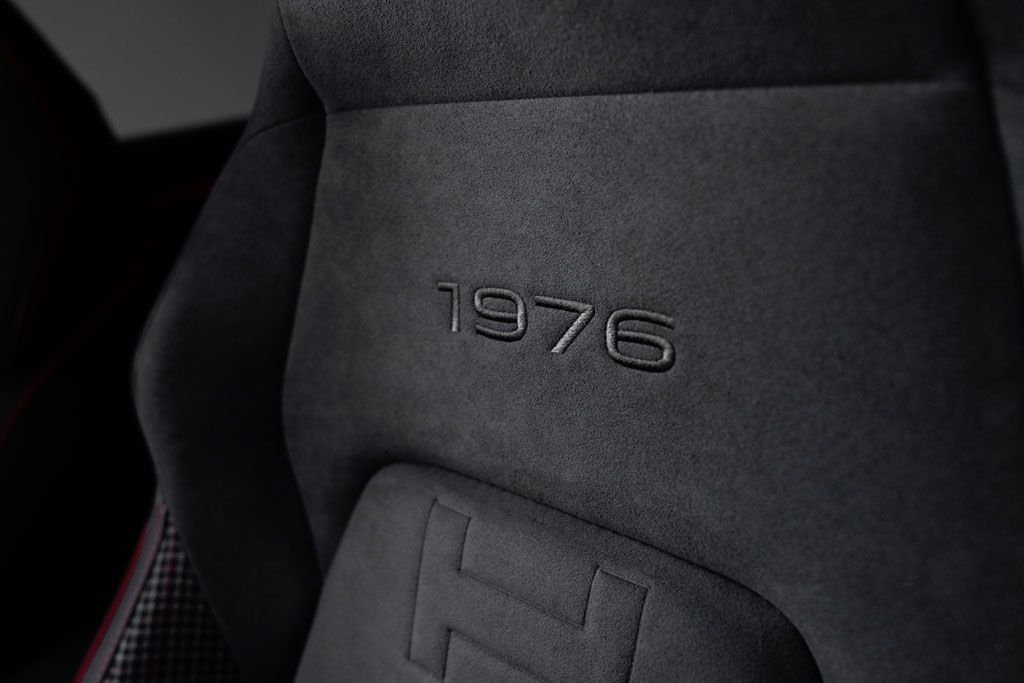
Inside, arguably the coolest detail is the return of the iconic golf ball shift knob. It’s such a simple thing, but anyone who has spent time behind the wheel of an older GTI can appreciate Volkswagen bringing back one of the car’s most recognizable interior features. Exclusive sport seat upholstery, red seatbelts, carbon-fiber decorative trim, a red accelerator pedal, and an ArtVelours-wrapped steering wheel further distinguish the anniversary model. There’s something rather appealing about Volkswagen celebrating its history through physical touchpoints that drivers interact with instead of relying on another flashy graphic buried within an infotainment screen.
Beyond the nostalgic bits, the GTI 1976 has some serious performance hardware underneath. Volkswagen includes its adaptive chassis control system, an electronically controlled front differential lock, and progressive steering as standard equipment. Those looking to extract even more performance can opt for the GTI Performance Package, which adds lightweight 19-inch Warmenau forged wheels, a lighter exhaust system with titanium outlets, and a more aggressive suspension configuration. The package incorporates additional front-wheel negative camber, revised suspension mounting points, and recalibrated adaptive dampers, with semi-slick tires available separately. In other words, Volkswagen has essentially created a manual GTI that should be as entertaining on a challenging back road as it is capable of tackling a weekend track day.
Volkswagen has yet to announce pricing, although we wouldn’t expect the GTI 1976 to come cheap. For some perspective, the GTI Clubsport already commands more than €50,000 in Germany, while the Edition 50 carries a price of €54,540. Factor in the limited production numbers and the novelty of having a manual transmission in a modern GTI, and there’s a good chance Volkswagen will have little trouble finding buyers. The irony, of course, is that the original GTI earned its reputation by making performance accessible to the masses. Five decades later, one of its most desirable iterations could end up being an expensive collector’s item.
While we’re delighted to see Volkswagen give the manual GTI another lease on life, we can’t help but feel that American enthusiasts are getting the short end of the stick once again. Between cars like the Honda Civic Type R, Acura Integra Type S, and Toyota GR Corolla, there are still compelling examples of manufacturers catering to those who prefer to shift their own gears. We’d love to see Volkswagen reconsider its position and make the manual transmission more than a limited-production novelty. The DSG is unquestionably an excellent transmission, but outright performance and quicker shift times aren’t necessarily what make a hot hatch enjoyable. Sometimes, the satisfaction of getting a perfectly timed downshift right is worth more than shaving a few tenths off an acceleration run. If anything, the Golf GTI 1976 serves as a welcome reminder of what we’re increasingly missing in modern performance cars.

Darryl Taylor Dowe is a seasoned automotive professional with a proven track record of leading successful ventures and providing strategic consultation across the automotive industry. With years of hands-on experience in both business operations and market development, Darryl has played a key role in helping automotive brands grow and adapt in a rapidly evolving landscape. His insight and leadership have earned him recognition as a trusted expert, and his contributions to Automotive Addicts reflect his deep knowledge and passion for the business side of the car world.