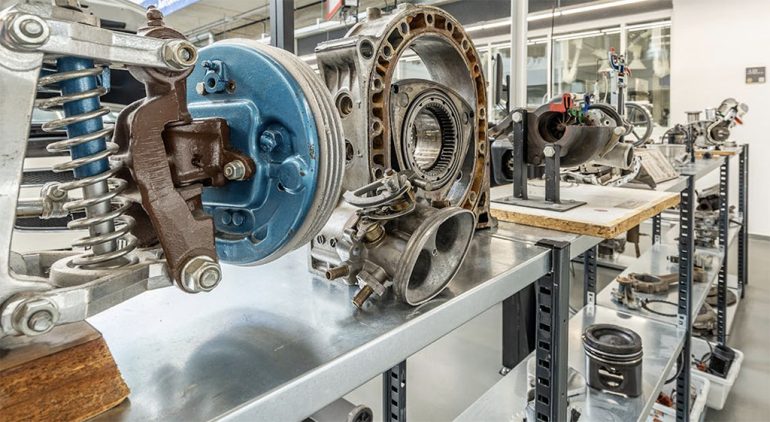
Nobody thinks about machining when they are driving. They think about it when something breaks. And nine times out of ten, when a part fails earlier than it should, the root cause traces back to how it was made. A surface that was not finished right. A bore that drifted slightly off center. A fit that looked acceptable on paper but not in practice. That is exactly why the quality of automotive parts machining work matters so much. Steel and aluminum do not become reliable components on their own. Skilled hands and the right processes are what turn raw material into something that holds up across hundreds of thousands of miles.
Understanding Automotive Parts Machining
So what does automotive parts machining actually mean when you get past the formal definition?
It starts with raw material. High-grade steel, aluminum, specialty alloys picked because of how they handle stress or heat or repeated loading cycles. From there, the work is about shaping that material into finished components that hit engineering specs with very little margin for error. Not approximately. Not close enough. On spec.
The tricky part is that the shape is only half of it. A component that looks correct but has been through a poorly controlled machining process may have internal stresses or a compromised grain structure that will cause it to fail under load. Every cut, every pass, every finishing step has to be done in a way that preserves what the material was supposed to bring to the part in the first place.
Yijin Solution in Homestead, FL does this work every day across automotive, aerospace, and medical sectors. Their approach uses multi-stage methods that refine each workpiece carefully at every step, so what ships to the client is not just the right shape but genuinely reliable in the field.
Key Machining Processes Used in the Automotive Industry
Automotive manufacturing pulls from a core set of machining processes. Each one handles specific types of geometry and specific types of parts.
- Turning: Shafts, brake discs, bushings. Cylindrical parts that need accurate inner and outer surfaces. The workpiece rotates while a cutting tool shapes it, and for this category of part there is really no better process. It has been the backbone of precision cylindrical machining for a long time and that has not changed.
- Milling: Complex features, gearbox housings, grooves, contours that turning cannot handle. Multi-point cutting tools work through the material in multiple directions, producing geometry that would otherwise be impossible to achieve. When a part drawing has a lot going on, milling is usually involved.
- Grinding: Think of grinding as the final word on a part’s dimensions. By the time a component reaches this stage it is mostly finished. What grinding does is bring critical surfaces like bearing journals and gear teeth to the exact dimensions and surface quality that determine how long a part actually lasts in service.
- Drilling and Boring: Engine blocks, cylinder heads, housing parts. These all depend on holes that are located precisely and sized accurately for assembly and alignment. Drilling puts the holes in. Boring brings them to final specification. Both steps matter and neither one is forgiving of carelessness.
- CNC Machining: Computer Numerical Control ties turning, milling, drilling and other operations into a single automated cycle. Software controls every movement, which takes human variability out of the equation in a meaningful way. Errors go down. Repeatability goes up. For automotive production volumes that kind of consistency is not a luxury.
At their Homestead facility, Yijin Solution runs advanced equipment across all of these processes. Their team matches each technique to what the specific job actually requires rather than defaulting to whatever is most convenient.
Commonly Machined Automotive Parts
The range of parts that come out of automotive machining operations is broader than most people picture.
- Engine Components: Cylinder blocks and heads get machined to extremely precise specifications because piston and valve geometry directly affects how an engine performs and how long it lasts. Crankshafts and connecting rods carry enormous cyclical loads and need surfaces that are smooth and balanced in a way that only careful machining produces.
- Transmission and Suspension Parts: Housings, knuckles, assemblies. When these parts do not fit together correctly the symptoms show up as vibration, noise, or handling that does not feel right. The tolerances on transmission and suspension components are tight for a reason and hitting them consistently is what separates good machining from acceptable machining.
- Exhaust System Parts: Getting smooth internal channels in manifolds and headers requires specialized work. The geometry affects exhaust flow and heat management in ways that influence both performance and emissions. Not every shop has the setup or experience to handle this category well.
- Trim Components: Dashboards, handles, decorative grilles. These get machined for fit, finish, and appearance. They are not safety-critical the way engine parts are but they matter to the overall quality impression a vehicle makes and they still have to be produced to spec.
Yijin Solution handles metal and plastic parts across this entire range, from engine components down to interior details, managing both one-off prototypes and full production runs for major automotive suppliers.
Advancements in Automotive Machining Technology
The technology behind automotive machining keeps moving and the practical impact on what shops can actually deliver has been significant.
- High-Precision CNC Machining: Modern CNC systems hold micron-level tolerances on engine cylinder bores and other demanding geometries. That level of accuracy has real effects on fuel efficiency and engine performance. Not theoretical effects. Measurable ones that show up in real vehicles.
- Toolpath Optimization and Multi-Machine Collaboration: Software coordination between machines has gotten genuinely sophisticated. Multiple machines working in sequence with minimal downtime between operations means higher output without pushing quality down. For automotive clients running tight schedules that matters a lot.
- Surface Finishes and Coatings: Anodizing and powder coating after machining protect parts from corrosion and wear in the environments they actually operate in. An engine bay is a harsh place. Finishing processes extend how long parts hold up there and customers notice that over years of ownership.
- Additive Manufacturing Integration: Combining traditional subtractive machining with 3D printing has opened up part designs and prototyping speeds that were not practical before. The automotive industry has been genuinely quick to figure out where this combination is useful.
Challenges and Quality Considerations in Machining
The challenges in automotive machining are real and worth understanding clearly, because they are what separate shops doing this work properly from shops that get by most of the time.
- Maintaining Tight Tolerances: There is no acceptable version of being slightly off on an engine piston or valve guide. Small dimensional errors lead to poor fit, reduced performance, and components that fail before they should. This is an area where close enough is not a category that exists.
- Surface Finish Consistency: Part to part variation in surface finish increases friction and accelerates wear in ways that accumulate quietly until something gives out. Keeping finish consistent across a production run takes real process discipline, not just capable equipment.
- Heat Treatment Issues: Certain parts need heat treatment after machining to reach required hardness or toughness. Managing that without introducing warpage requires experience and tight process control. It looks manageable until the first time something warps and has to be scrapped.
- Error Prevention: Manual setups and older machinery create opportunities for defects to slip through. CNC automation and coordinate measuring machines close those gaps, but only at shops that have actually built them into their standard workflow rather than using them occasionally.
Future Trends Shaping Automotive Parts Machining
The automotive industry is going through changes that are creating real new demands on machining operations. The shops positioned well for what is coming are the ones paying attention now.
- Electrification Requirements: Battery cases, specialized connectors, precision components for electric drivetrains. These are not traditional combustion parts and they require capabilities some shops are still building out. The EV transition is already changing what clients need and it is not slowing down.
- High-Speed, High-Precision Milling: Better tooling and faster machines keep pushing production speeds higher without accuracy tradeoffs. For automotive plants running just-in-time manufacturing that directly affects how reliably they can meet their own schedules.
- Integrated Manufacturing Solutions: Connecting design, machining, and inspection in a continuous digital workflow compresses the time from drawing to finished part in a way that makes rapid customization practical. Shops that have built this capability deliver faster and with fewer handoff errors.
About Yijin Solution
Business: Yijin Solution
Spokesperson: Gavin Yi
Position: CEO
Phone: +1 626 263 5841
Email: [email protected]
Location: 760 NW 10th Ave, Homestead, FL 33030
Website: http://yijinsolution.com/
Frequently Asked Questions About Automotive Parts Machining
What is automotive parts machining and why is it important?
It is the process of shaping steel, aluminum, and specialty metals into precise vehicle components through turning, milling, grinding, and related techniques. Vehicle safety and reliability depend directly on parts being manufactured to spec, which is exactly what machining makes possible.
Which machining processes are commonly used in the automotive industry?
Turning for cylindrical parts like shafts and brake discs, milling for complex geometry like gearboxes, grinding for precision finishing on bearing and gear surfaces, drilling and boring for engine and housing holes, and CNC machining that integrates these operations into automated cycles.
What automotive parts are typically machined?
Engine components like cylinder blocks and crankshafts, transmission and suspension parts like housings and knuckles, exhaust parts like manifolds and headers, and trim components like dashboards and handles.
How has CNC technology advanced automotive parts machining?
It enables micron-level tolerances, integrates multiple operations into single automated cycles, removes human variability from the process, improves repeatability across large production runs, and allows machine coordination that increases throughput without sacrificing accuracy.
What challenges do manufacturers face in automotive parts machining?
Holding tight tolerances consistently, keeping surface finish uniform across production runs, managing post-machining heat treatment without warping parts, and replacing error-prone manual setups with CNC automation and measurement systems.
How is automotive parts machining evolving to meet future trends?
Shops are developing EV component capabilities, using faster high-precision milling to meet tighter production schedules, and integrating design, machining, and inspection into connected digital workflows that shorten development cycles and support rapid customization.
Automotive Addicts Contributors are a collective of guest writers, industry professionals, and passionate enthusiasts who bring fresh perspectives to the Automotive Addicts platform. Focused on delivering timely news, in-depth reviews, and unique insights, these contributors help keep the site dynamic and engaging. Many use the platform to expand their reach and build credibility within the automotive media world, adding depth and variety to the content that drives the Automotive Addicts community.