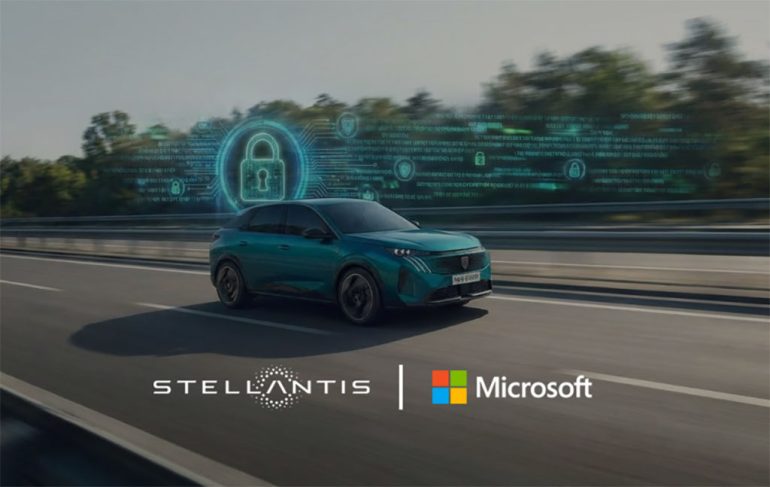
Stellantis is making another clear move to close the gap between traditional car building and the tech-first future now reshaping the industry. The automaker has signed a five-year strategic partnership with Microsoft focused on artificial intelligence, cybersecurity, and engineering, signaling just how important software and connected services have become for the company’s next chapter. In an era where automakers are being judged as much on digital capability as horsepower and design, this is the kind of deal that feels less optional and more necessary.
What stands out here is the scale of the ambition. Stellantis and Microsoft say they will work together on more than 100 AI initiatives, covering everything from product development and validation to predictive maintenance, testing, and the rollout of digital services. That may sound broad, but it points to something bigger than just adding smarter voice controls or another flashy app. Stellantis appears to be using AI as a tool to tighten up the entire business, from how vehicles are engineered to how digital features are delivered to customers.
There is also a serious cybersecurity angle to this partnership, and that may end up being one of the more meaningful parts of the agreement. As vehicles become more connected and software-defined, the attack surface grows right along with them. Stellantis says it will strengthen its global cyber defense center with AI-driven analytics that span IT systems, connected vehicles, manufacturing sites, mobile apps, and digital products. For a company with a huge global footprint and a long list of brands, that kind of protection is no longer just a back-office concern. It is part of the ownership experience and part of maintaining trust.
The infrastructure side of the agreement may be just as important as the consumer-facing benefits. Stellantis plans to continue modernizing its systems on Microsoft Azure with a goal of cutting its data center footprint by 60% by 2029. That suggests this partnership is not only about building smarter tools, but also about making the company itself more efficient, scalable, and responsive. For Stellantis, which has leaned on outside tech expertise before and has adjusted some of its software strategy along the way, this feels like a more grounded attempt to build long-term digital capability where it matters most.
Taken together, the Microsoft deal shows Stellantis understands the race is no longer just about launching new models. It is about building a smarter ecosystem around those vehicles while keeping pace with rivals that have been far quicker to embrace software, AI, and connected features as core selling points. Whether this partnership changes the experience in a way customers can truly feel remains to be seen, but the direction is clear. Stellantis wants to be more than a legacy automaker trying to catch up. It wants to prove it can still move with urgency in a market that is changing fast.

Darryl Taylor Dowe is a seasoned automotive professional with a proven track record of leading successful ventures and providing strategic consultation across the automotive industry. With years of hands-on experience in both business operations and market development, Darryl has played a key role in helping automotive brands grow and adapt in a rapidly evolving landscape. His insight and leadership have earned him recognition as a trusted expert, and his contributions to Automotive Addicts reflect his deep knowledge and passion for the business side of the car world.