
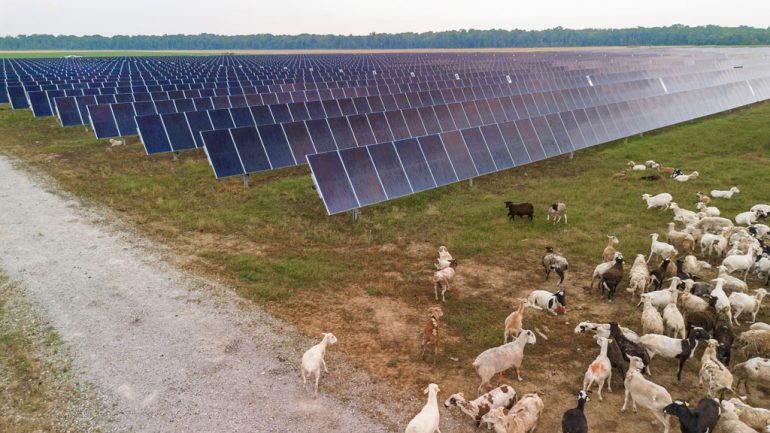
General Motors just checked off a milestone that feels bigger than a corporate sustainability headline. The automaker says it has now secured enough renewable energy to match 100% of the electricity used across its U.S. facilities, becoming the first U.S. automaker to get there. For a company with sprawling assembly plants, engineering campuses, and office space spread across the country, that is not just a symbolic win. It is a sign that the business of building cars is becoming just as much about managing energy as it is about metal, batteries, and software.
What makes this notable is that GM is framing the move as more than an environmental talking point. The company says its global operations matched 70% of electricity use with renewables in 2025, nearly double its 2023 level, while its operational emissions have fallen 52% since 2018. That gives the announcement some real weight. This is not simply about hanging a green banner over the front door. It is part of a broader push to shrink the footprint of the factories and facilities that support everything from the Cadillac Lyriq to the Chevrolet Silverado EV.
There is also a practical side to all of this that should resonate with anyone watching the auto industry navigate an unpredictable economy. GM’s renewable mix in the U.S. comes from a blend of utility programs, virtual power purchase agreements, renewable energy credits, default delivered renewable energy, and a smaller slice from on-site generation and landfill gas. In plain English, GM is building an energy portfolio designed to smooth out volatility and reduce exposure to wild swings in electricity pricing. For an automaker making multibillion-dollar product bets, stable energy costs are not a side benefit. They matter.
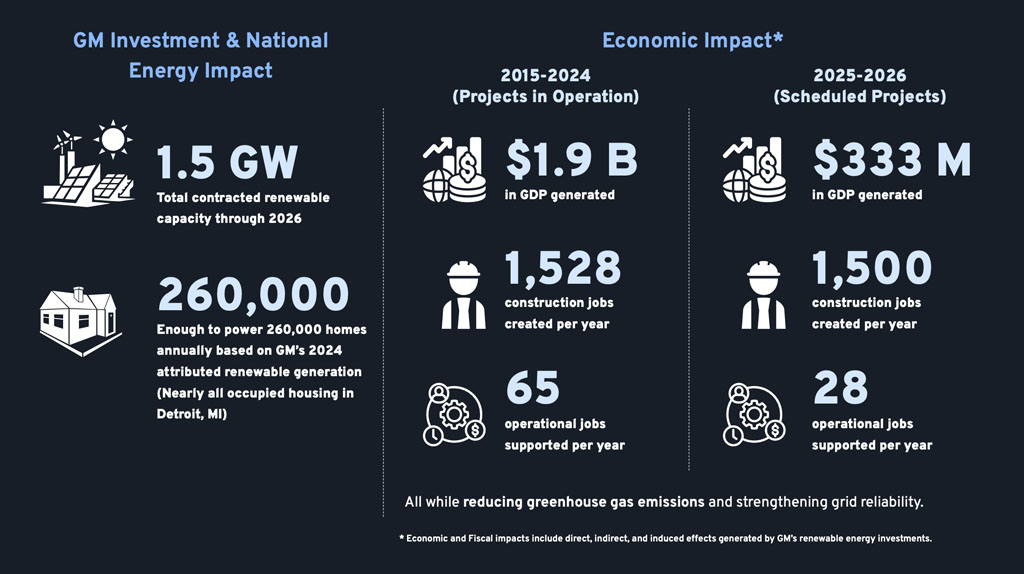
The local economic angle is worth paying attention to, too. GM says its domestic renewable energy investments have generated about $1.9 billion in GDP impact since 2015, with more on the way from projects contracted through 2026. Those projects have also supported an average of 1,500 construction jobs per year in states including Michigan, Texas, Ohio, Arkansas, and Illinois. That means this is not only about what powers a plant like Factory ZERO in Detroit or Spring Hill Manufacturing in Tennessee. It is also about what those power deals mean for communities, tax bases, and local infrastructure around them.
Of course, none of this suddenly turns the auto industry into a clean-sheet sustainability story. Building vehicles still takes enormous resources, and the road to a lower-emissions future is more complicated than any single press release suggests. Even so, GM deserves credit for reaching a benchmark that once sounded far more aspirational than achievable. In a business where the EV conversation usually centers on range, charging, and sales momentum, this is a reminder that the cleaner-car equation starts long before a customer presses the start button.

Mike Floyd is a finance executive by trade and a car enthusiast at heart. As a CFO with a keen eye for detail and strategy, Mike brings his analytical mindset to the automotive world, uncovering fresh insights and unique perspectives that go beyond the surface. His passion for cars—especially his favorite, the Porsche 911, fuels his contributions to Automotive Addicts, where he blends a love for performance and design with his professional precision. Whether he’s breaking down industry trends or spotlighting emerging innovations, Mike helps keep the site both sharp and forward-thinking.