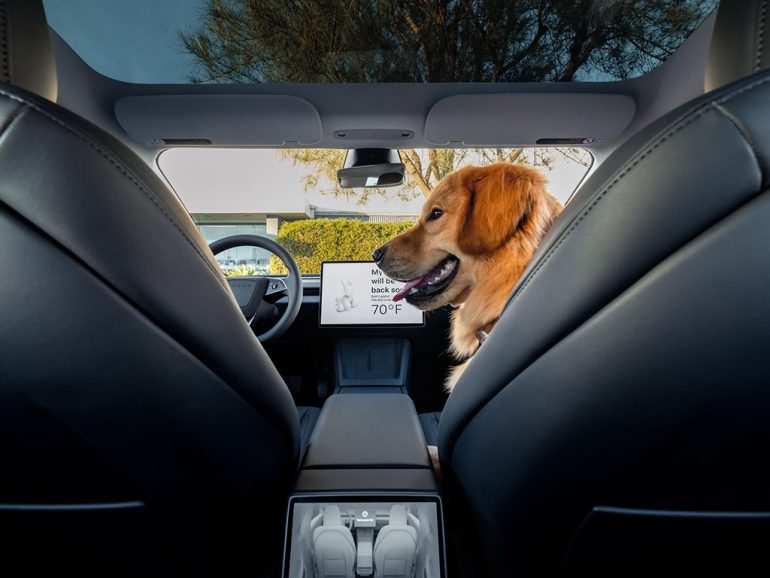
Anyone who has spent time inside a modern EV during the summer knows the downside of those beautiful panoramic glass roofs. They look sleek, flood the cabin with natural light, and create an open-air feel, but once temperatures climb, they can quickly turn the interior into a rolling greenhouse. Tesla may have found an answer to that problem, however, as a newly uncovered patent suggests the automaker is exploring a way to transform the glass roof itself into part of the vehicle’s climate control system.
According to reports highlighted by AutoBlog, Tesla’s latest patent focuses on improving cabin cooling efficiency by integrating airflow directly into the panoramic roof structure. Instead of relying solely on traditional air-conditioning vents, the design uses a layered glass system featuring perforated glass combined with a honeycomb-style center structure. The idea is surprisingly clever. Cool air would disperse gently downward through the roof while hot air naturally rises upward into the system, helping regulate cabin temperatures more efficiently and evenly.
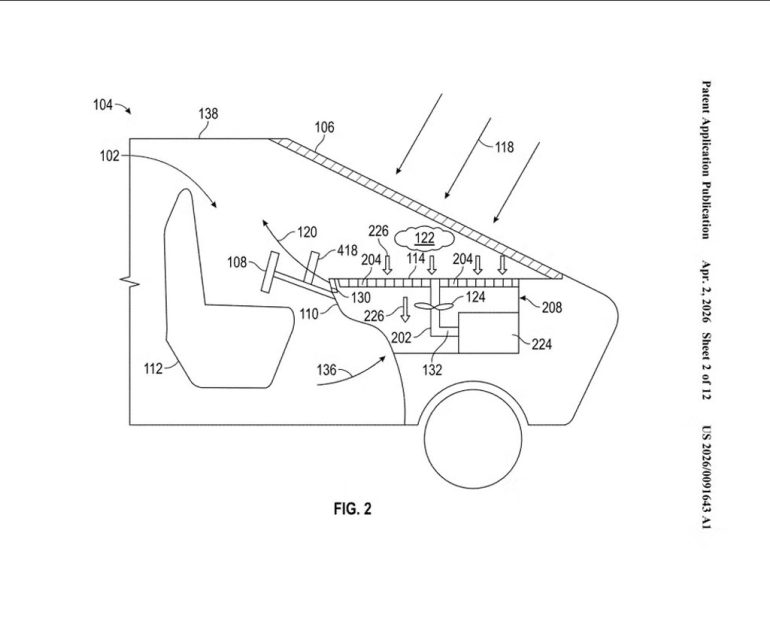
The concept goes beyond simply making passengers more comfortable. For EVs, HVAC systems can have a noticeable impact on driving range, especially during extreme weather. InsideEVs recently pointed out that Tesla also filed a separate patent involving a suction-based ventilation system designed to remove hot air from the cabin. If the two technologies were eventually paired together, Tesla could significantly reduce the strain on the air-conditioning system. Less energy spent cooling the cabin means more available battery power for driving range, which remains one of the most important selling points for electric vehicles.
What makes the idea particularly interesting is how subtle the cooling experience could become. Instead of blasting cold air directly at passengers while other parts of the cabin remain warm, the roof could create a more balanced temperature environment throughout the interior. In sunny states like California, Arizona, Florida, and Texas, where glass roofs often become heat traps, this type of system could dramatically improve comfort during daily driving. It also aligns with Tesla’s broader philosophy of finding unconventional engineering solutions to everyday automotive problems.
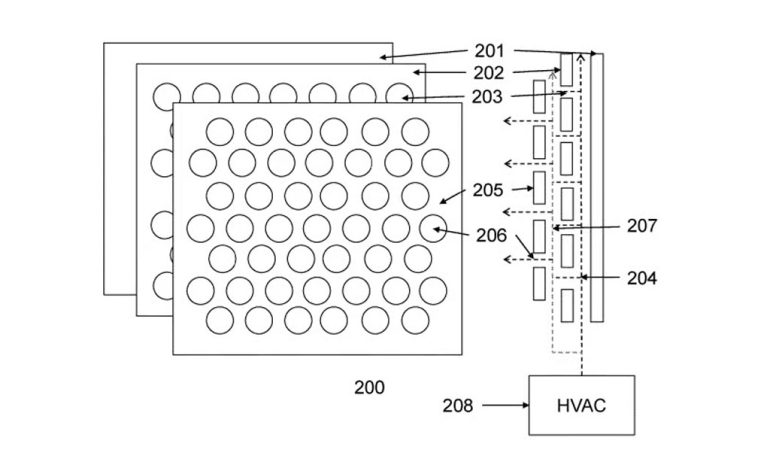
Of course, patents do not guarantee production-ready technology. There are still major hurdles that would need to be solved before something like this appears in a showroom vehicle. Manufacturing a layered honeycomb glass roof at scale would likely be expensive, and durability concerns immediately come to mind. A cracked panoramic roof is already a costly repair on many modern vehicles, and introducing perforated structures and integrated airflow channels could add another layer of complexity. Even so, the fact Tesla is dedicating engineering resources toward the idea shows how competitive EV development has become as automakers chase every possible efficiency gain.
Interestingly, the patent also references the possibility of routing warm air through the roof during colder weather, suggesting the system may eventually play a role in both heating and cooling. Whether or not this exact design ever reaches production, it is another reminder that innovation in the EV space is no longer limited to battery chemistry and acceleration numbers. Sometimes the next breakthrough comes from rethinking something as ordinary as the roof over your head.

Lloyd Tobias is a seasoned automotive journalist and passionate enthusiast with over 15 years of experience immersed in the world of cars. Whether it's exploring the latest advancements in automotive technology or keeping a close pulse on breaking industry news, Lloyd brings a sharp perspective and a deep appreciation for all things automotive. His writing blends technical insight with real-world enthusiasm, making his contributions both informative and engaging for readers who share his love for the drive. When he's not behind the keyboard or under the hood, Lloyd enjoys test driving the newest models and staying ahead of the curve in an ever-evolving automotive landscape.

Lloyd Tobias is a seasoned automotive journalist and passionate enthusiast with over 15 years of experience immersed in the world of cars. Whether it’s exploring the latest advancements in automotive technology or keeping a close pulse on breaking industry news, Lloyd brings a sharp perspective and a deep appreciation for all things automotive. His writing blends technical insight with real-world enthusiasm, making his contributions both informative and engaging for readers who share his love for the drive. When he’s not behind the keyboard or under the hood, Lloyd enjoys test driving the newest models and staying ahead of the curve in an ever-evolving automotive landscape.