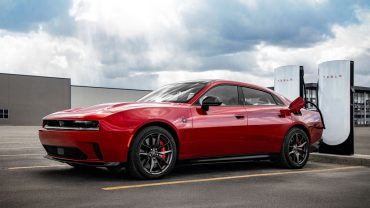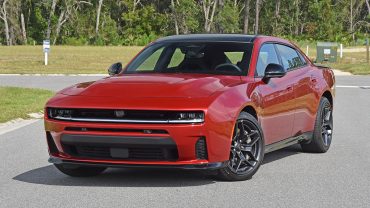
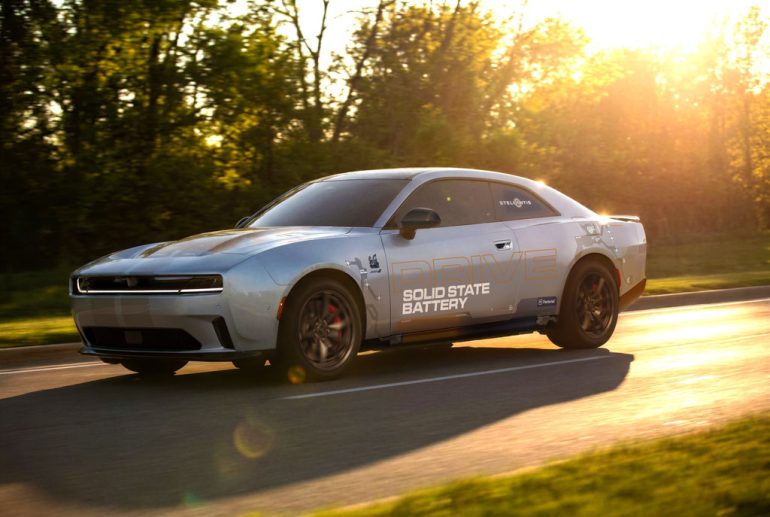
For years, solid-state batteries have been touted as the next major breakthrough in electric vehicle technology. Automakers, suppliers, and industry analysts have all pointed to their potential to deliver longer driving range, faster charging times, improved safety, and lighter battery packs. Despite the excitement, the technology has largely remained confined to laboratories and development centers. That is beginning to change as Stellantis takes a significant step forward by putting a solid-state battery-equipped Dodge Charger Daytona on public roads for real-world testing.
The prototype Charger Daytona is powered by a battery developed by Factorial Energy, one of the leading companies focused on bringing solid-state battery technology to market. The vehicle marks the first time Factorial’s FEST, or Factorial Electrolyte System Technology, cells have been integrated into a Stellantis production-based vehicle. While this remains a test program, it represents a meaningful milestone as the technology transitions from controlled testing environments to everyday driving conditions where durability, reliability, and performance can be evaluated under real-world demands.
The numbers behind the new battery are certainly impressive. Stellantis and Factorial claim the solid-state cells deliver an energy density of 375 watt-hours per kilogram, a substantial improvement over many of today’s lithium-ion battery technologies. Higher energy density typically means more range without increasing battery size or weight, two factors that continue to influence EV performance and efficiency. Just as notable is the charging capability, with the battery reportedly able to recharge from 15% to 90% in only 18 minutes. If those figures hold up during extensive testing, they could help address one of the biggest concerns among EV buyers: charging convenience.
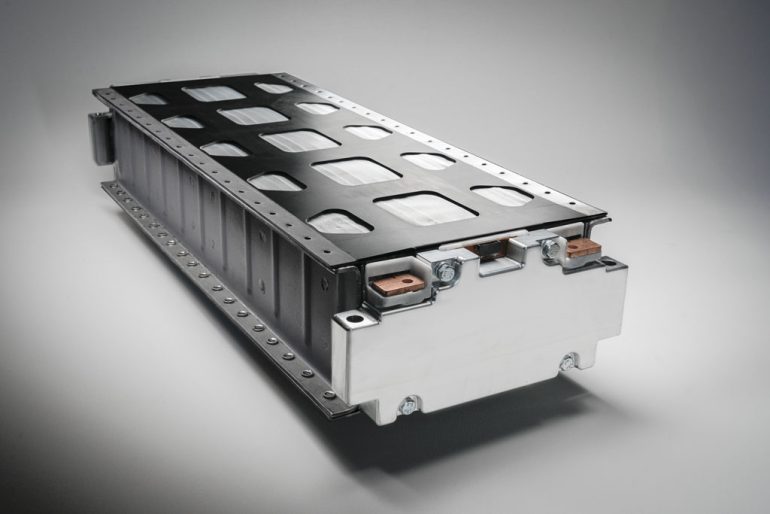
Beyond charging speed and energy storage, the companies have also highlighted the battery’s ability to operate across a wide range of temperatures. According to Stellantis and Factorial, the cells have demonstrated reliable performance in conditions ranging from -22°F to 113°F. Temperature management remains one of the most challenging aspects of EV battery development, making this capability particularly important for vehicles sold across diverse climates. To accommodate the new battery technology, Stellantis engineers modified the Charger Daytona’s existing battery architecture, control systems, and pack design while maintaining safety and durability standards.
The move into road testing suggests that Stellantis sees genuine production potential in solid-state technology. While the automaker has not provided a timeline for commercialization, many manufacturers across the industry continue targeting the latter part of this decade for broader deployment. Real-world testing programs like this one are critical because they expose new technologies to countless variables that simply cannot be replicated in a laboratory. Every mile driven helps engineers gather valuable data that can accelerate development and refine the technology for future production vehicles.
For Dodge enthusiasts and EV advocates alike, the Charger Daytona serves as an intriguing test bed for what could become one of the most transformative advancements in modern automotive engineering. If solid-state batteries can ultimately deliver on their promise of faster charging, increased range, lower weight, and improved durability, they could dramatically reshape the electric vehicle landscape. While there is still work to be done before the technology reaches dealership showrooms, Stellantis’ decision to begin real-world testing is an encouraging sign that the future many have been talking about for years may finally be getting closer.

Lloyd Tobias is a seasoned automotive journalist and passionate enthusiast with over 15 years of experience immersed in the world of cars. Whether it’s exploring the latest advancements in automotive technology or keeping a close pulse on breaking industry news, Lloyd brings a sharp perspective and a deep appreciation for all things automotive. His writing blends technical insight with real-world enthusiasm, making his contributions both informative and engaging for readers who share his love for the drive. When he’s not behind the keyboard or under the hood, Lloyd enjoys test driving the newest models and staying ahead of the curve in an ever-evolving automotive landscape.