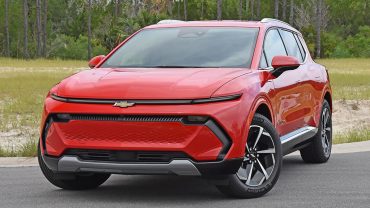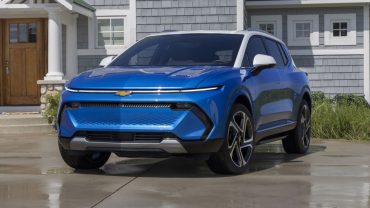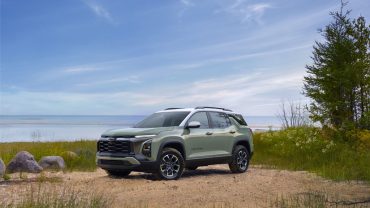
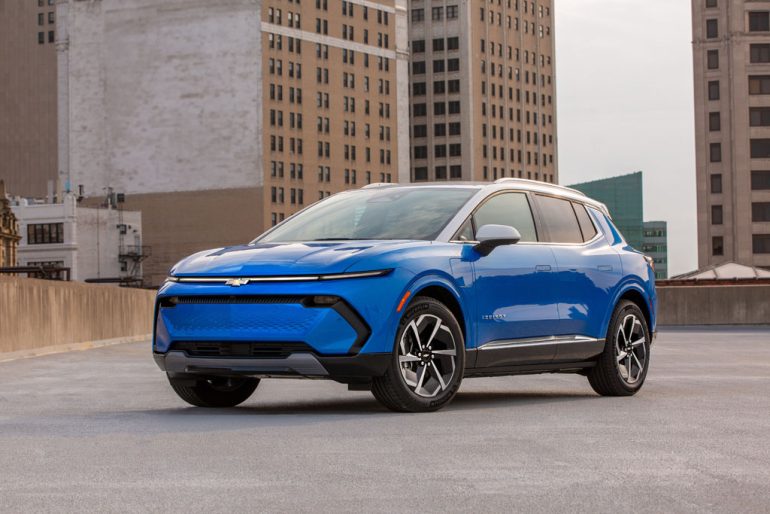
Shopping for an EV in 2026 means shopping under different rules than even a year ago, and it’s important to start there before talking trim levels and invoice numbers. The federal $7,500 new-EV tax credit and the $4,000 used-EV credit both ended for vehicles acquired after September 30, 2025, under the One Big Beautiful Bill Act, which means that discount simply isn’t on the table for 2026 purchases the way it was when the Equinox EV first launched. That changes the math on this vehicle more than on most, since the Equinox EV’s biggest selling point has always been its combination of long range and a genuinely low starting price, without a federal credit stacked on top, the sticker price itself, and how well you negotiate it, matters more than it used to. This guide breaks down what Chevrolet dealers actually pay across all three Equinox EV trims, what incentives are actually still available in 2026, the EV-specific details worth understanding before you buy, and how to get real competing dealer quotes before you negotiate.
The 2026 Equinox EV starts at $36,795 for the LT1 and climbs to $45,895 for the range-topping RS, with the LT2 landing in between. Kelley Blue Book notes the Equinox EV remains among the most affordable electric compact SUVs in base form, starting thousands less than rivals like the Ford Mustang Mach-E, Hyundai Ioniq 5, Kia EV6, Tesla Model Y, Volkswagen ID.4, Nissan Ariya, Toyota bZ, and Subaru Solterra, though that price advantage narrows considerably at the LT2 and RS trims, where KBB notes the Equinox EV has closer parity with those competitors rather than a clear undercut.
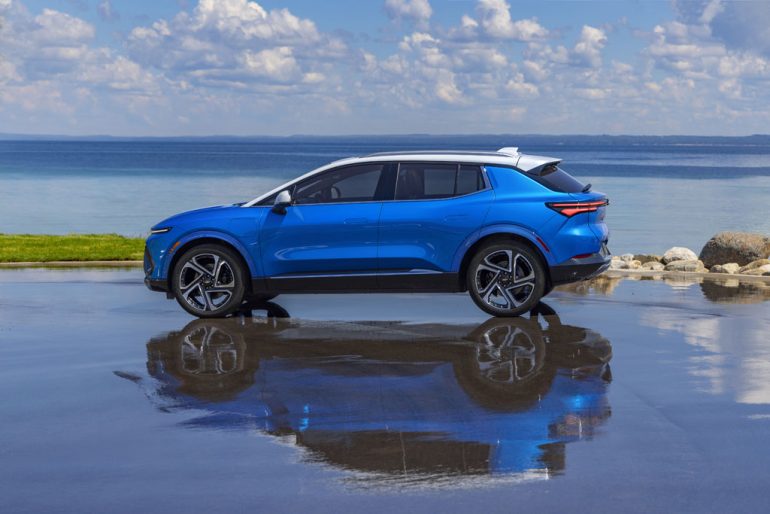
Every Equinox EV shares the same battery pack and a single front-mounted electric motor producing 220 horsepower and 243 lb-ft of torque, delivering an EPA-estimated 319 miles of range in front-wheel-drive form. An available second motor adds all-wheel drive, raising output to 300 horsepower and 355 lb-ft of torque while trimming range slightly to 307 miles, and unlocking a 1,500-pound towing capacity that front-wheel-drive models don’t offer. TrueCar’s transaction data shows real buyers currently paying about 6.9 percent below MSRP on the base LT1, a healthy discount that, combined with the loss of the federal credit, makes negotiating the sticker price itself more important than it’s been on this vehicle in past model years.
Here’s the situation as it actually stands, since a lot of outdated information is still circulating. The federal Section 30D new-EV credit, which previously knocked up to $7,500 off a qualifying purchase, ended for vehicles acquired after September 30, 2025, and there is no indication of a broad reinstatement as of mid-2026. If you’re buying an Equinox EV today, you should not expect that credit to apply, regardless of what older articles, dealer marketing, or even some sales staff may still reference out of habit.
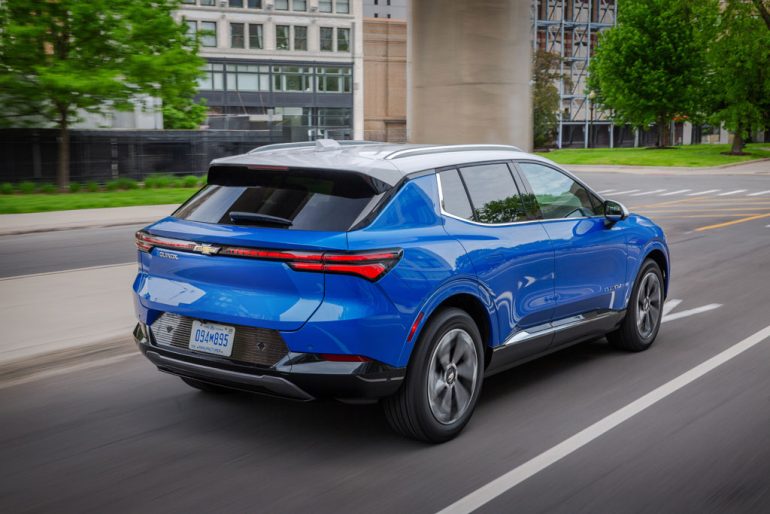
What does still exist is narrower but real. The One Big Beautiful Bill Act introduced a new federal deduction allowing eligible buyers to deduct up to $10,000 per year in interest paid on qualifying new vehicle loans, provided the vehicle is American-made, meaning final assembly took place in the United States, confirmed via the “Final Assembly Point” listed on the vehicle’s Monroney sticker. This deduction is available to single filers with modified adjusted gross income up to $100,000 and joint filers up to $200,000, phasing out gradually above those thresholds. Separately, several states maintain their own EV purchase incentives independent of federal rules, with active programs in California, Colorado, New York, New Jersey, Oregon, Massachusetts, Vermont, and Illinois, among others, with amounts and eligibility varying significantly by state. It’s worth checking your specific state’s program before assuming no incentive applies to your purchase at all.
The invoice price is what a Chevrolet dealer actually paid General Motors for the vehicle on their lot, and on the 2026 Equinox EV, Kelley Blue Book’s Fair Purchase Pricing currently suggests paying $2,195 to $3,495 below MSRP depending on trim and equipment. That gap from MSRP typically reflects an underlying invoice spread of roughly $1,400 to $2,600 depending on trim, with the wider dollar gap appearing on LT2 and RS given their higher price points and additional equipment.
GM’s dealer holdback adds roughly 2 to 3 percent of base MSRP back to the dealer after a sale closes, which on a $41,795 LT2 represents approximately $835 to $1,255 in additional margin sitting beneath the invoice figure entirely. With the federal purchase credit gone, dealers and GM itself have real incentive to keep EV sales moving through direct pricing and financing offers rather than relying on a government credit to do the work, which is exactly the dynamic our Insider Access to Dealer Pricing tool is built to help you take advantage of, putting real competing local dealer quotes in front of you before you ever step onto a lot.
Edmunds’ own buying advice here is direct: the base LT1 is a smart buy if you want a spacious EV with great range for the money, but they specifically recommend paying more for the LT2 given how much additional content it adds while still undercutting many competitors.
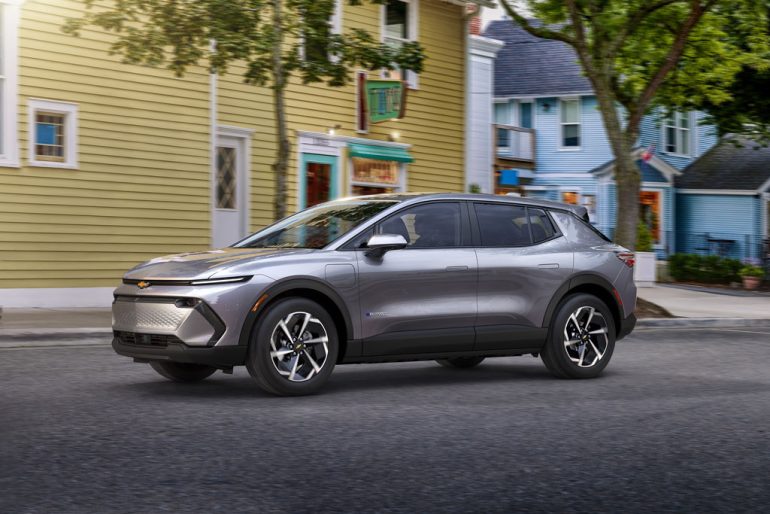
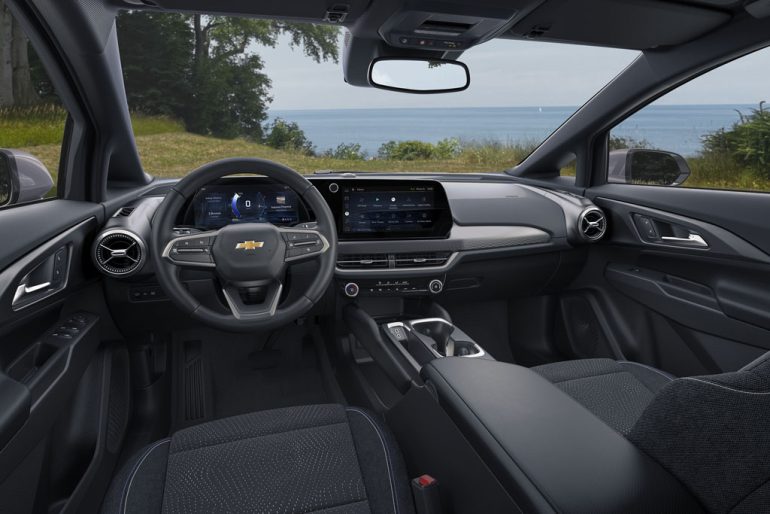
LT1 ($36,795) delivers the same 319-mile range as every other trim, a 17.7-inch touchscreen, and more than 20 standard safety features, all at the lineup’s lowest price point. A new Midnight Package became available on LT1 for 2026, and a dual-level charge cord is now standard equipment.
LT2 ($41,795) is the trim Edmunds explicitly recommends stretching to, adding bright roof rails, HD Surround Vision, wireless phone charging, and notably, this is the entry point for GM’s Super Cruise hands-free driver assistance system, one of the more capable hands-free highway driving systems currently available and not offered at all on the base LT1.
RS ($45,895) tops the lineup with bold styling cues including black emblems, mirrors, and standard 21-inch black wheels, along with sport-tuned handling. Optional all-wheel drive is available across all three trims, but Edmunds’ own testing found the AWD version noticeably quicker, dropping the 0-to-60 time from a leisurely 7.8 seconds in front-wheel-drive form to a considerably stronger 5.7 seconds with the dual-motor setup.
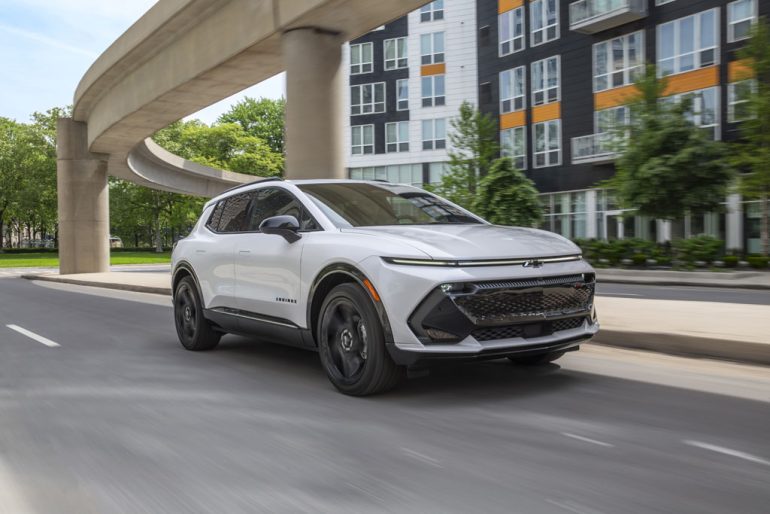
It’s worth going into an Equinox EV purchase with accurate expectations about a few specific shortcomings that show up repeatedly in owner reviews and professional testing. The most significant: the Equinox EV does not currently offer wireless Apple CarPlay or Android Auto, a notable omission in a vehicle this otherwise tech-forward, and one that owner reviews flag as a genuine frustration rather than a minor quibble. Some dealerships have indicated this may be addressed in a future software update, but as of now, it’s not available, and you shouldn’t purchase expecting it to be patched in by a specific date.
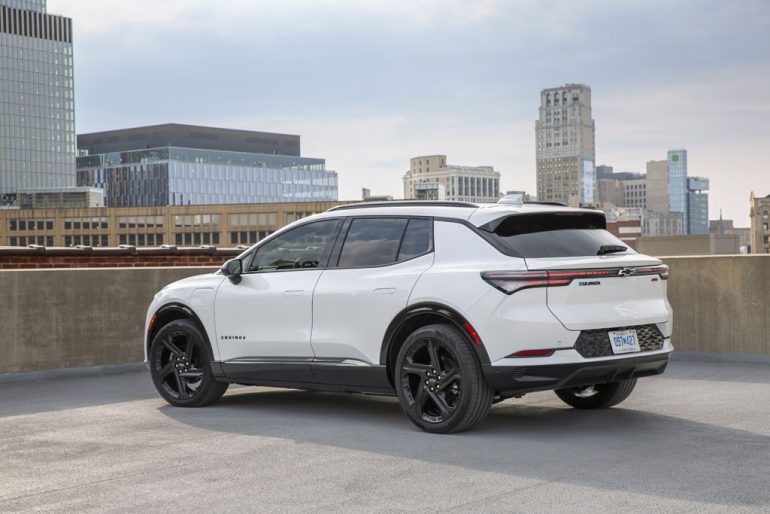
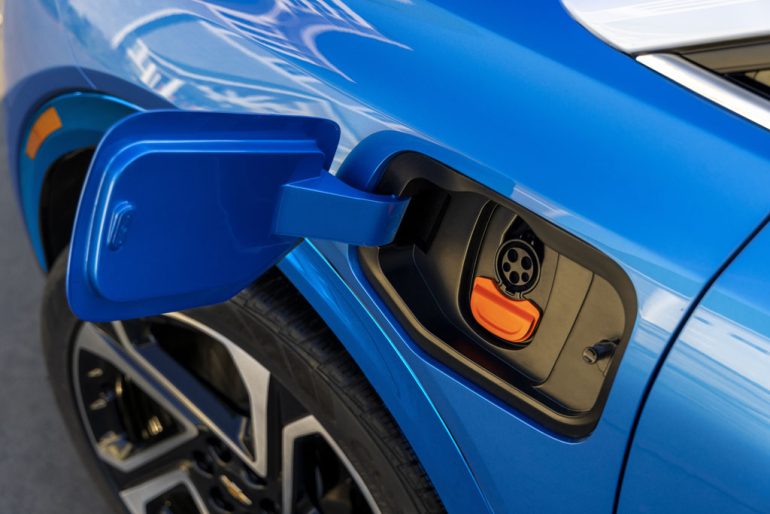
DC fast-charging speed is also merely decent rather than class-leading, adding roughly 100 miles of range in about 19 minutes, which works out to a charge rate modestly below the current EV industry average. For most daily driving and home charging, this won’t matter much, an 11.5 kW Level 2 home charger adds about 34 miles of range per hour overnight, but if frequent road trips with fast public charging are part of your plan, it’s worth comparing this figure directly against competitors like the Ioniq 5 or EV6 before deciding. Owner reviews also note cold-weather range reduction, a characteristic of all EVs but worth factoring in if you live somewhere with serious winters, along with some complaints about interior plastic quality and dashboard glare onto the windshield in certain lighting conditions.
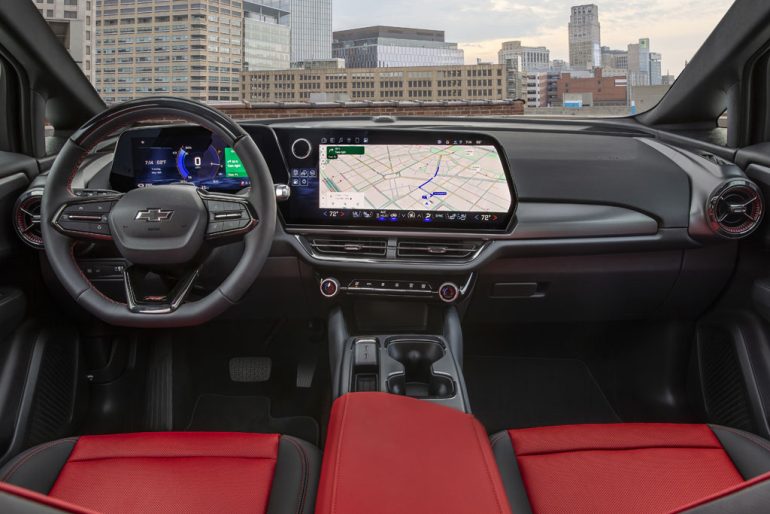
With the federal purchase credit gone, GM Financial’s own promotional financing offers become more central to the value equation than they were in past Equinox EV model years, and it’s worth asking your dealer directly what’s currently available, since EV-specific financing promotions tend to shift based on inventory and regional sales targets more frequently than gas-vehicle offers do.
Chevrolet also maintains military appreciation pricing for active duty and veteran buyers, along with discount programs for first responders including police officers, firefighters, EMTs, and paramedics, layered on top of any negotiated discount. If you’re installing a home Level 2 charger, the federal Alternative Fuel Vehicle Refueling Property Credit under Section 30C can still cover 30 percent of the cost, up to $1,000, but only for equipment placed in service before June 30, 2026 and only in eligible census tracts, so this is worth acting on quickly if it applies to your situation rather than treating it as available indefinitely. Getting a real local dealer quote that reflects negotiated pricing alongside whatever incentives genuinely apply to you through our Insider Access to Dealer Pricing tool gives you the clearest picture of your actual out-the-door cost before visiting a single dealership.
Based on KBB’s Fair Purchase data and TrueCar’s transaction data already showing buyers nearly 7 percent below MSRP, here’s a realistic target range across the 2026 Equinox EV lineup. On the LT1, $33,800 to $34,700 reflects a strong outcome, consistent with current transaction data. On the LT2, target $38,800 to $39,900. On the RS, $42,900 to $44,100 is achievable with competing quotes in hand. Add roughly $1,500 to $1,700 to any of these targets if you’re configuring with the optional all-wheel-drive dual-motor setup.
These targets assume you’ve gathered competing quotes from multiple local Chevrolet dealers, kept any trade-in discussion completely separate from the new vehicle price negotiation, and confirmed final assembly location directly if the loan interest deduction factors into your decision, since that benefit depends entirely on where your specific vehicle was built.
Without a federal credit to lean on, getting multiple dealers to compete for your business matters more on an EV purchase in 2026 than it has in years past. Click the “Get Prices” button above, select the 2026 Equinox EV trim you’re considering, and you’ll receive real pricing from local Chevrolet dealers competing directly for your purchase, typically within minutes and without visiting a single showroom.
Whether the value-focused LT1, the Super Cruise-equipped LT2, or the sportier RS fits what you’re looking for, getting competing offers first means you walk into any final negotiation already knowing what other dealers in your area are willing to offer, and with accurate information about which incentives genuinely still apply to your purchase in 2026.

Darryl Taylor Dowe is a seasoned automotive professional with a proven track record of leading successful ventures and providing strategic consultation across the automotive industry. With years of hands-on experience in both business operations and market development, Darryl has played a key role in helping automotive brands grow and adapt in a rapidly evolving landscape. His insight and leadership have earned him recognition as a trusted expert, and his contributions to Automotive Addicts reflect his deep knowledge and passion for the business side of the car world.