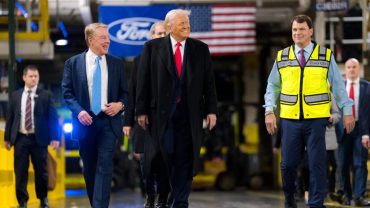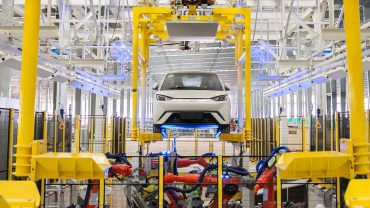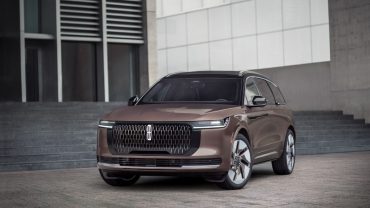
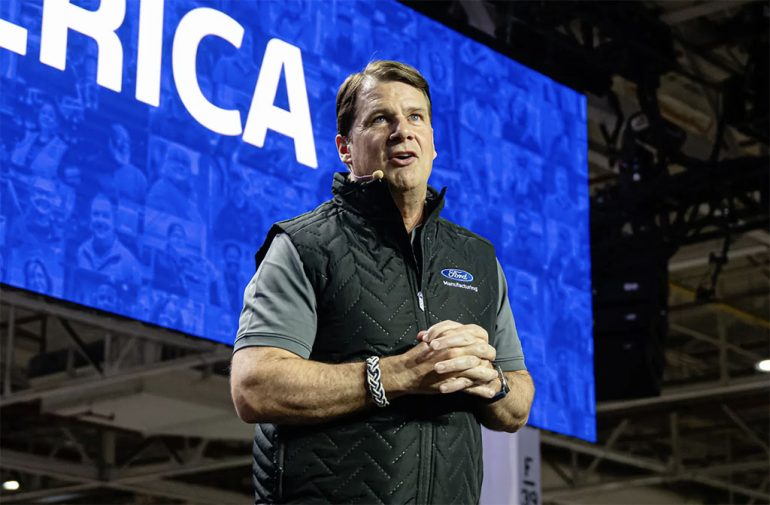
Ford CEO Jim Farley is once again sounding the alarm on Chinese automakers, but this time with a more specific timeline. According to Reuters, Farley told employees during a private town hall that Ford is preparing for the possibility that Chinese brands could enter the U.S. market within the next five to 10 years. That does not mean BYD, Geely, or other Chinese automakers are about to open American showrooms tomorrow, but it does show that Ford is planning for a future where today’s trade walls may not hold forever.
The U.S. market is currently protected by some very serious barriers. Chinese-built EVs face tariffs of about 100 percent, and federal connected-vehicle rules are set to ban Chinese software by model year 2027 and Chinese hardware by model year 2030 over national security and data privacy concerns. The Senate is also looking at broader restrictions that could make direct Chinese vehicle sales even harder. Still, Farley’s message is that Detroit cannot build its entire future around keeping China out. At some point, Ford believes it may have to compete more directly.
That concern is not theoretical. Chinese automakers have already gained ground in Mexico, and Canada could become a proving ground for limited EV sales under existing trade terms. For American automakers, that matters because both countries sit right next door, share similar consumer tastes in many segments, and could help Chinese brands learn how to tailor vehicles, pricing, and dealer strategies for North American buyers. Ford already sees the competition firsthand in Europe, where Chinese automakers have become an increasingly serious threat in the EV space.
Farley has been blunt about why this matters. Chinese automakers have become extremely good at building affordable, technology-packed EVs at lower cost, and that is exactly the kind of pressure Ford is trying to answer with its own upcoming family of affordable electric vehicles. The company has said it engineered those EVs from the ground up to match the cost efficiency and speed of its toughest global rivals. For Ford, the challenge is not only to build EVs, but to build them profitably at prices regular buyers can actually consider.
Ford’s recent joint venture with Geely in Europe shows how complicated the situation has become. On one hand, Ford is warning about Chinese competition and the risk it poses to American manufacturing. On the other, it is also working with a Chinese automaker in a region where competition is forcing everyone to get leaner and smarter. That may sound contradictory, but it reflects the reality of the modern auto business: rivals in one market can become partners in another when survival and scale are on the line.
For U.S. buyers, the big question is what this could mean down the road. If Chinese automakers eventually find a path into the American market, they would likely arrive with aggressive pricing, advanced EV software, and features that put pressure on Detroit, Japan, Korea, and Europe alike. For Ford, the warning is clear. The company cannot simply depend on policy protection and nostalgia. It has to build better, more affordable, more compelling vehicles before the competition reaches America’s doorstep in full force.

Mike Floyd is a finance executive by trade and a car enthusiast at heart. As a CFO with a keen eye for detail and strategy, Mike brings his analytical mindset to the automotive world, uncovering fresh insights and unique perspectives that go beyond the surface. His passion for cars—especially his favorite, the Porsche 911, fuels his contributions to Automotive Addicts, where he blends a love for performance and design with his professional precision. Whether he’s breaking down industry trends or spotlighting emerging innovations, Mike helps keep the site both sharp and forward-thinking.