
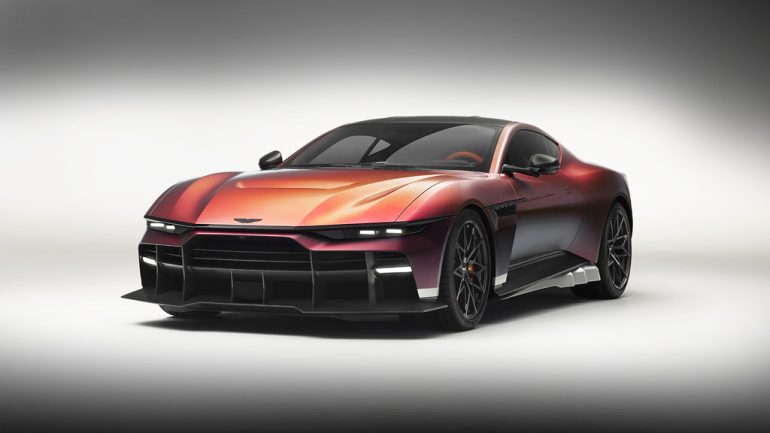
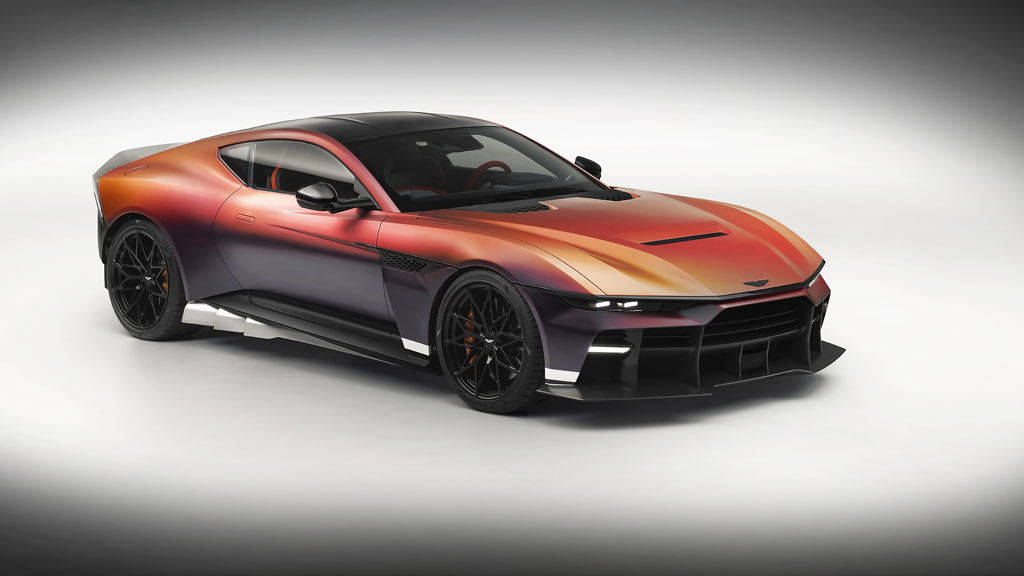
Aston Martin has used Monterey Car Week to pull the covers off one of its most extreme front-engine creations yet, the Aston Martin Valen. Developed through Q by Aston Martin together with the company’s new Special Vehicle Operations group, the Valen is a limited-production V-12 supercar that pushes the familiar Aston formula into much more aggressive territory. It is also the most powerful front-engine production Aston Martin in the company’s history, with only 150 examples planned worldwide.
Power comes from Aston Martin’s 5.2-liter twin-turbocharged V-12, tuned here to produce 850 PS, which works out to roughly 838 horsepower, along with 1,000 Nm of torque, or about 738 lb-ft. The engine sends its output through an eight-speed ZF automatic transmission with revised shift programming influenced by Aston Martin’s Vantage GT4 race program. Aston Martin says the Valen can accelerate from 0 to 60 mph in 3.0 seconds before reaching an electronically limited top speed of 214 mph.
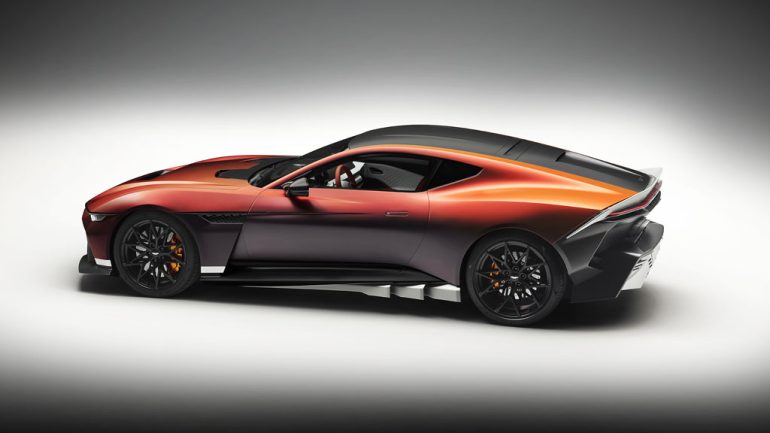
Straight-line speed only tells part of the story. Aston Martin also put the Valen on an extensive diet, using carbon fiber, magnesium, aluminum, and titanium to cut as much as 110 kilograms, or around 243 pounds, compared with the company’s core V-12 platform. Lightweight magnesium wheels are standard, while an available package adds machined aluminum suspension components and titanium fasteners. The goal is not simply a better power-to-weight ratio, but a car that feels more responsive and smaller from behind the wheel than its front-engine proportions might suggest.
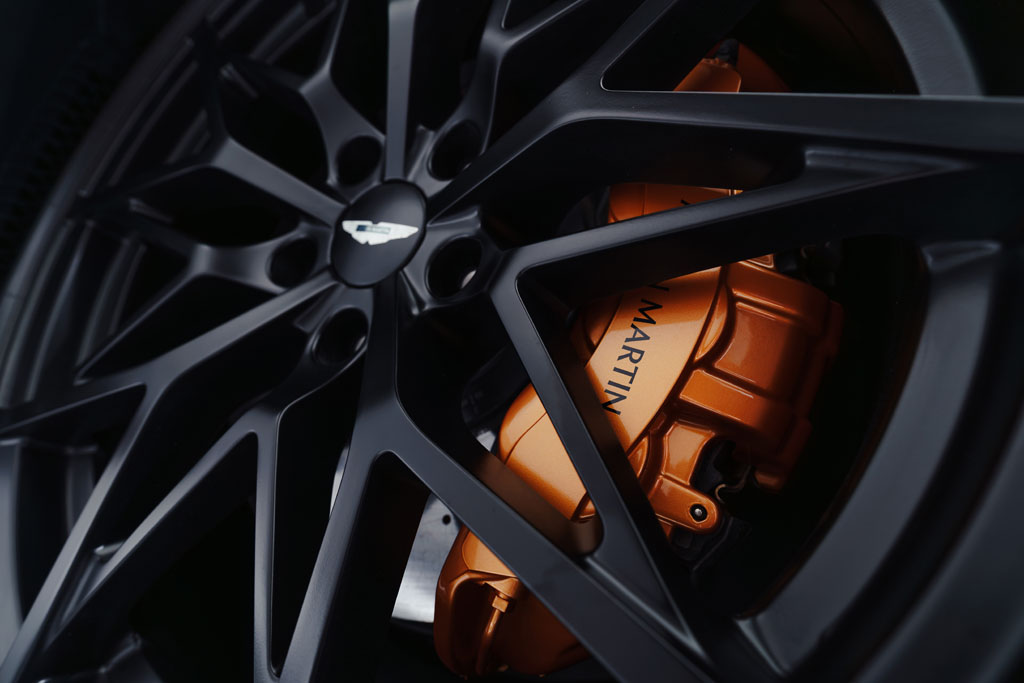
The chassis receives equally serious attention. The Valen uses model-specific springs, helper springs, a solid-mounted rear subframe, and Bilstein DTX semi-active dampers, along with recalibrated steering, stability control, braking, and suspension software. Drivers can choose from Sport, Sport+, and Track modes, with each setting altering how quickly the car responds to throttle inputs and other commands. Carbon-ceramic brakes measuring 410 mm up front and 360 mm at the rear provide the stopping power, while specially developed Pirelli P Zero R tires are designed to balance road use with serious performance driving.
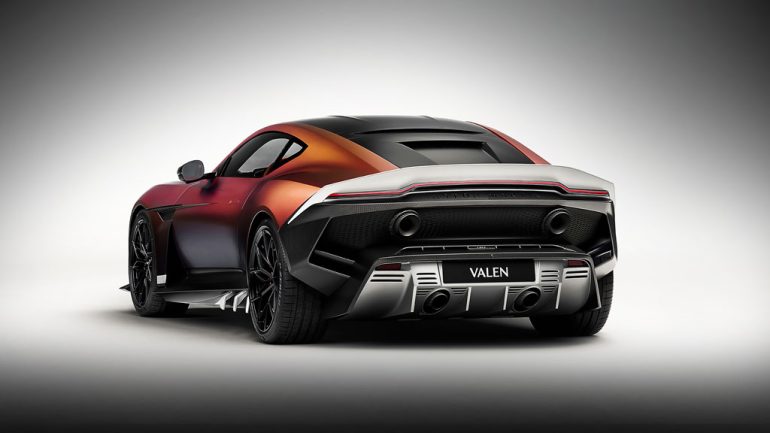
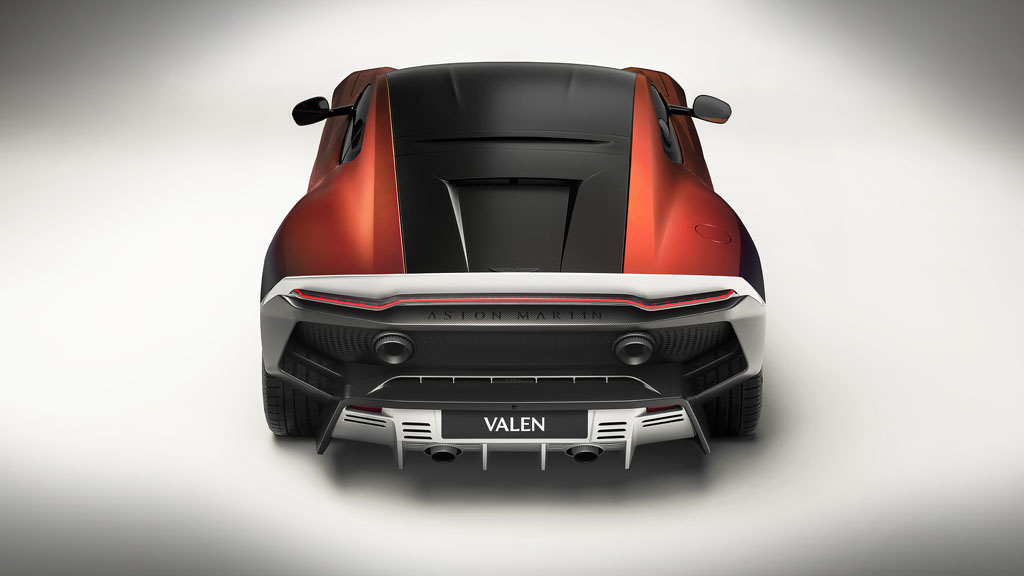
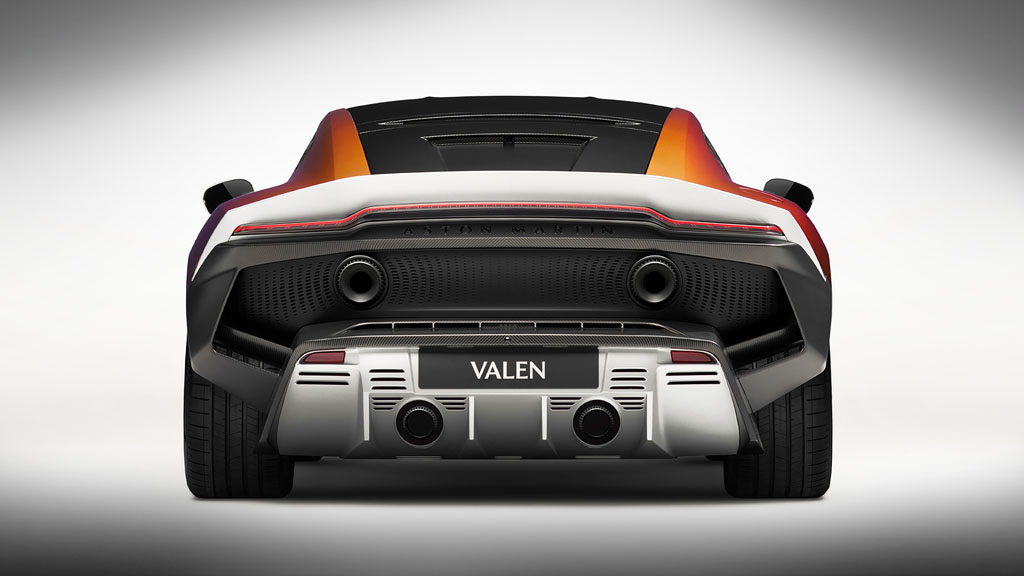
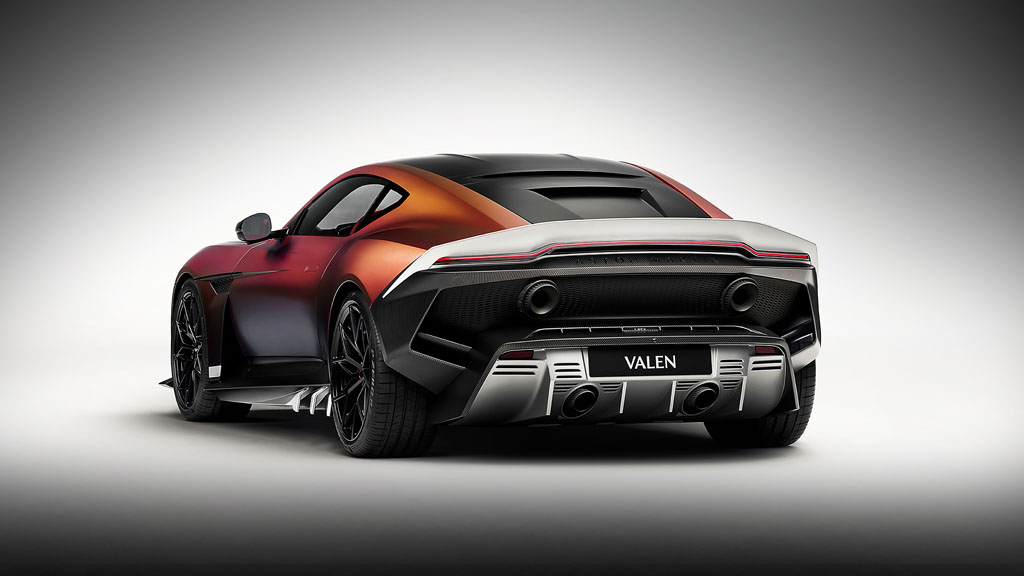
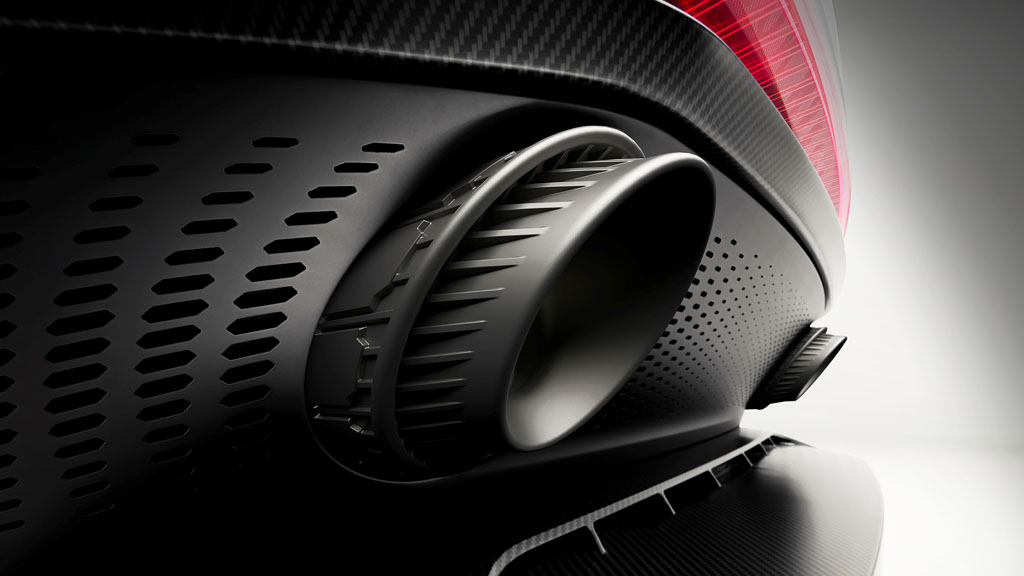
Aston Martin has also paid unusual attention to something increasingly rare in modern performance cars: sound. The Valen receives a bespoke lightweight titanium exhaust system with four outlets, including two upper pipes that remain open and two lower pipes controlled by valves. The upper outlets were tuned to enhance higher-frequency tones as engine speed rises, giving the V-12 a more dramatic voice without simply adding low-frequency rumble. Trusted automotive outlets including Car and Driver, Road & Track, and Autoweek have highlighted the exhaust as one of the car’s defining features, with published reports noting just how much more vocal the Valen is compared with the Vanquish on which its underlying architecture is based.
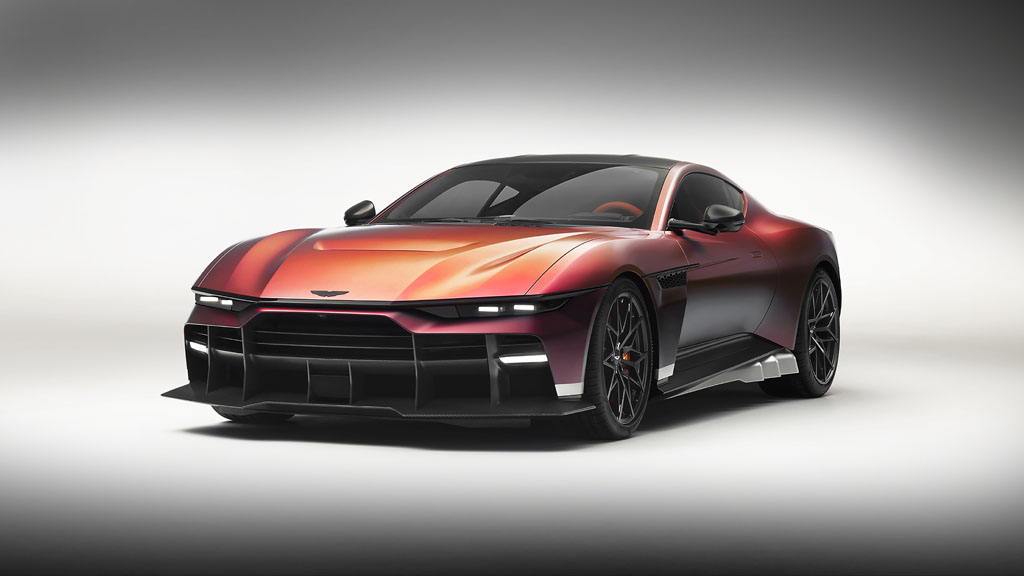
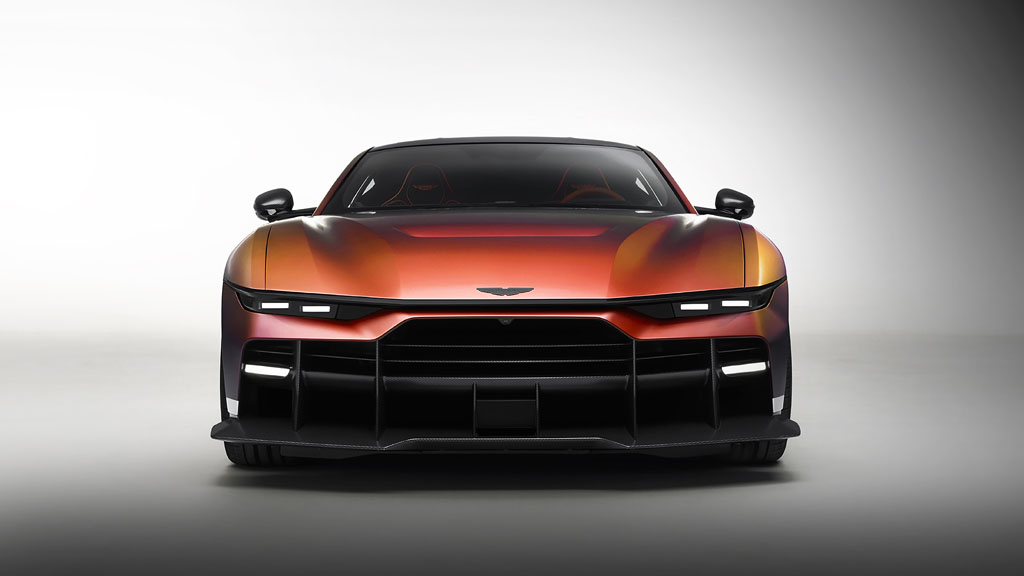
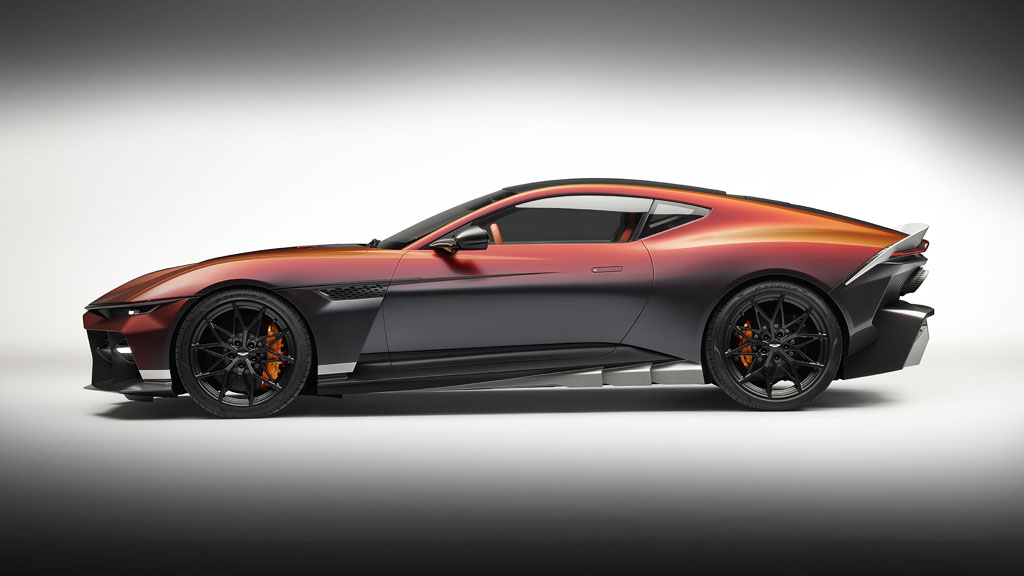
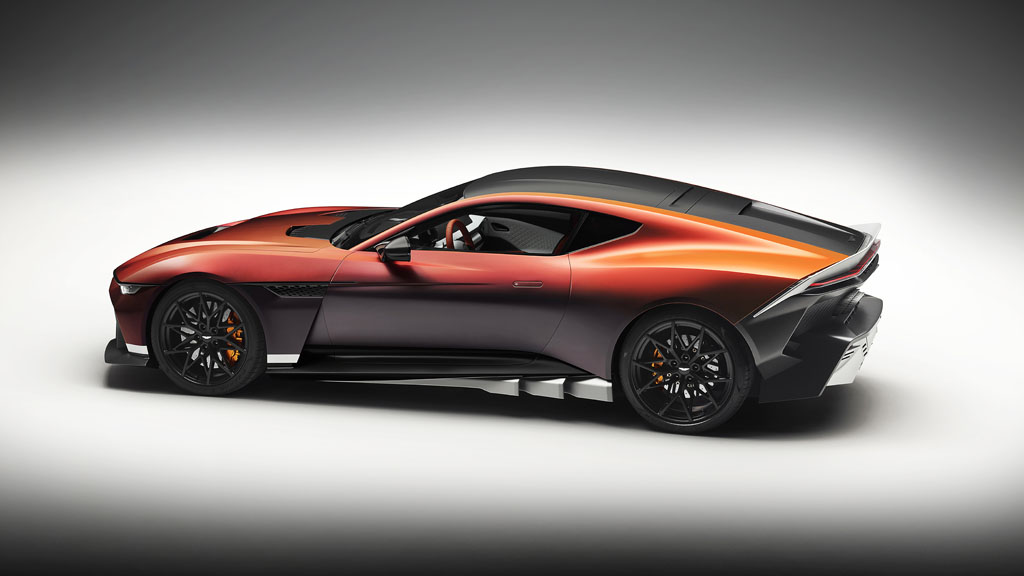
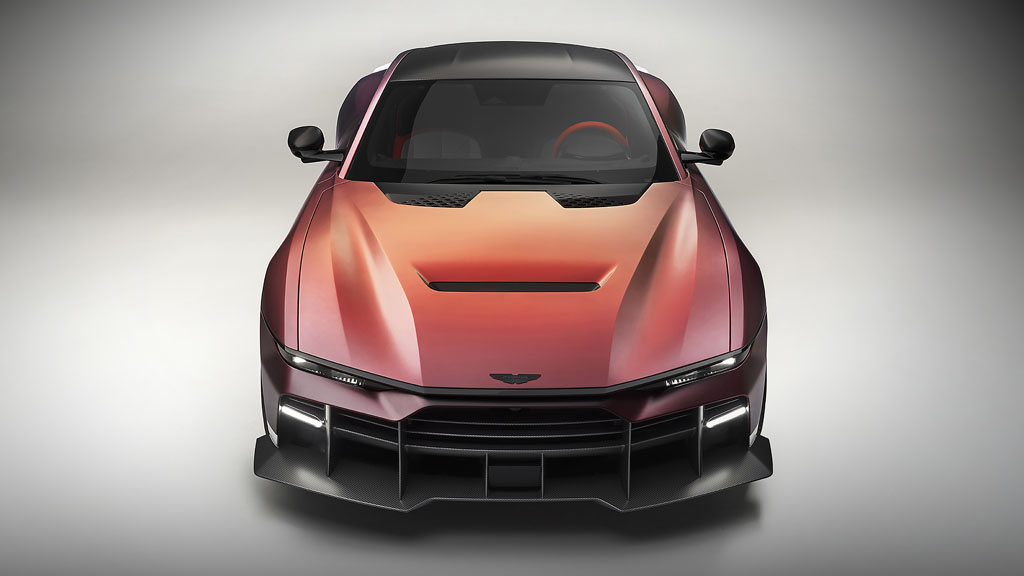
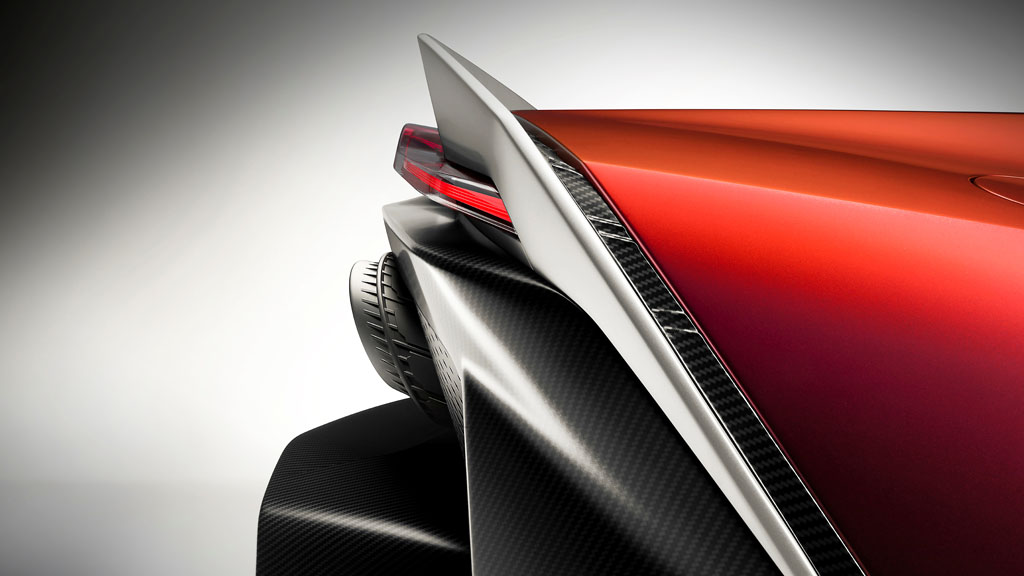
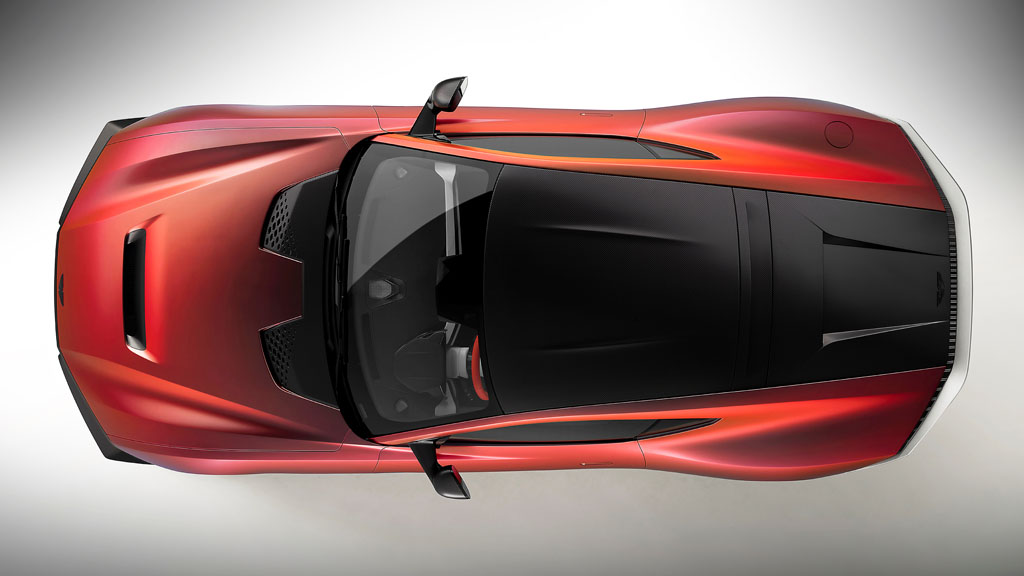
Visually, the Valen is far more dramatic than a typical Aston Martin grand tourer. Every body panel is carbon fiber, and the front end features extremely slim recessed headlights, a sharply defined grille, large cooling openings, and an aggressive splitter. Saw-tooth vortex generators appear along the side skirts, while the rear gets a full-width light bar, a rising aerodynamic tail treatment, and a large diffuser. One of the most unusual details is the lack of a conventional rear window. Instead, the solid rear bodywork incorporates aerodynamic elements while a camera system handles rearward visibility.
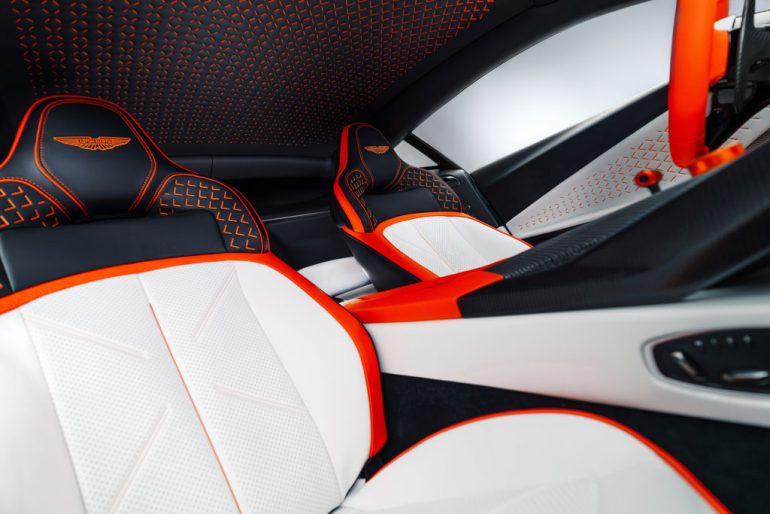
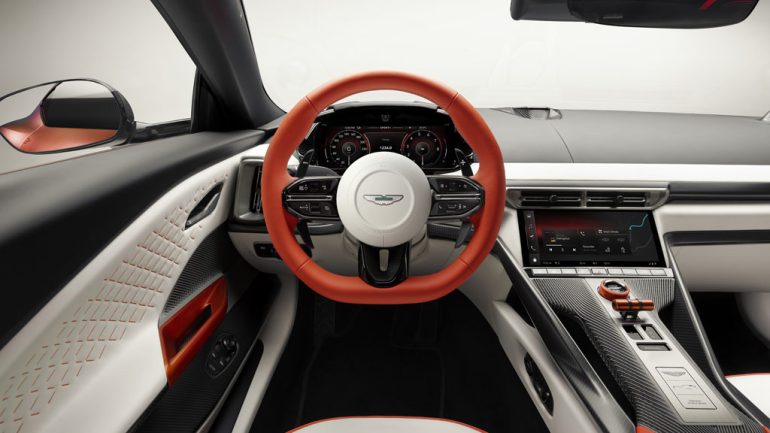
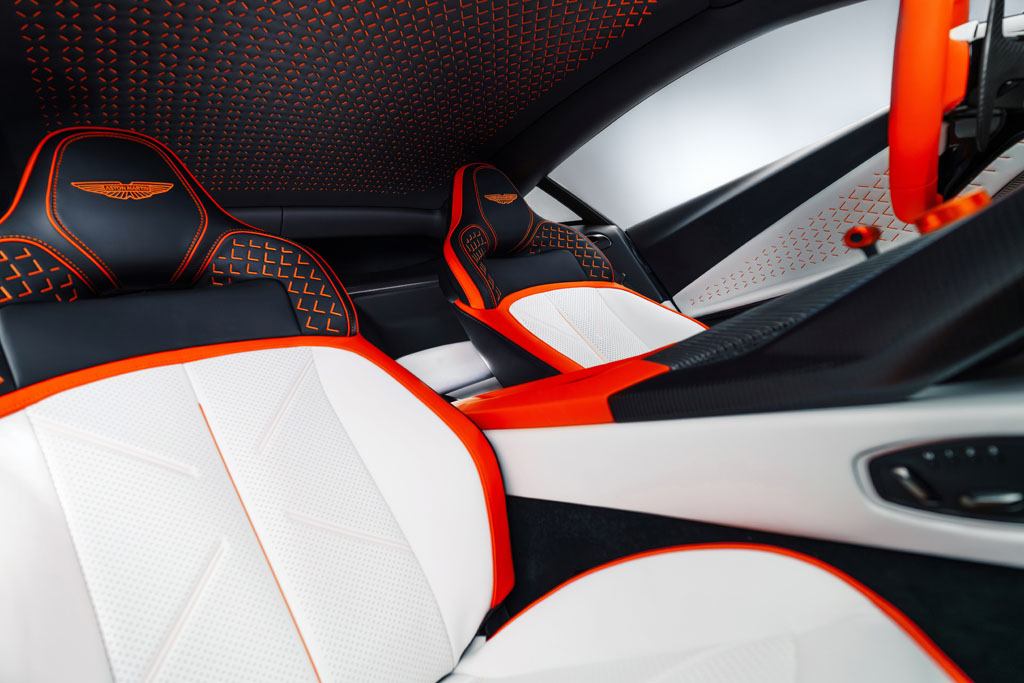
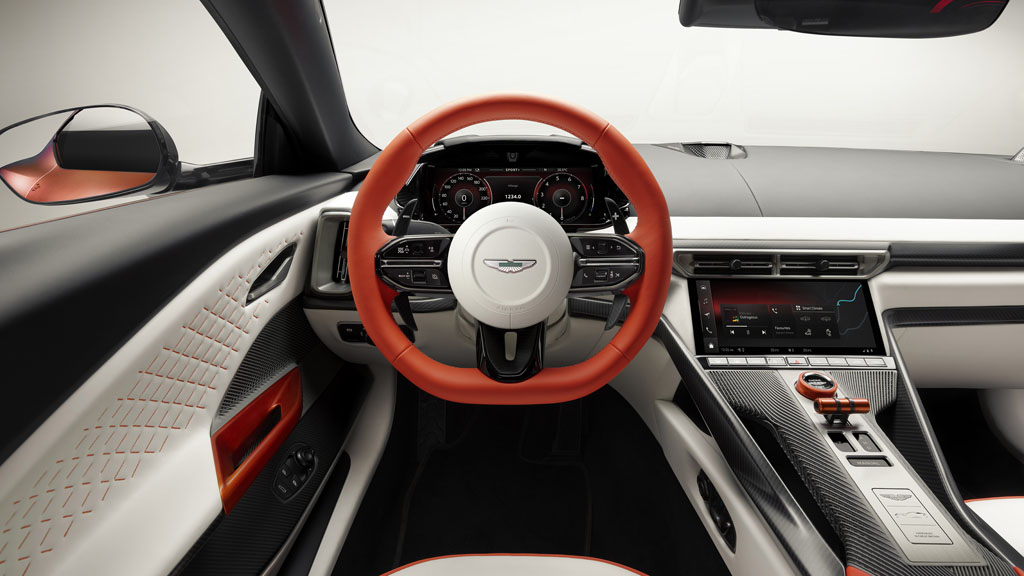
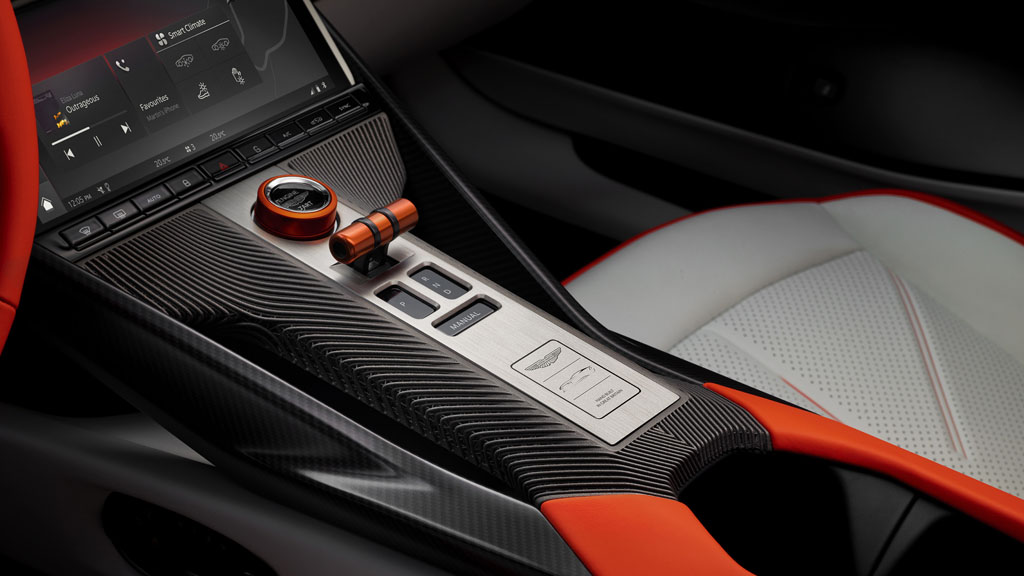
Inside, Aston Martin has tried to make the cabin look lighter and more purposeful without stripping away the craftsmanship expected from the brand. A slim center console incorporates 3D-printed components and switchgear influenced by the Valhalla, while buyers can choose between more comfort-oriented Sports Plus seats or lighter carbon-fiber performance seats. Leather, Alcantara, anodized trim, exposed carbon fiber, and numerous Q by Aston Martin personalization options give customers enormous freedom to tailor the finished car. The rear compartment still provides about 170 liters of luggage capacity, and Aston Martin will even offer a fitted touring luggage set.
Production is strictly capped at 150 cars, and first deliveries are expected to begin in 2027. Aston Martin has not included an official price in its initial press materials, although several automotive publications have reported a figure around $2 million before extensive Q customization. Whatever the final transaction prices turn out to be, the Valen clearly sits at the very top of Aston Martin’s front-engine hierarchy. In a market increasingly dominated by hybrid systems and electrification, a lighter, louder, 838-horsepower V-12 coupe with 214-mph capability feels almost defiantly traditional, and that may be exactly why the Valen stands out.

Darryl Taylor Dowe is a seasoned automotive professional with a proven track record of leading successful ventures and providing strategic consultation across the automotive industry. With years of hands-on experience in both business operations and market development, Darryl has played a key role in helping automotive brands grow and adapt in a rapidly evolving landscape. His insight and leadership have earned him recognition as a trusted expert, and his contributions to Automotive Addicts reflect his deep knowledge and passion for the business side of the car world.