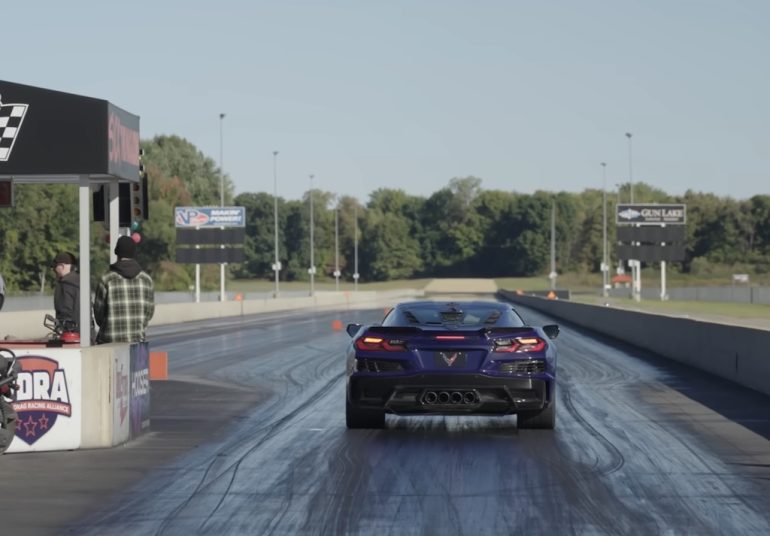
Imagine pulling up to the drag strip in your Corvette, staging at the starting line, and letting the car handle the perfect launch while you sit back and enjoy the ride. That might sound like cheating to some old-school drag racers, but General Motors has patented a technology that could make it possible. The system uses onboard cameras to monitor the drag strip’s Christmas Tree starting lights, calculate precisely when the race will begin, and automatically launch the vehicle at the appropriate moment. As highlighted by Road & Track, the technology could take modern launch control systems to an entirely new level, potentially eliminating one of the last remaining variables in achieving consistently quick quarter-mile times: human reaction.
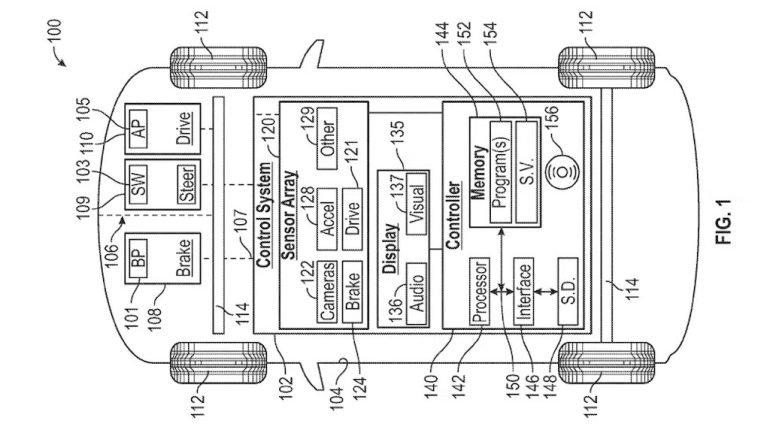
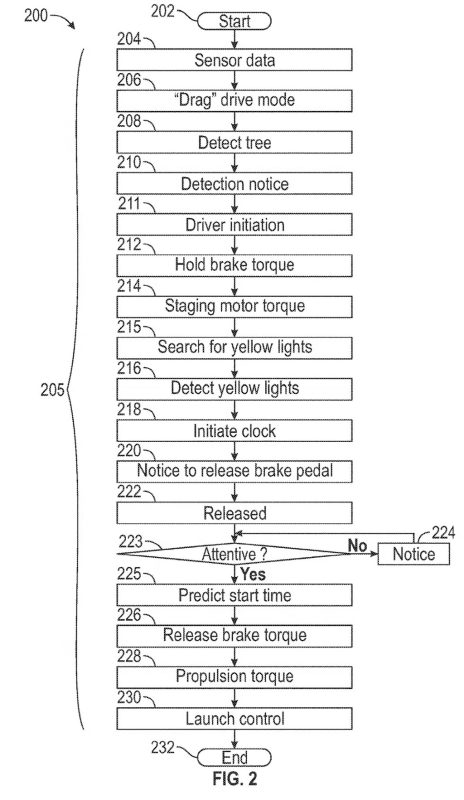
The technology is detailed in U.S. Patent 12,780,203, titled “Methods and Systems for Coordinating Launch Control for Vehicles for Racing,” which was granted on November 3, 2026. Unlike conventional launch control systems that require drivers to hold the brake and accelerator pedals before releasing the brake at the right moment, GM’s proposed system would take over both functions. Once the vehicle’s cameras recognize the starting lights, the driver could activate the system, allowing the car to maintain the necessary braking pressure and engine torque automatically. From there, the onboard computer would monitor the light sequence and determine exactly when to release the brakes and deliver power to the wheels.
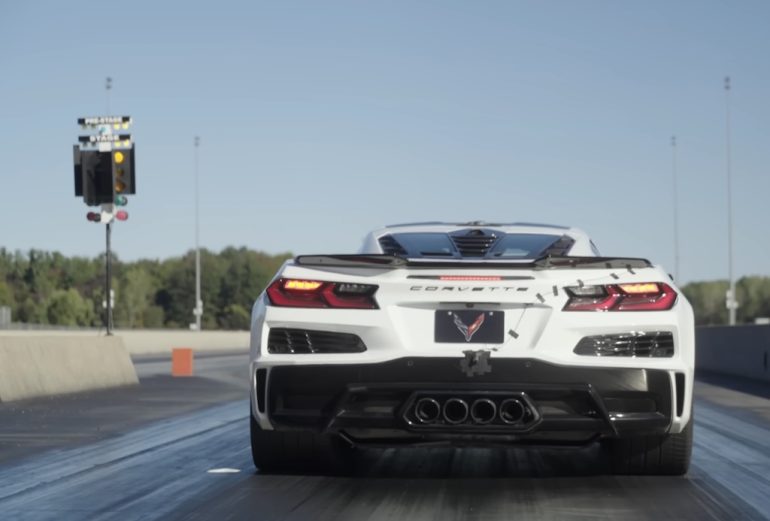
What makes the system particularly clever is its ability to recognize different drag racing starting sequences. Some tracks use a Pro Tree, where all three amber lights illuminate simultaneously before the green light appears approximately 0.4 seconds later. Others use a Sportsman Tree, which activates the amber lights sequentially at half-second intervals. GM’s software could recognize these patterns and calculate the correct launch timing while also accounting for the slight delay between commanding the vehicle to accelerate and the moment it actually begins moving. In theory, this could deliver remarkably consistent launches with minimal reaction-time variation. The patent even describes using interior cameras to confirm that the driver remains attentive before the vehicle is permitted to launch.
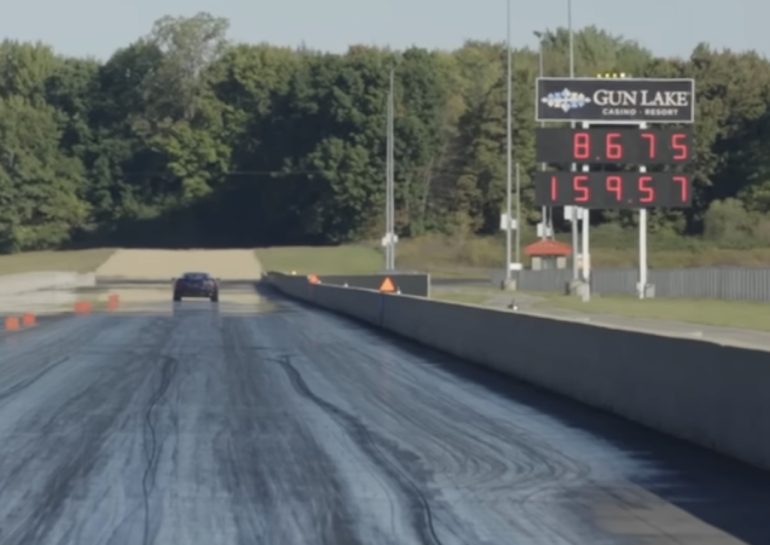
Of course, the big question is whether GM would ever bring such a system to production. The company hasn’t announced any specific vehicle applications, although it’s easy to imagine the technology eventually finding its way into a high-performance Chevrolet Corvette or Cadillac V-Series model. Modern performance cars already use sophisticated electronics to manage traction, optimize acceleration, and control wheelspin, so automatically timing a launch to the Christmas Tree seems like a logical next step. Still, there’s something to be said for the satisfaction of cutting a great reaction time yourself. Part of drag racing’s appeal has always been the skill involved in staging, anticipating the lights, and launching a powerful car without wasting precious fractions of a second.
From our perspective, GM’s idea is both fascinating and a little controversial. On one hand, we’d love to see how accurately a computer-controlled launch could react to the lights, particularly in something like the new Corvette ZR1X capable of delivering 8-second quarter mile runs straight from the factory. On the other hand, automating the starting procedure removes another element of driver involvement from a sport that has traditionally rewarded experience and precision.
There’s also the question of whether organized drag racing events would even allow such technology under their competition rules. For now, this is simply a patented concept rather than a confirmed production feature, but it certainly gives us something interesting to think about. If GM eventually brings it to market, we suspect plenty of enthusiasts will be eager to find out whether their own reaction times can still beat the computer.

Darryl Taylor Dowe is a seasoned automotive professional with a proven track record of leading successful ventures and providing strategic consultation across the automotive industry. With years of hands-on experience in both business operations and market development, Darryl has played a key role in helping automotive brands grow and adapt in a rapidly evolving landscape. His insight and leadership have earned him recognition as a trusted expert, and his contributions to Automotive Addicts reflect his deep knowledge and passion for the business side of the car world.