
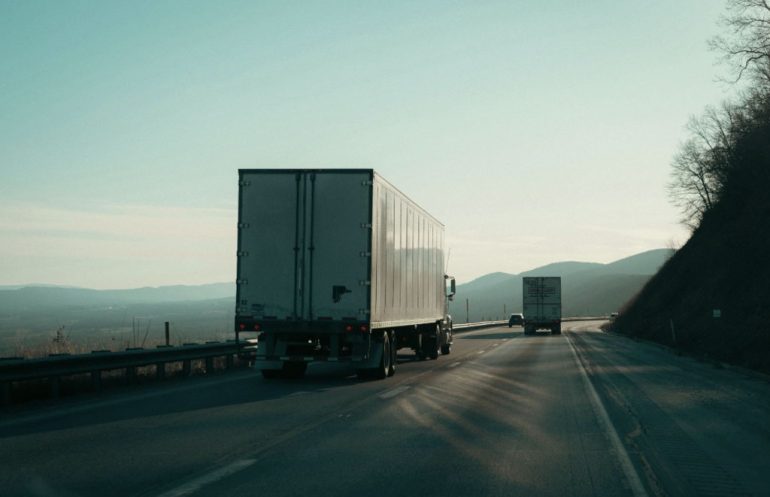
Anyone who commutes on I-35 between Edmond and Oklahoma City knows the rhythm. Pickups and crossovers weave through a steady stream of tractor-trailers hauling freight north and south. Most days, everyone gets home.
Alt text: A white semi-trailer truck driving on a divided highway with a second truck and a car ahead under a pale evening sky
When a fender-bender involves a semi, though, almost nothing about the aftermath looks like a crash between two cars. There is a motor carrier behind the driver, a federal rulebook behind the carrier and far more insurance on the table. If you were hurt, it can make sense to talk to a truck accident lawyer early, before key records age out. This article is general information, not legal advice about your crash.
The Oklahoma Highway Safety Office tracks them in its annual Crash Facts book. Its 2021 large truck figures give a sense of scale.
Large trucks were involved in 5,575 crashes statewide that year. Of those, 99 were fatal and 130 caused serious injuries. Another 478 caused minor injuries, 724 involved possible injuries, and 4,144 caused no injury at all.
The same report notes something drivers rarely hear. Every driver in a crash gets a contributing factor on the Oklahoma report form. “No Improper Action by Driver” went to 41.2% of large truck drivers and 48.4% of the other drivers. In plain terms, fault cuts both ways, and the report form is where that story starts.
Interstate truckers work under federal hours-of-service limits. The core rules for property-carrying drivers sit in 49 CFR 395.3, and they read like this:
Why should a car owner care? Because fatigue is one of the causes Warhawk Legal’s Edmond page lists for truck crashes, alongside distracted driving and negligent maintenance. Duty-status logs show whether a driver was inside the limits. Onboard data can then confirm or challenge those logs, which is why telematics in crash investigations matters so much to truck cases.
Car crashes leave photos, a police report and maybe a dash cam clip. Truck crashes leave all of that plus a paper trail the carrier is required to keep. The clock on some of it is short.
| Record | Federal Rule | How Long It Is Kept |
| Driver’s records of duty status | 49 CFR 395.8(k) | At least 6 months |
| Carrier’s accident register | 49 CFR 390.15 | 3 years after each accident |
| Copies of accident reports for states or insurers | 49 CFR 390.15 | Part of the same register |
| Post-accident alcohol test | 49 CFR 382.303 | Required in set cases, as soon as practicable |
| Post-accident drug test | 49 CFR 382.303 | Required in set cases, as soon as practicable |
The testing rule has its own triggers. A fatal crash means testing the surviving truck driver for alcohol and drugs. If someone was hurt and treated away from the scene, or a vehicle had to be towed, testing follows when the driver is cited. That citation must come within 8 hours for the alcohol test and within 32 hours for the drug test.
Six months sounds long until a claim stalls. That is why lawyers often send a preservation letter to the carrier within days.
A typical Oklahoma car policy may carry modest limits. Federal rules set much higher floors for trucks. Under 49 CFR 387.9, these minimums apply to vehicles rated at 10,001 pounds or more:
Alt text: A man in a cap standing in front of a red semi-truck tractor parked on a paved lot
Higher limits do not mean easy money. A carrier’s insurer usually has adjusters and investigators on the case fast. More than one company may also share the blame, such as the carrier, a cargo loader or a maintenance shop. Comparing your own cover still matters too, so our guide to choosing a car insurance policy is worth a read before renewal.
Not every scrape with a semi needs one. Some do, and the warning signs are fairly clear:
A lawyer can ask the carrier in writing to hold logs, video and maintenance files before routine deletion. They can also work out which companies share responsibility, from the carrier to whoever loaded the trailer. That legwork is hard to manage from a hospital bed or a rental car.
If a lawyer proposes a contingency arrangement, ask how the fee percentage, case expenses and any medical liens would affect your share. VerdictPoint’s contingency fee calculator can illustrate the deductions using hypothetical figures and the terms you enter.
Warhawk Legal is an Oklahoma City firm on North Classen Boulevard, and its Edmond truck accident page names senior partner Joe S. Carson. The firm says it has served the Edmond community since 2001.
Prevention still beats any claim. These habits come straight from how trucks move:
Under 49 CFR 395.3, a property-carrying driver may drive up to 11 hours after 10 hours off duty. No driving is allowed after 14 hours from coming on duty.
Federal rules require carriers to keep records of duty status for at least 6 months. The carrier’s accident register must be kept for 3 years after each accident.
After a fatal crash, yes. After an injury or tow-away crash, testing applies when the driver receives a citation within the federal time limits.
For-hire general freight carriers in interstate commerce need at least USD 750,000 in public liability. Some hazardous loads require USD 1,000,000 or USD 5,000,000.

Automotive Addicts Contributors are a collective of guest writers, industry professionals, and passionate enthusiasts who bring fresh perspectives to the Automotive Addicts platform. Focused on delivering timely news, in-depth reviews, and unique insights, these contributors help keep the site dynamic and engaging. Many use the platform to expand their reach and build credibility within the automotive media world, adding depth and variety to the content that drives the Automotive Addicts community.


