
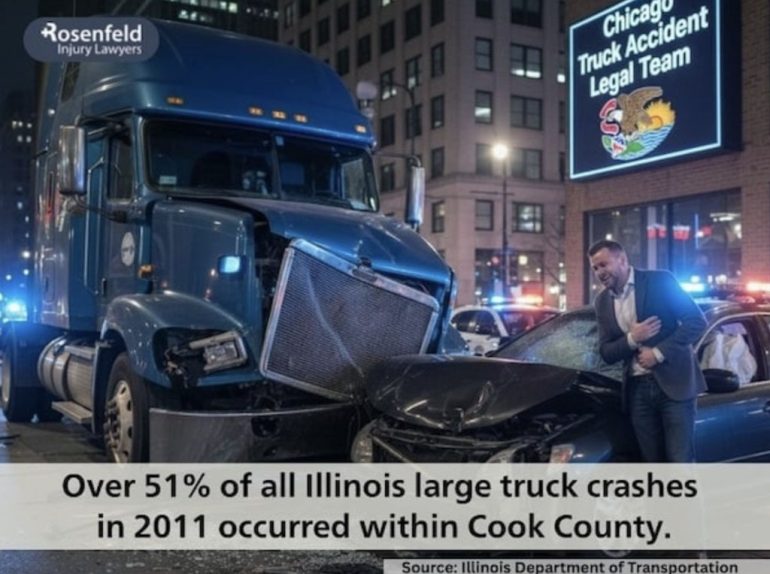
A collision between a passenger car and an 80,000-pound commercial truck can leave people facing serious injuries, vehicle damage and difficult questions about who was responsible. The weight difference alone can make these crashes far more dangerous than typical car accidents. Federal rules governing truck weight limits are one part of the picture. Driver conduct, trucking company practices, cargo loading and vehicle maintenance may also affect what happened and how a claim is handled.
National crash data reflect these consequences. According to the Insurance Institute for Highway Safety, 5,340 people died in large-truck crashes in 2024. Occupants of passenger vehicles accounted for 62% of those deaths, according to its large truck crash deaths statistics.
Truck accident claims can involve federal safety rules, multiple potentially responsible parties and commercial insurance policies. Electronic records and maintenance documents may help establish what happened, but evidence can disappear. State laws determine how fault affects compensation and how long an injured person has to file a lawsuit.
Commercial trucking on interstate routes is subject to Federal Motor Carrier Safety Regulations. Unlike ordinary passenger-car drivers, commercial drivers and their employers must follow specific requirements covering driving hours, driver qualifications, drug and alcohol testing, and vehicle maintenance.
These rules can help investigators identify problems that contributed to a collision. A driver may have exceeded permitted driving hours, for example, or a carrier may have failed to address a known mechanical problem.
Federal hours-of-service rules generally limit driving to 11 hours after 10 consecutive hours off duty, within a 14-hour driving window. Drivers must generally take a 30-minute break after eight cumulative hours of driving, subject to applicable exceptions.
Other regulations address driver qualifications, medical certification, drug and alcohol testing, and commercial vehicle inspections and repairs. Electronic logging devices can help investigators establish how long a driver was on the road. Inspection and maintenance records may reveal whether a truck had unresolved mechanical issues.
A regulatory violation does not automatically prove that a driver or company caused a crash. Its significance depends on the facts and whether the violation contributed to the collision.
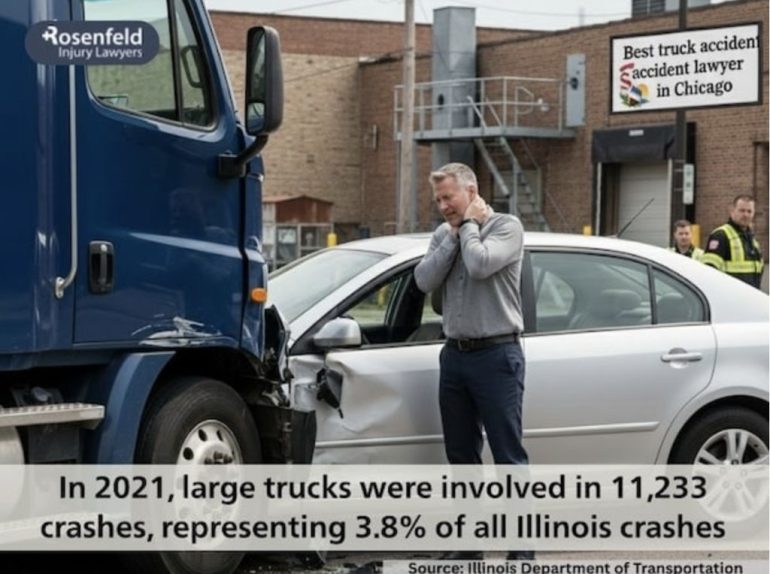
The truck driver may have caused or contributed to a crash through speeding, distraction, fatigue or following too closely. However, the investigation should not end with the person behind the wheel.
A trucking company may be responsible for its own negligence, such as inadequate maintenance, poor supervision or failures in hiring and training. Whether it is legally liable for a driver’s conduct depends on the working relationship and applicable law.
Other businesses may also have played a role. A shipper or loading contractor might have overloaded a trailer or failed to secure cargo properly. A maintenance provider could have performed faulty repairs. A defective component may raise questions about the manufacturer’s responsibility.
These issues matter because each party may have different records, responsibilities and insurance coverage. Several parties may dispute responsibility, and the evidence must establish how their actions contributed to the crash.
Certain interstate commercial carriers must carry more liability insurance than ordinary motorists. For qualifying for-hire carriers transporting non-hazardous property in vehicles weighing 10,001 pounds or more, the federal minimum is generally $750,000. Certain hazardous-materials operations require up to $5 million under federal minimum insurance requirements.
These minimums do not guarantee a particular payout. Coverage, injuries and disputes over fault all affect a claim.
Commercial claims may involve multiple insurers and legal teams. Before giving a recorded statement or signing a release, an injured person should understand the potential consequences and the extent of their injuries.
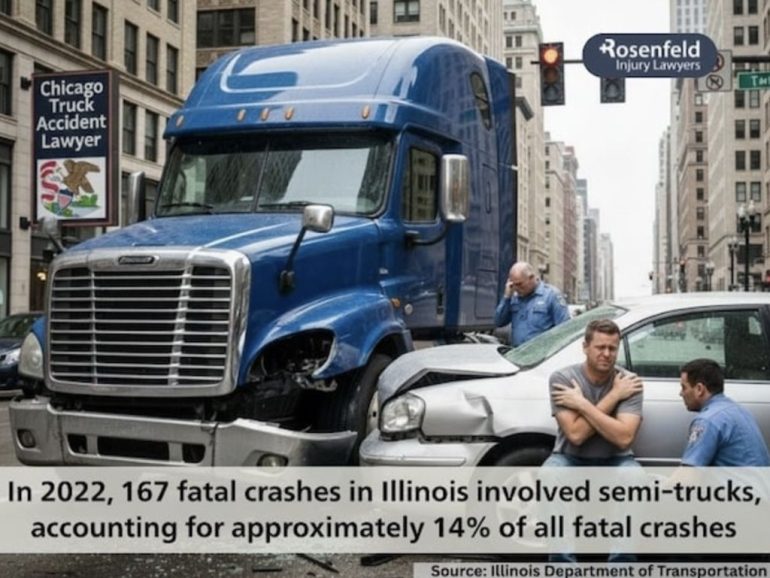
A police report and damage photos may not tell the whole story. Truck records can help explain a crash, but some data may be overwritten or lost over time. Useful evidence includes electronic logs, dashcam footage, GPS data, maintenance records and cargo documents.
If safe, call 911, seek medical care, photograph the scene and truck markings, collect witness details, and keep related medical records and receipts.
A police report does not settle fault, and company records may need to be preserved quickly. Chicago trucking accident attorneys can explain relevant evidence and procedures.
State law determines how fault affects a claim and how long an injured person has to file a lawsuit.
Illinois follows a modified comparative fault system. Generally, an injured person cannot recover damages if they are found more than 50% at fault. If their share of fault is 50% or less, their recoverable damages are reduced in proportion to that share.
Illinois generally allows two years to file a personal injury lawsuit, although exceptions may apply. Claims involving government entities can have shorter notice requirements or other special rules. The deadline depends on the circumstances, so anyone involved in a serious collision should confirm which rules apply rather than assume the standard limit covers every case.
Commercial trucks have blind spots, often called no-zones. These can extend roughly 20 feet in front of the cab, 30 feet behind the trailer, one lane to the driver’s left and two lanes to the right. The exact areas vary by vehicle. If you cannot see the driver in a side mirror, the driver may not be able to see you.
Give trucks room to turn and change lanes. Avoid lingering beside a trailer, cutting closely in front of a truck or braking suddenly after merging. When it is safe, pass on the left without lingering, then leave plenty of space before returning to the lane.
A heavy truck needs much more room to stop than a passenger car. At highway speed, a loaded rig may need up to two football fields to stop, depending on conditions. Rain, road surfaces, cargo weight and vehicle condition can all affect stopping distance.
Truck drivers work with these physical limits every day. Giving a large truck space helps everyone on the road have more time to react.
Responsibility may fall on the driver, trucking company, cargo loader, maintenance provider or manufacturer, depending on the evidence. More than one party may share fault.
Useful evidence may include photographs, witness details, medical records, the police report, electronic driving logs, dashcam footage, inspection records and maintenance documents. Some records may not be retained indefinitely.
Illinois generally has a two-year deadline for personal injury lawsuits. Exceptions may apply, including special requirements for certain claims involving government entities. The deadline should be checked against the facts of the individual case.
Not necessarily. Under Illinois’s modified comparative fault rules, a person generally cannot recover if they are more than 50% responsible. If they are 50% responsible or less, recoverable damages are reduced according to their share of fault.
No. An insurance minimum establishes a required level of coverage for certain operations. It does not guarantee a particular payment. Coverage terms, liability, injuries and other facts affect the outcome.
Truck accident claims can involve complex safety rules, multiple parties and evidence that may not remain available for long. Understanding the relevant laws, preserving records and knowing the applicable deadlines can help injured people make informed decisions. Laws vary by state, and every claim depends on its specific facts.

Automotive Addicts Contributors are a collective of guest writers, industry professionals, and passionate enthusiasts who bring fresh perspectives to the Automotive Addicts platform. Focused on delivering timely news, in-depth reviews, and unique insights, these contributors help keep the site dynamic and engaging. Many use the platform to expand their reach and build credibility within the automotive media world, adding depth and variety to the content that drives the Automotive Addicts community.


