
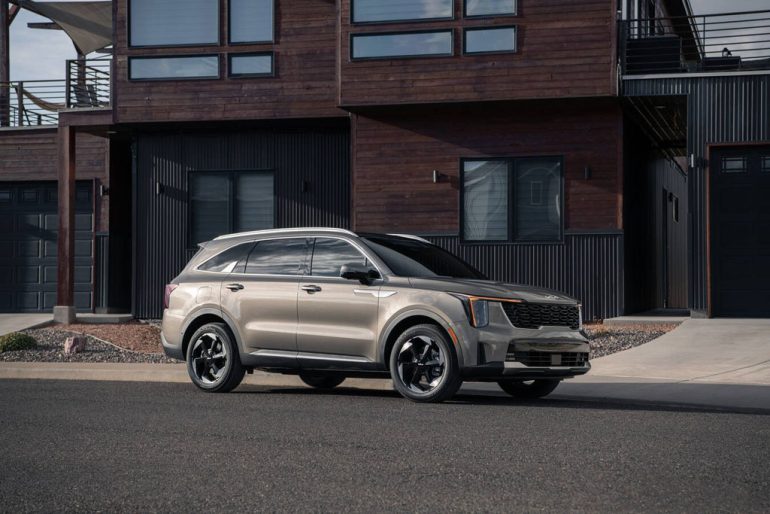
The Kia Sorento Plug-In Hybrid is a two-row, six-seat midsize SUV that combines a 1.6-liter turbocharged four-cylinder with a plug-in electric drive system for approximately 31 miles of electric-only range and a total combined range of roughly 440 miles. For 2027, Kia simplified the PHEV lineup to a single trim: the X-Line SX-Prestige AWD. The lower EX AWD trim that previously anchored the PHEV lineup has been discontinued. Importantly, the $7,500 federal plug-in hybrid tax credit that previously applied to the Sorento PHEV has been eliminated under the One Big Beautiful Bill Act, signed July 4, 2025, and effective for vehicle purchases after September 30, 2025. There is no federal tax credit available on new Sorento PHEV purchases. Here is what the dealer paid and what you should be targeting.
The 2027 Sorento PHEV is available in one configuration only. The price below excludes the $1,495 destination charge.
| Trim | MSRP | Invoice | Gap |
|---|---|---|---|
| X-Line SX-Prestige AWD | $53,890 | $52,003 | $1,887 |
Invoice figure sourced from AutoFinder. Some pricing sources may list different MSRPs. Always verify the current MSRP on the window sticker before making an offer.
The destination and freight charge on the 2027 Sorento PHEV is $1,495. With destination included, the X-Line SX-Prestige AWD comes to $55,385.
The 2027 Sorento PHEV receives a trim consolidation and a content update:
The $7,500 federal plug-in hybrid tax credit that previously made the Sorento PHEV significantly more affordable has been eliminated. Congress repealed this credit as part of the One Big Beautiful Bill Act, signed into law on July 4, 2025. The repeal is effective for vehicle purchases completed after September 30, 2025. No federal tax credit of any kind applies to new 2027 Sorento PHEV purchases at the time of this writing.
State-level incentives may still apply depending on the buyer’s state of residence. Several states maintain their own EV and PHEV purchase incentives or HOV lane access programs independent of the federal credit. Verify current state incentives with your tax advisor or your state’s department of revenue before purchase, as these programs vary significantly and change frequently.
The Sorento PHEV uses a 1.6-liter turbocharged four-cylinder paired with a plug-in electric motor and a 13.8-kWh battery pack, driving all four wheels through a six-speed transmission. AWD is standard and is the only available drivetrain. Combined system output is 268 horsepower and 270 lb-ft of torque.
Electric range: Approximately 31 miles of EV-only driving on a full charge. In the real world, electric range varies with ambient temperature, driving speed, and climate control use; cold weather and sustained highway driving will reduce the available electric range below the EPA estimate.
Combined range: Approximately 440 miles on a full charge and a full tank of gasoline. After the battery is depleted, the Sorento PHEV operates as a conventional hybrid.
Fuel efficiency: 74 MPGe with electric assistance; approximately 33 mpg on gasoline alone after the battery is depleted.
Charging: The Sorento PHEV charges via a standard 120V Level 1 household outlet or a 240V Level 2 charger. Level 2 charging from empty to full takes approximately 2 hours and 15 minutes. Level 1 charging is significantly slower and is best suited to overnight charging rather than opportunistic top-offs. A Level 2 home charger installation is strongly recommended for buyers who intend to maximize the PHEV’s electric range benefit regularly.
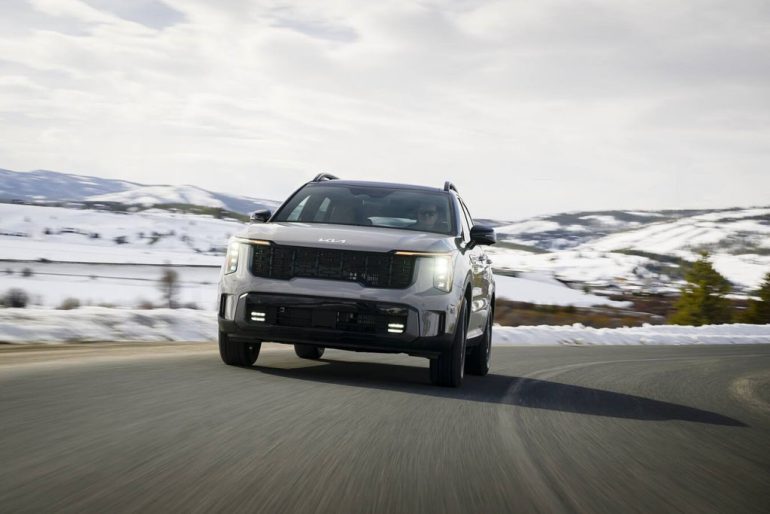
Seating: Six passengers in a two-row configuration with second-row captain’s chairs standard. The PHEV’s battery pack occupies space that would otherwise accommodate the third row. This is the most significant packaging difference between the Sorento PHEV and the Sorento Hybrid: the Hybrid seats seven across three rows; the PHEV seats six across two rows with no third row available.
Cargo volume: 12.6 cubic feet behind the second row; 38.5 to 45.0 cubic feet with the second row folded.
Dimensions: 188.0 inches overall length, 74.4 inches width, 66.3 inches height, 110.4-inch wheelbase. Ground clearance is approximately 7.0 inches on the X-Line configuration.
Wheels: 19-inch wheels standard on the X-Line SX-Prestige.
Warranty: Kia covers the 2027 Sorento PHEV with a 5-year/60,000-mile basic warranty, a 10-year/100,000-mile powertrain warranty, a 10-year/100,000-mile PHEV battery warranty, a 5-year/100,000-mile anti-perforation warranty, and 5-year/unlimited-mile roadside assistance. Kia’s 10-year powertrain and battery warranty is among the strongest standard coverage packages available on any midsize plug-in hybrid SUV.
Because the X-Line SX-Prestige is the only trim available, it is the complete Sorento PHEV feature set. Standard content includes the 12-speaker Bose premium audio system, a 12.3-inch touchscreen infotainment display with navigation, wireless Apple CarPlay and Android Auto, a 12.3-inch digital driver cluster, the new-for-2027 head-up display, a wireless phone charger, a panoramic dual-sunroof, ventilated and heated front seats with the new 2027 X-Line seatback embossing, a heated steering wheel, second-row captain’s chairs, a power liftgate, ambient interior lighting, and the full Kia driver assistance suite. The driver assistance suite includes forward collision avoidance assist with pedestrian and cyclist detection, lane keeping assist, blind-spot collision warning with rear cross-traffic avoidance, smart cruise control with stop-and-go, highway driving assist, and a surround-view monitor. X-Line exterior styling adds gloss-black 19-inch wheels, gloss-black window surrounds and trim, and X-Line-specific badging.
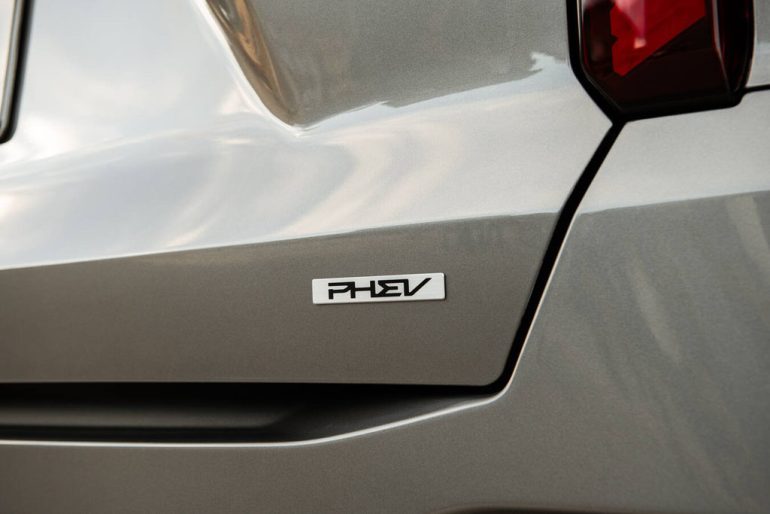
The Sorento PHEV at $53,890 costs $6,300 more than the Sorento Hybrid X-Line SX-Prestige AWD at $47,590, and the two vehicles share the same body, trim level, and most standard content. The decision between them comes down to a few concrete factors.
Choose the Sorento PHEV if you have a dedicated home charging setup, your daily driving is consistently within or near the 31-mile electric range, and you can cover most weekday miles on electricity. In that usage pattern, the per-mile energy cost on electricity is well below the cost of gasoline, and the PHEV’s fuel savings over time partially offset the higher purchase price. The PHEV is also the choice if the second-row captain’s chair configuration without a third row suits your household, and if you want the highest combined powertrain output available in the Sorento lineup at 268 horsepower.
Choose the Sorento Hybrid if you cannot reliably plug in at home, if you need seven-seat capacity, or if the $6,300 price premium is difficult to justify given your annual mileage and electricity access. Without regular home charging, the PHEV’s electric range benefit largely disappears and it operates as a slightly heavier hybrid at a meaningfully higher price. The Hybrid X-Line SX-Prestige at $47,590 delivers nearly identical content at lower cost and retains the third row. For the majority of buyers who cannot plug in daily, the Hybrid is the more rational choice.

As of early November 2026, there is no federal tax credit available on the 2027 Sorento PHEV. Kia’s monthly incentive programs may include regional lease offers, APR financing, and purchase allowances. Kia historically offers conquest bonuses for buyers switching from a competing brand and loyalty bonuses for returning Kia owners; these conditional programs are not always advertised and are worth asking about directly at the dealership. Check Kia’s website for the current month’s programs before signing any paperwork.
With a single trim and an invoice of $52,003 against an MSRP of $53,890, the Sorento PHEV carries a $1,887 gap — the widest in the entire Sorento lineup across all three powertrain families. That gap is your primary negotiating anchor.
Invoice is your starting point. On the X-Line SX-Prestige at $53,890 MSRP with an invoice of $52,003, a realistic opening offer is $52,300 to $52,700 before destination. That range positions you close to invoice while signaling that you have done the research. With no competing trim to shop within the PHEV lineup, your leverage comes from being willing to compare across dealers and, if applicable, against competing plug-in hybrid alternatives.

The elimination of the federal tax credit changes the negotiating conversation. Prior to October 2025, buyers could walk in expecting to reduce the effective cost of the PHEV by $7,500 through the federal credit. That offset is gone. Buyers who feel the current $53,890 MSRP is priced for a tax-credit world have a legitimate argument to make at the dealership, particularly as credit-era buyer expectations adjust to the new pricing reality. Dealers aware of softened PHEV demand post-credit may have more motivation to negotiate than the invoice gap alone suggests.
Email multiple Kia dealers simultaneously. Request the out-the-door price on the X-Line SX-Prestige PHEV from two to three dealers in your market before visiting any of them. Out-the-door is the only number worth comparing; documentation fees and dealer add-on packages vary widely between stores. With a single trim in the lineup, the vehicle configuration is identical at every dealer, making out-the-door price the cleanest apples-to-apples comparison available.
The two-row plug-in hybrid midsize SUV segment is a narrow field. The Hyundai Tucson PHEV, Ford Escape PHEV, and Toyota RAV4 Prime compete in a smaller footprint. For buyers who want a midsize plug-in hybrid with more interior room and a captain’s chair second row, the Sorento PHEV’s most direct competitor is the Hyundai Santa Fe PHEV, which shares its platform and powertrain architecture at broadly similar pricing.

Against the Toyota RAV4 Prime, which starts around $44,000 and has historically been one of the most sought-after plug-in hybrid SUVs in the market, the Sorento PHEV offers a longer factory powertrain and battery warranty (10 years / 100,000 miles versus Toyota’s 8 years / 100,000 miles on the hybrid battery), slightly more horsepower (268 versus 302 on the RAV4 Prime, though the RAV4 Prime has more in some configurations), and a comparable electric range. The RAV4 Prime has historically commanded stronger resale values due to high demand, though the post-tax-credit landscape has begun to normalize PHEV demand across most nameplates.
The Sorento PHEV’s principal advantages are Kia’s 10-year warranty package, the well-equipped single-trim approach that eliminates option anxiety, and a lower price of entry than the Sorento Hybrid at equivalent trim content. Its main competitive limitations are the loss of the third row, the elimination of the federal tax credit that previously made its price more competitive, and a higher transaction price than the Sorento Hybrid for buyers who do not reliably plug in. For buyers who have a home charger, commute within the electric range most days, and want a well-warranted plug-in hybrid SUV fully loaded at the X-Line SX-Prestige content level, the 2027 Sorento PHEV is a competitive choice at a price that should have room to negotiate.

Darryl Taylor Dowe is a seasoned automotive professional with a proven track record of leading successful ventures and providing strategic consultation across the automotive industry. With years of hands-on experience in both business operations and market development, Darryl has played a key role in helping automotive brands grow and adapt in a rapidly evolving landscape. His insight and leadership have earned him recognition as a trusted expert, and his contributions to Automotive Addicts reflect his deep knowledge and passion for the business side of the car world.