
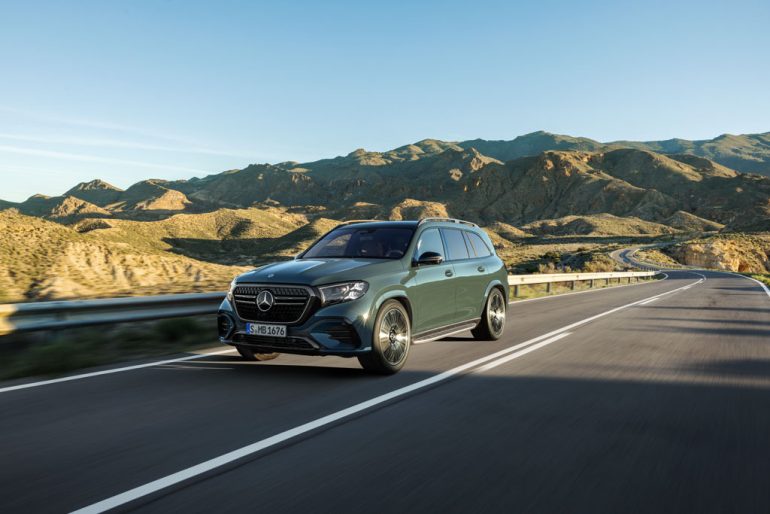
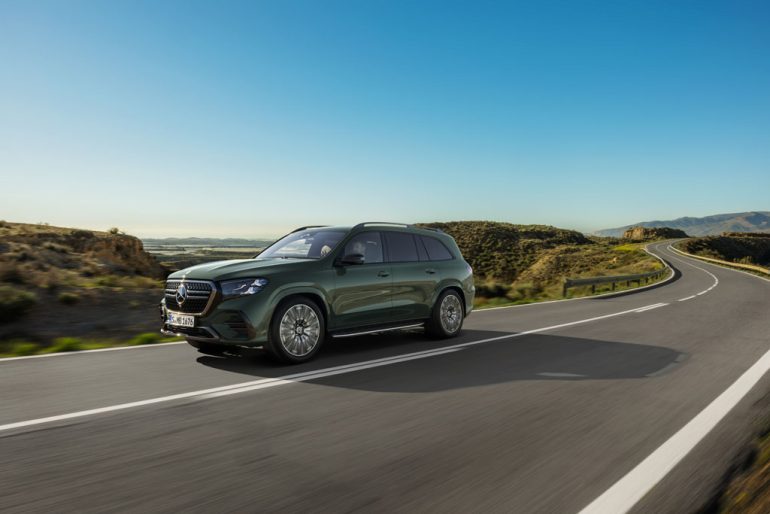
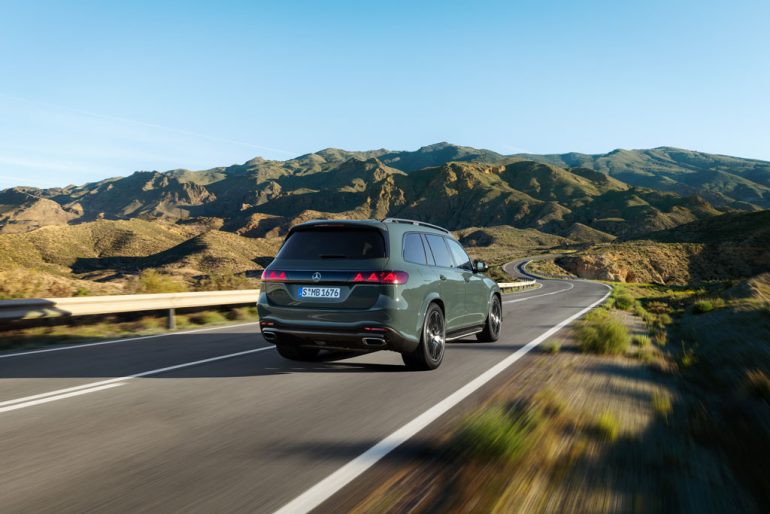
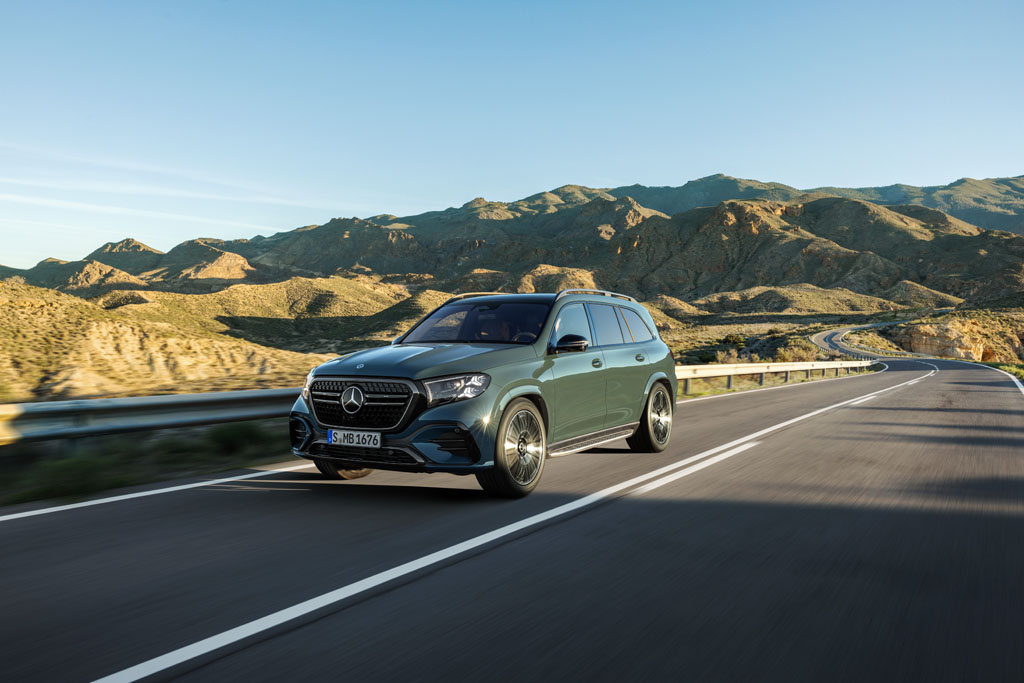
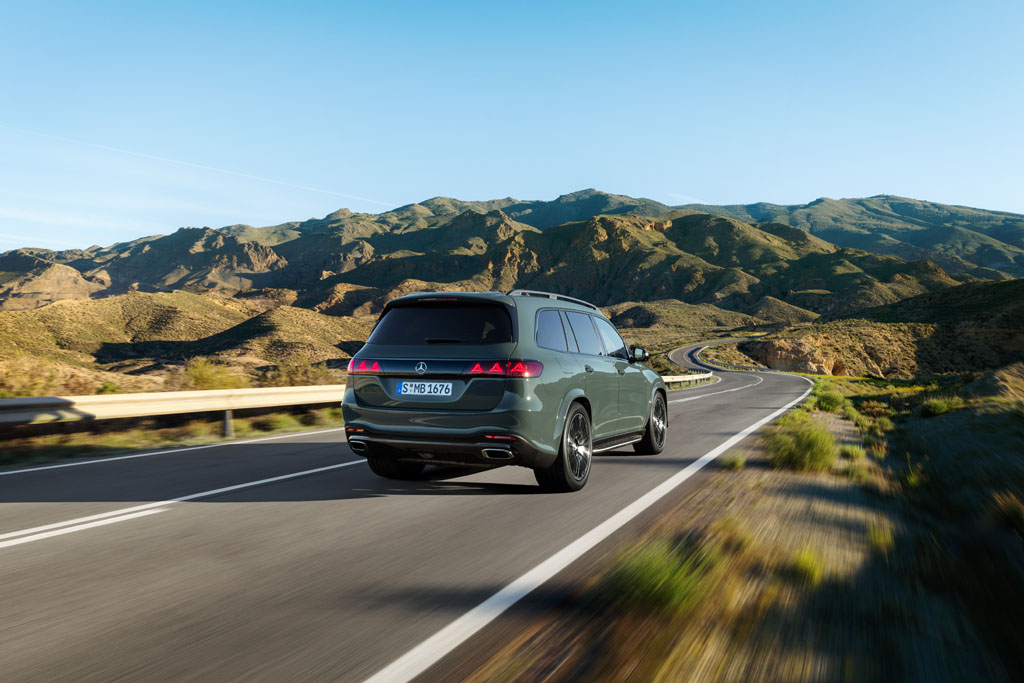
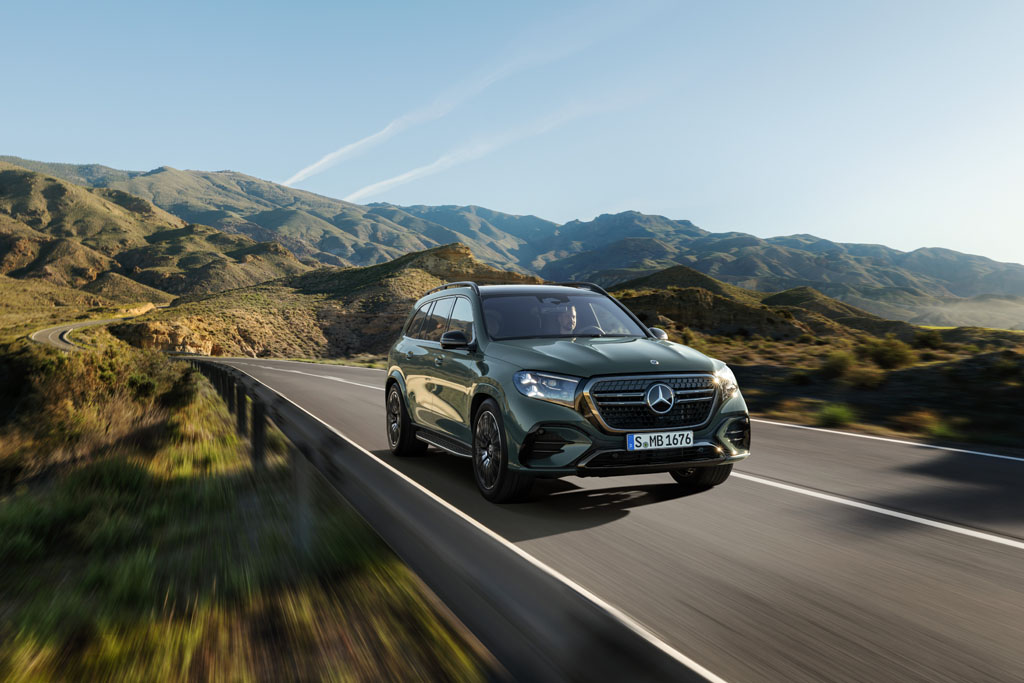
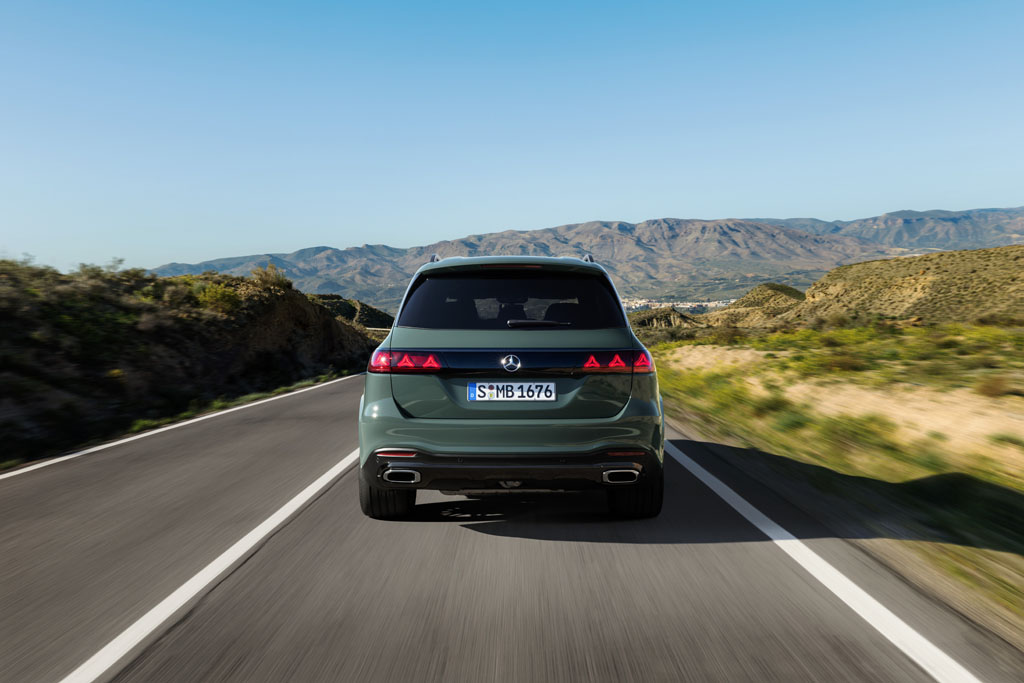
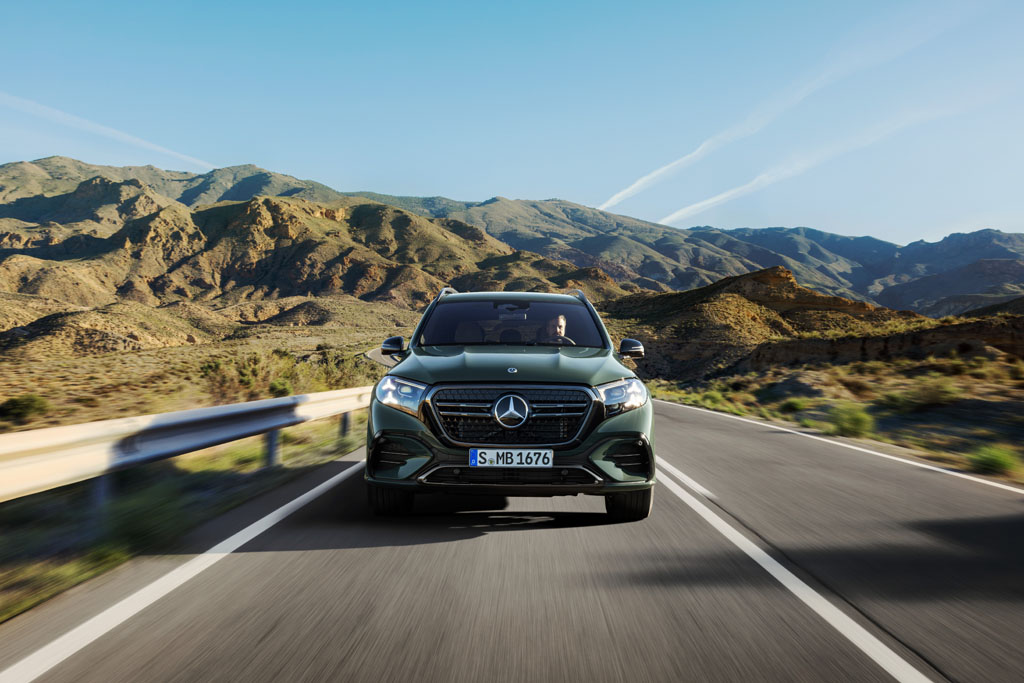
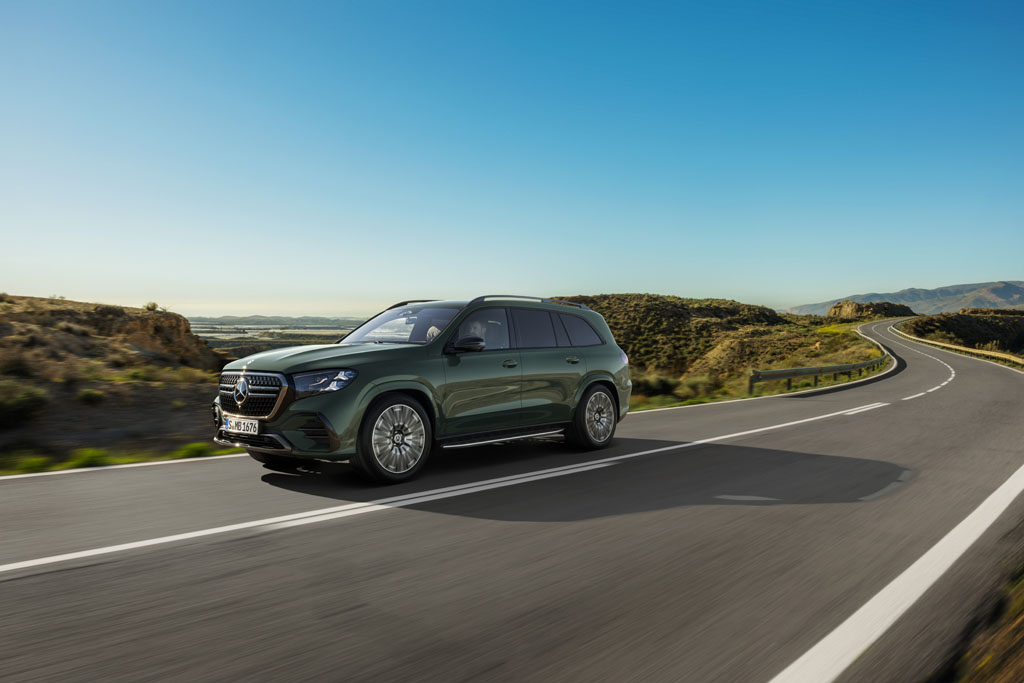
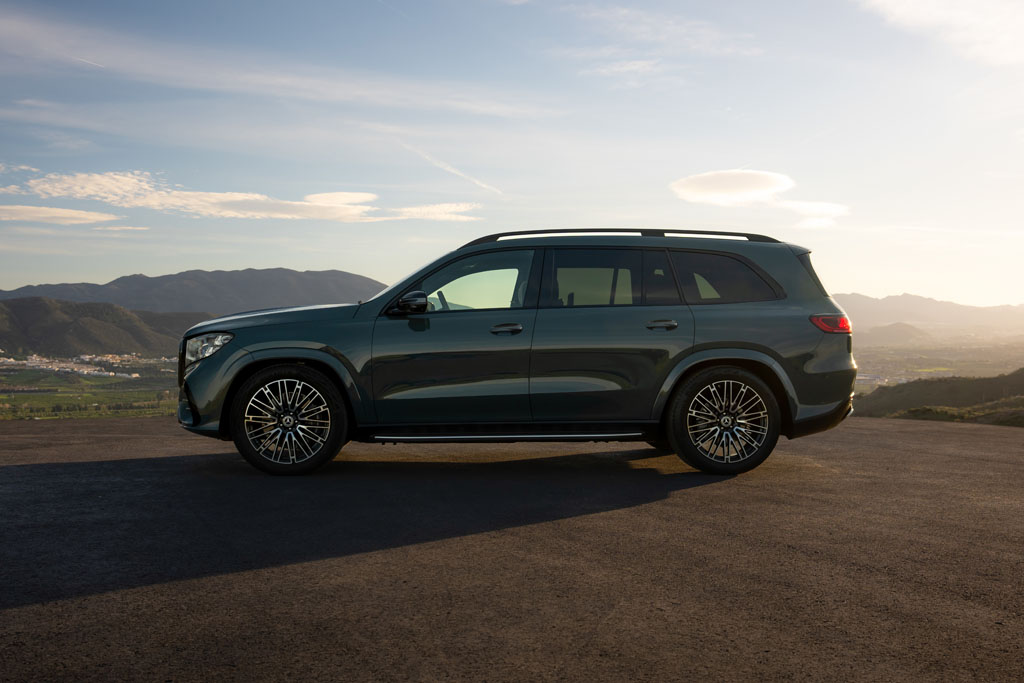
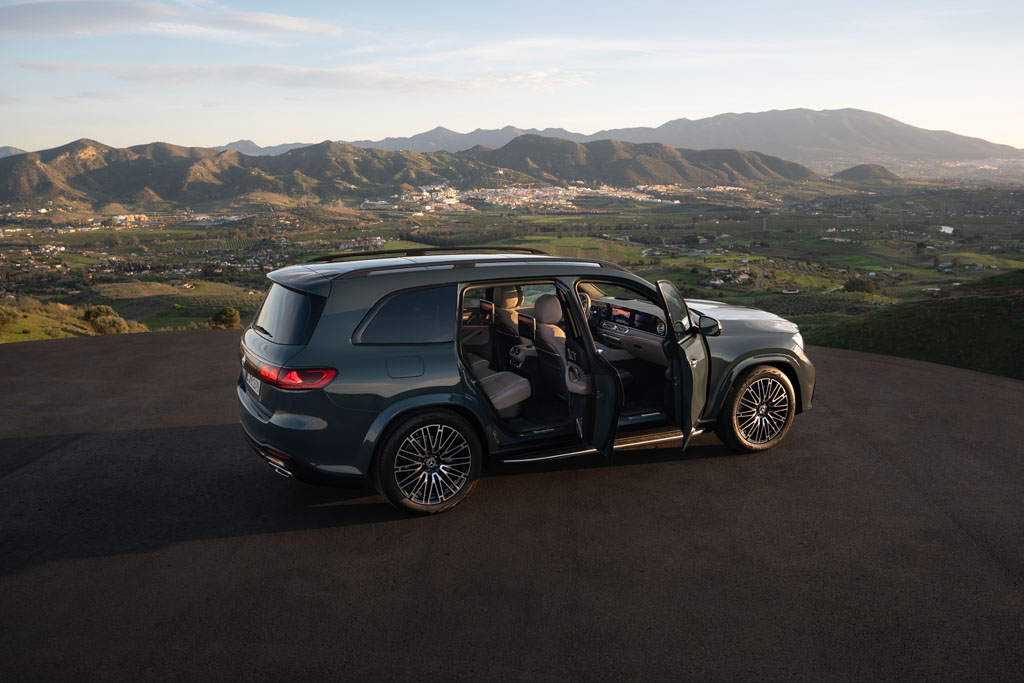
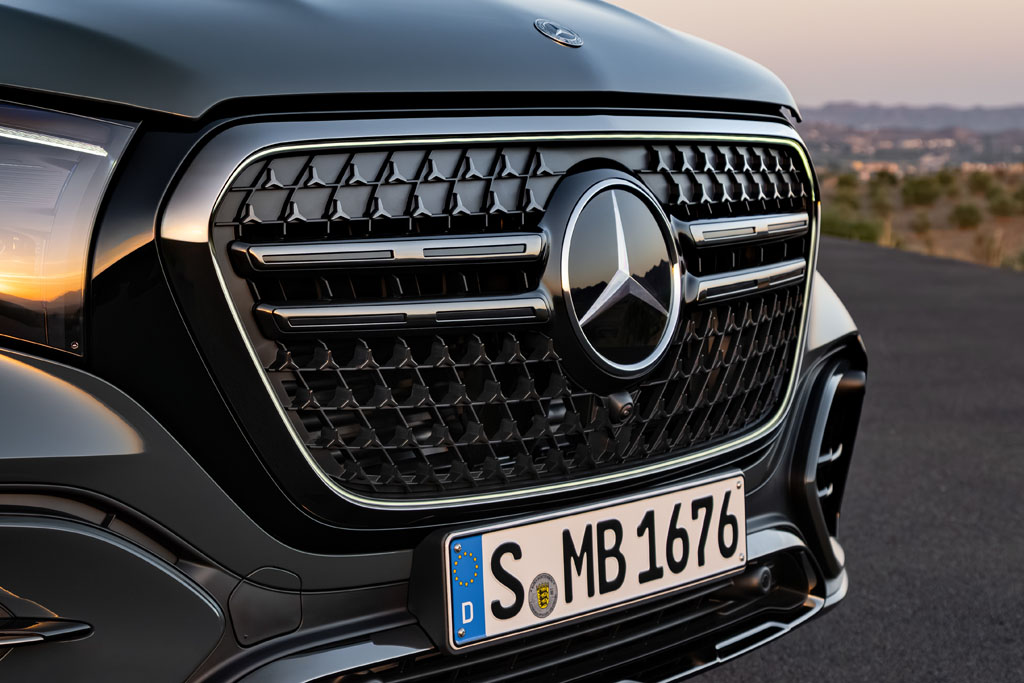
Mercedes-Benz is giving the 2027 GLS a refresh that feels very on-brand for its flagship three-row SUV. There is more flash, more screen real estate, more computing power, and just enough old-school swagger to remind everyone this is still a Mercedes-Benz. The illuminated hood ornament may grab the early attention, but the bigger story is how thoroughly Mercedes is leaning into the idea of the GLS as the S-Class of SUVs. This is still the big, comfortable family hauler for well-heeled buyers, but now it arrives with an even deeper layer of technology and a stronger sense of theater.
Under the hood, the GLS 580 gets one of the more unexpected updates in the luxury SUV world with a twin-turbo 4.0-liter V-8 that now uses a flat-plane crankshaft. That is the kind of hardware you usually associate with sharper-edged performance machines, not a full-size luxury people mover, which makes its arrival here especially interesting. Output climbs to 530 horsepower and 553 lb-ft of torque, while the GLS 450 keeps its turbocharged 3.0-liter inline-six and now adds more torque to its already smooth and capable character. On paper, the V-8 is the conversation starter, but the six-cylinder model still looks like it will be the quietly compelling choice for buyers who want real pace without going full excess.
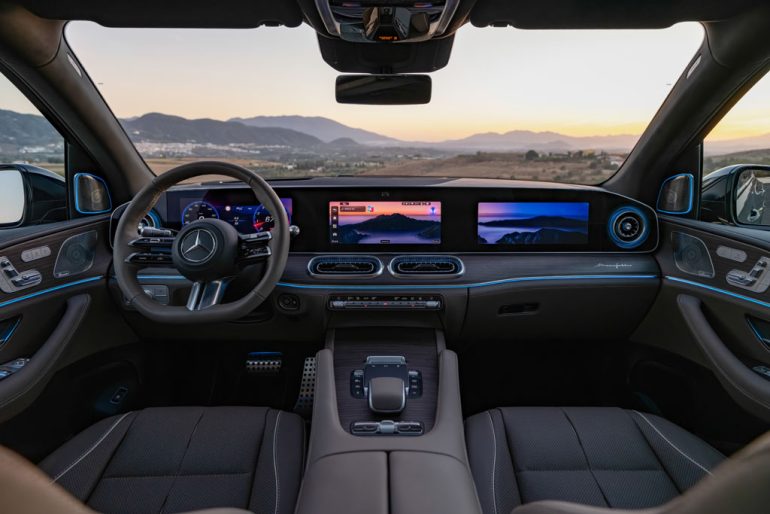
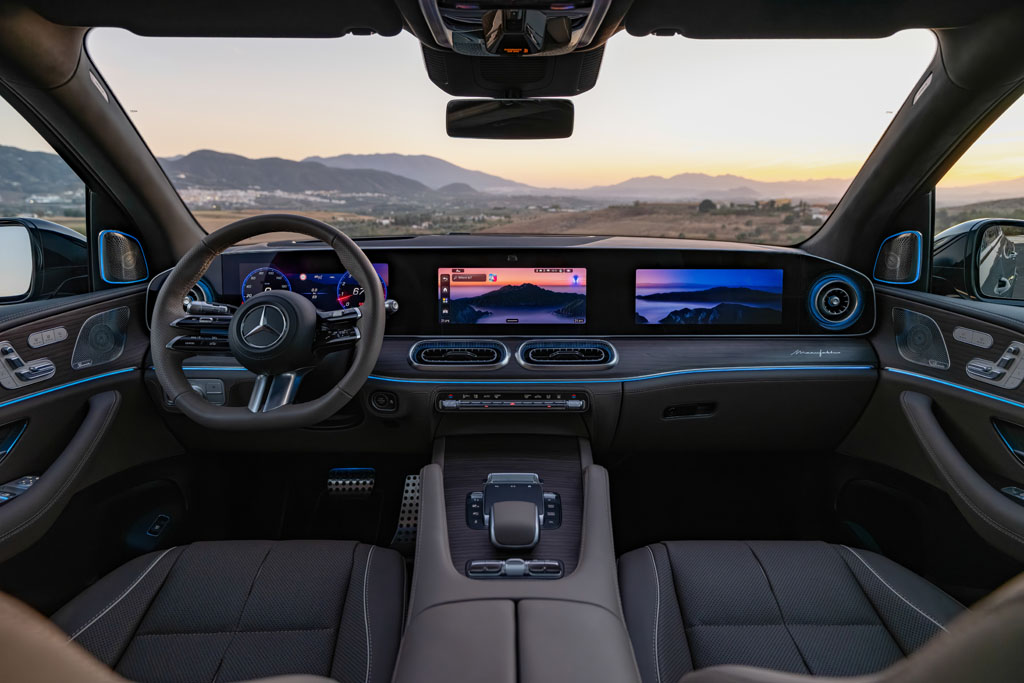
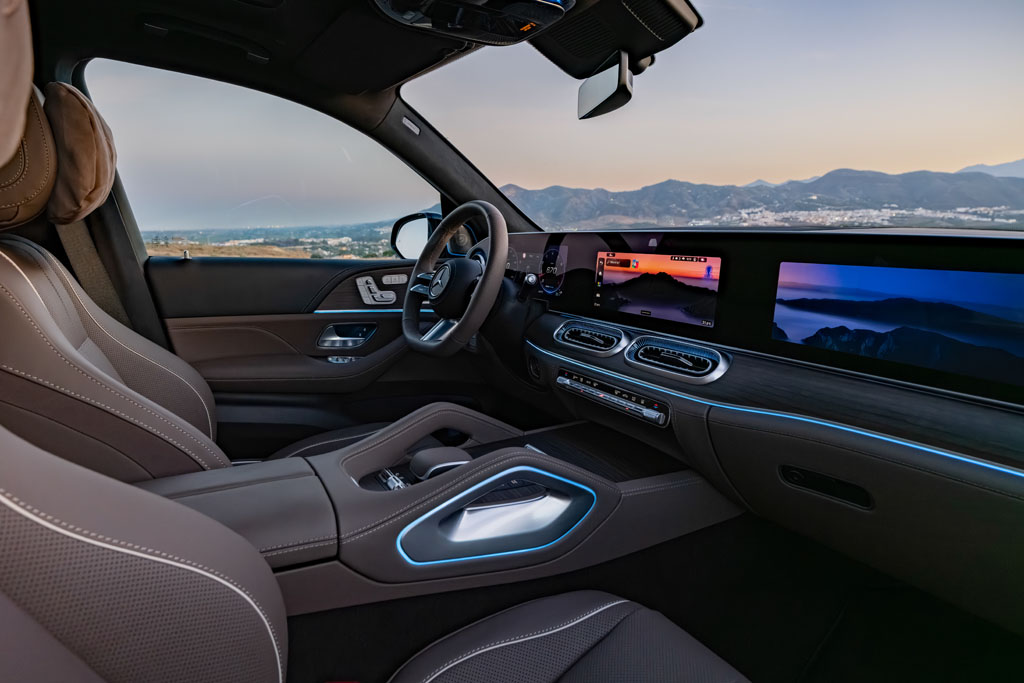
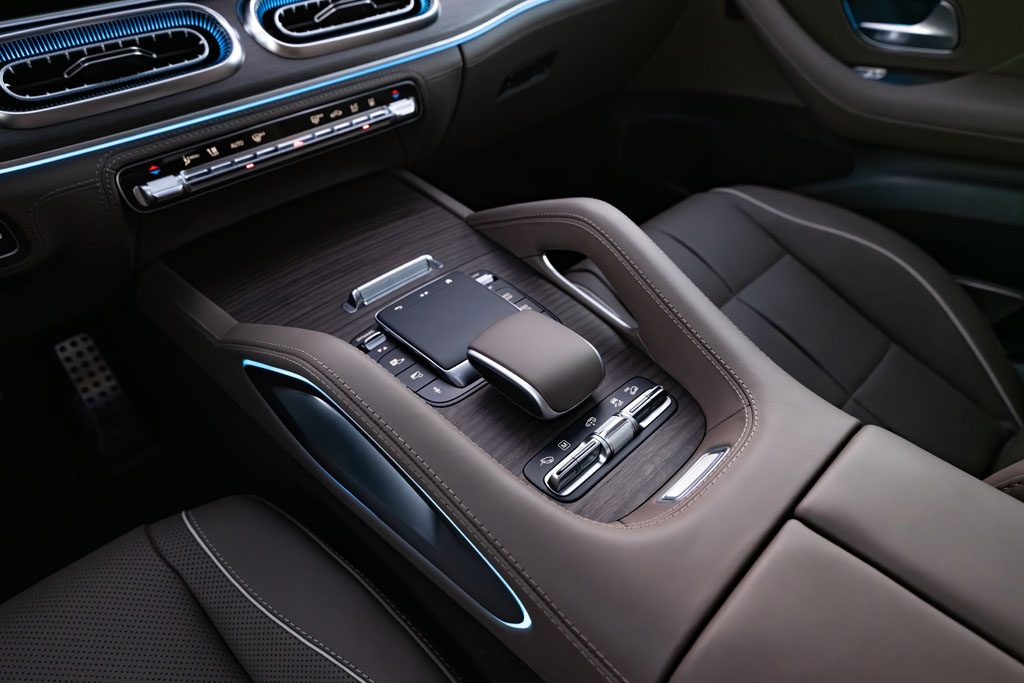
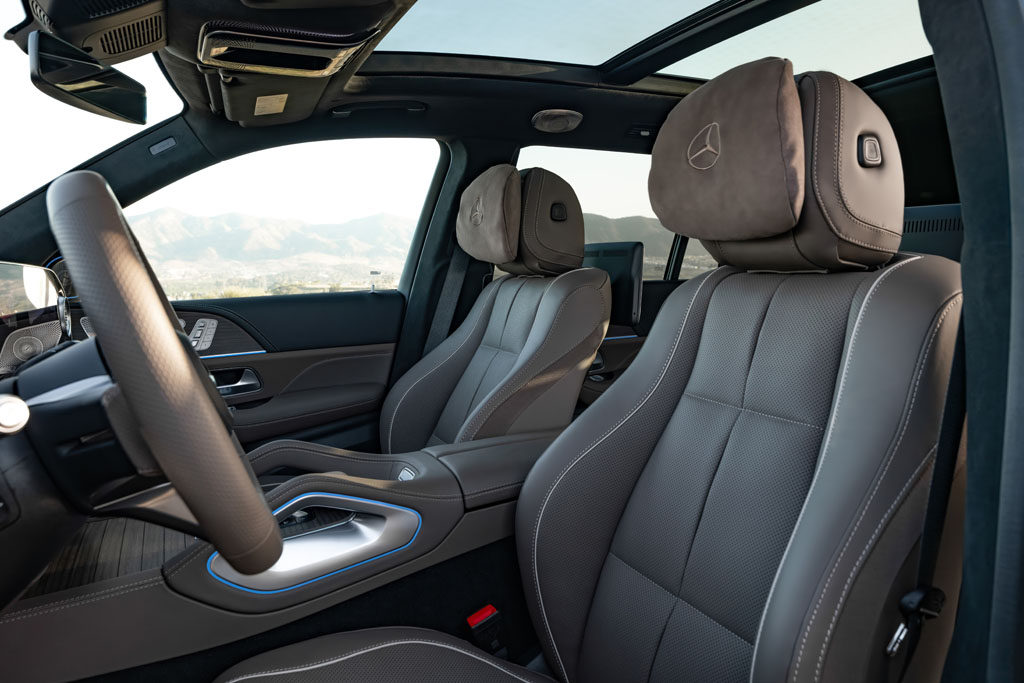
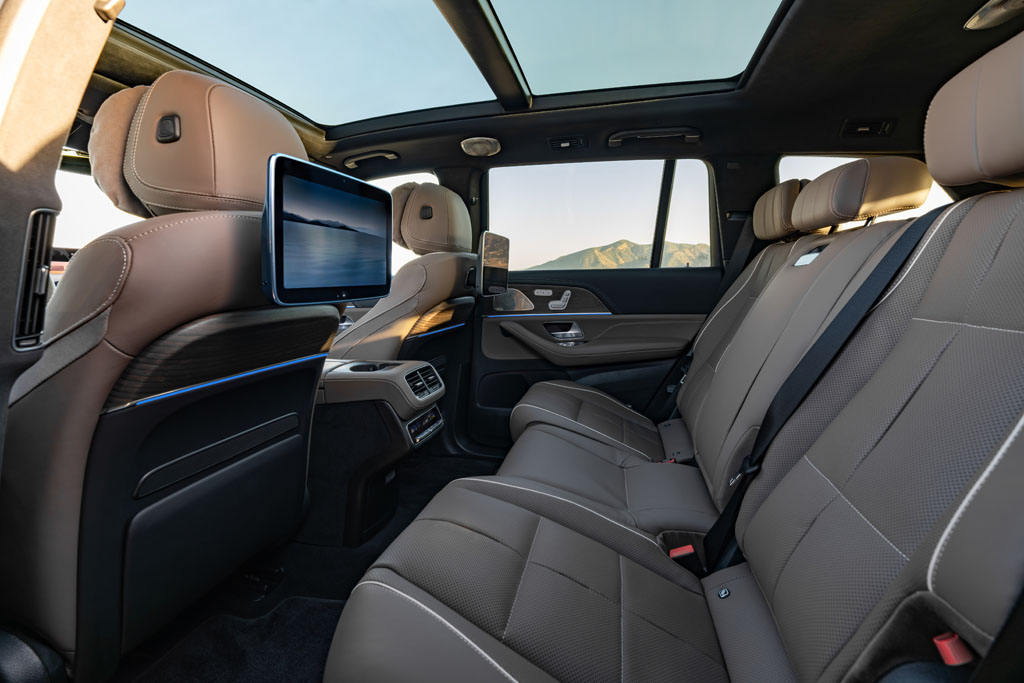
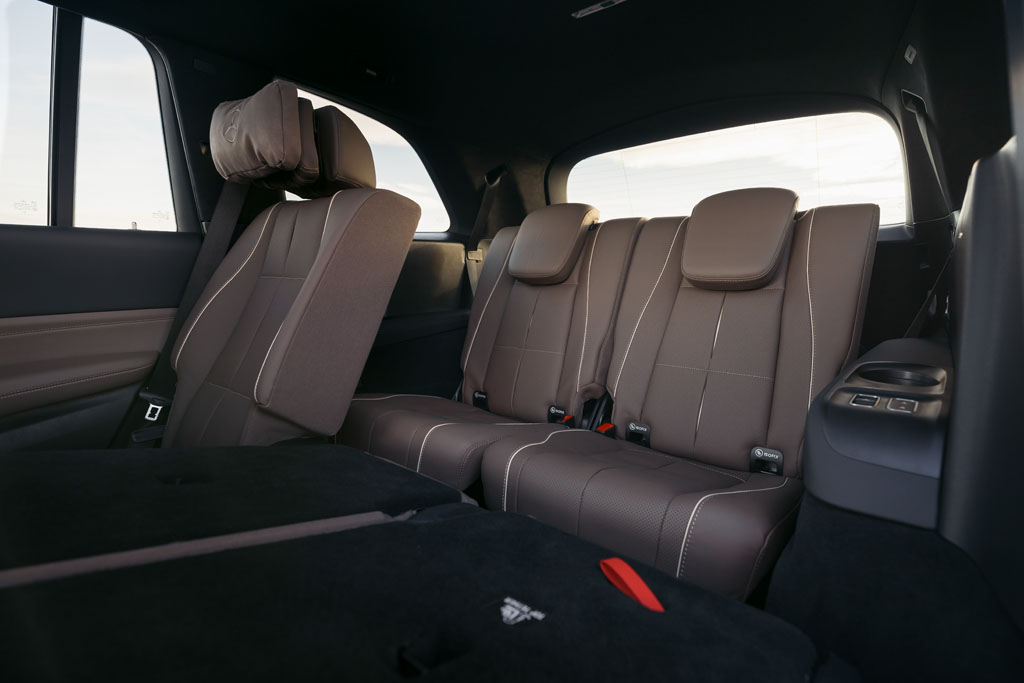
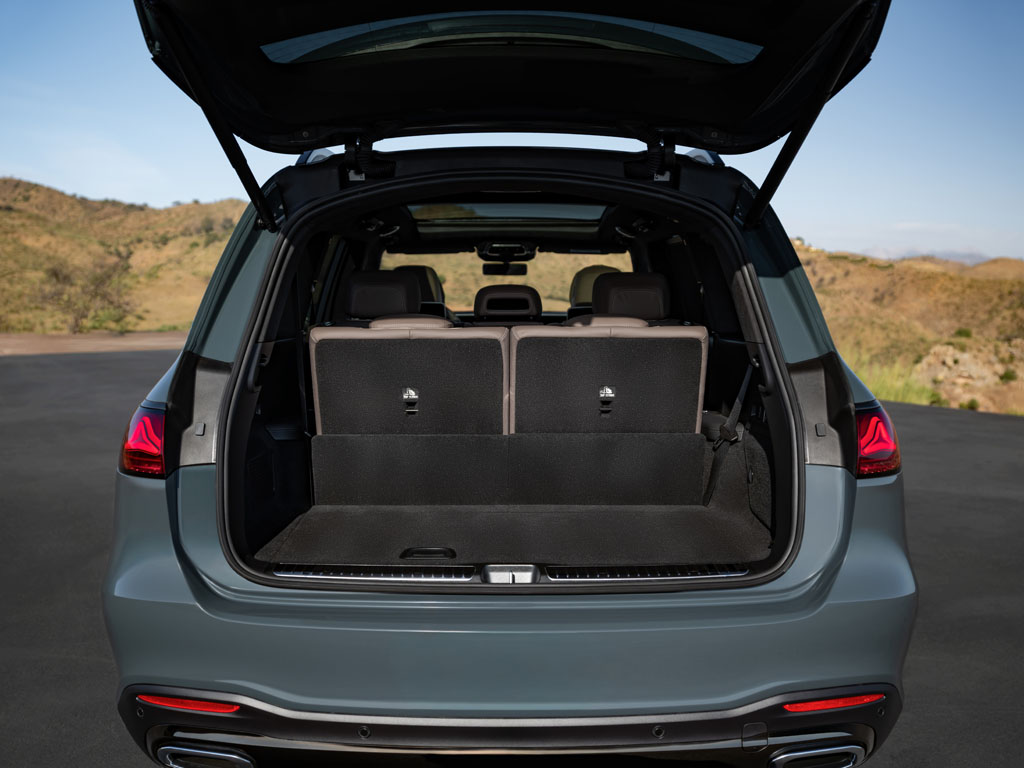
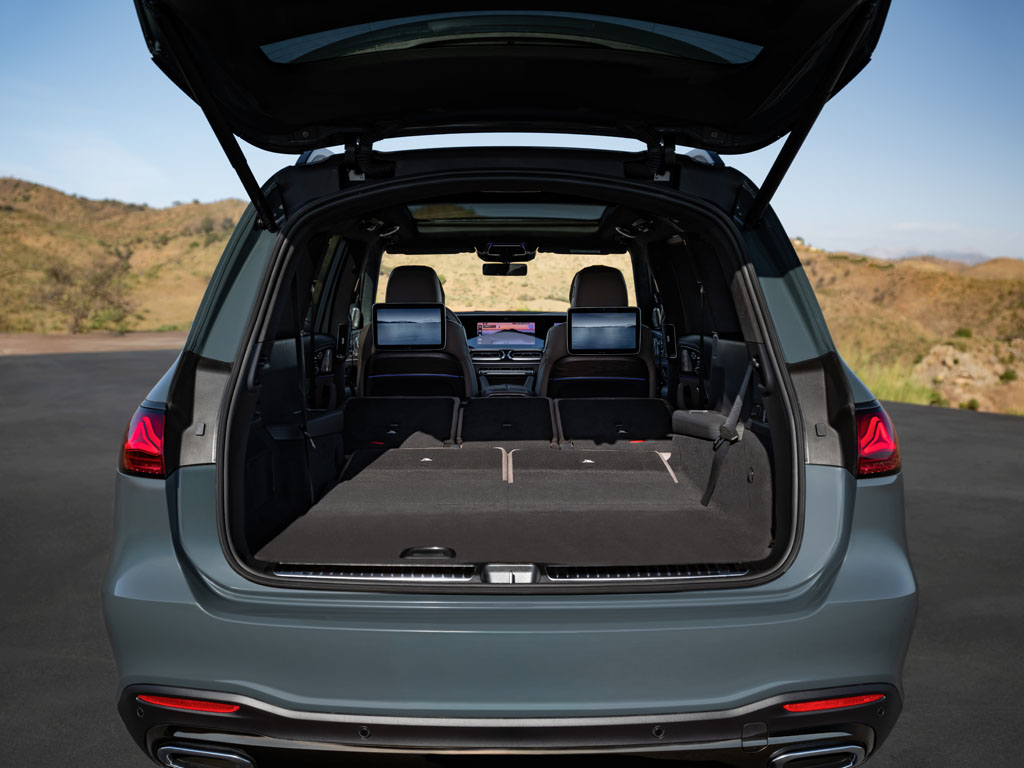
Inside, Mercedes appears to be doubling down on the idea that luxury now means digital immersion as much as leather, wood, and soft ambient lighting. The new MBUX Superscreen stretches three 12.3-inch displays under one glass surface and gives the cabin an even more futuristic feel, while the latest Mercedes-Benz Operating System pushes harder into AI-driven features and personalization. Add in available five-zone climate control, a genuinely usable third row, and even vibrating front seats designed to ease fatigue, and the GLS starts to sound less like a traditional SUV and more like a rolling first-class lounge with a command center built into the dash.
Still, the coolest technology in the 2027 GLS may be the one many people will never fully appreciate until they experience it. Mercedes’ E-Active Body Control has been remarkable in past applications, and this latest evolution sounds even more impressive. The system monitors wheel and body movement at an incredibly fast rate, actively adjusting the suspension to smooth out the road in real time. That alone is special. What takes it further is the predictive, cloud-based element that can use data gathered from other similarly equipped Mercedes vehicles to map imperfections in the road ahead. In simple terms, if another Mercedes has already encountered a pothole, speed bump, or rough patch, your GLS can know about it before you get there and prepare itself accordingly. People tend to think of suspension tech as background engineering, but this is the kind of system that can fundamentally change how a big luxury SUV feels on the move.
And yes, Mercedes has not forgotten that a GLS still needs to do SUV things. All-wheel drive remains standard, there is still a two-speed transfer case with low range, and E-Active Body Control can even help free the vehicle from sand by rocking it or adjusting individual wheels to find traction. Realistically, most GLS owners are more likely to use that capability leaving a beach house than crawling through Moab, but it is still impressive that Mercedes continues to pair serious luxury with legitimate hardware underneath. Even the more conventional Airmatic setup now benefits from predictive road preparation, which means the entire lineup gets smarter, not just the range-topping version.
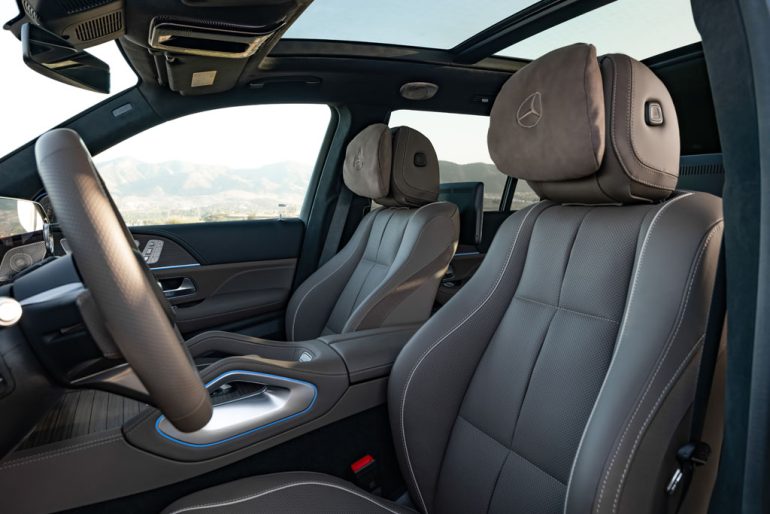
The refreshed GLS feels like Mercedes chasing a very specific kind of buyer, someone who wants flagship comfort, unmistakable presence, and a long list of innovations that make every trip smoother and more entertaining. There is no shortage of luxury three-row SUVs now, but Mercedes still seems especially good at making technology feel indulgent rather than clinical. That is what could make this GLS stand out. It is not just about having more features. It is about making a 5,000-plus-pound family SUV feel eerily polished, unusually intelligent, and in the case of that suspension, genuinely remarkable.
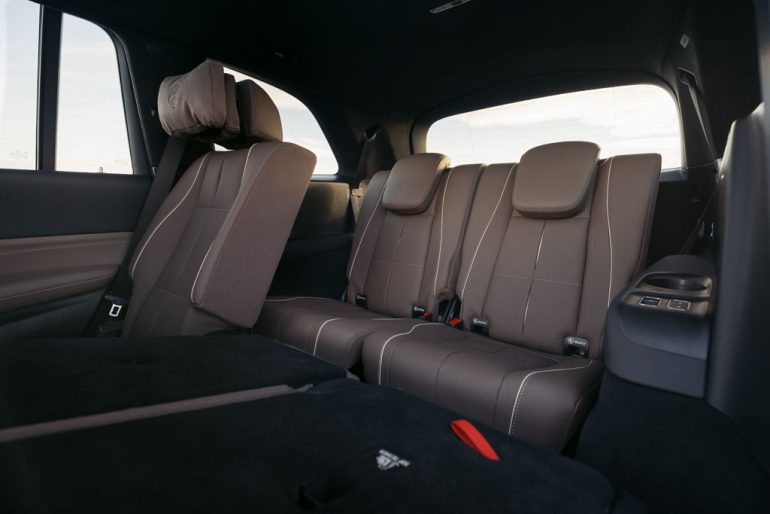
Pricing has not been announced, but given the current GLS starts in the low-$90,000 range and this refresh adds more content across the board, no one should expect this new version to come cheap. Even so, for buyers shopping at this level, the 2027 GLS looks poised to make a strong case for itself as one of the most complete luxury SUVs on the market, especially if that next-generation suspension delivers the kind of magic it promises.


Lloyd Tobias is a seasoned automotive journalist and passionate enthusiast with over 15 years of experience immersed in the world of cars. Whether it’s exploring the latest advancements in automotive technology or keeping a close pulse on breaking industry news, Lloyd brings a sharp perspective and a deep appreciation for all things automotive. His writing blends technical insight with real-world enthusiasm, making his contributions both informative and engaging for readers who share his love for the drive. When he’s not behind the keyboard or under the hood, Lloyd enjoys test driving the newest models and staying ahead of the curve in an ever-evolving automotive landscape.

 2026 Mercedes-Benz GLS Pricing: What Real Buyers Are Paying on the Three-Row Flagship That Floats Over Bad Pavement
 2027 Mercedes-Maybach GLS680 Brings 603 HP V8 Power and Over-the-Top Luxury SUV Presence
 Mercedes-Benz Celebrates Tuscaloosa Milestone as New GLE and GLS Reinforce the Strength of American SUV Production


