
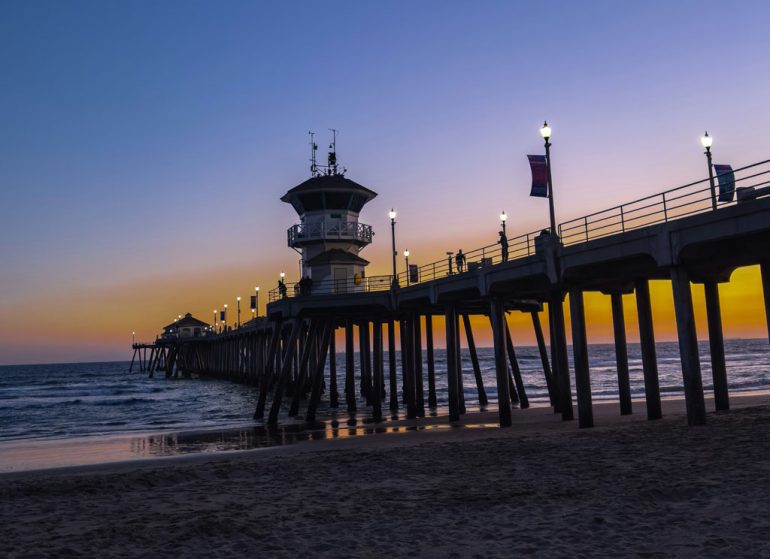
Pacific Coast Highway through Huntington Beach is a classic Orange County drive. It is also busy with beach traffic, cyclists, parking lot exits and drivers looking at the ocean instead of the road. A fender bender there can ruin a perfect Saturday and a clean car.
Alt text: A long ocean pier with a lookout tower silhouetted against a sunset sky
What you do in the first hour shapes the repair, the insurance claim and any injury case. If someone is hurt, many drivers also talk to a car accident lawyer before they sign anything. This guide walks through the rest from a car owner’s point of view.
PCH in Huntington Beach mixes very different users in a small space. Through traffic, beachgoers hunting for parking and riders on the bike path all share the same stretch. Speeds drop and rise quickly, which sets up rear-end and side-swipe crashes.
Summer weekends and big beach events add more pressure. Visitors who do not know the turn lanes make late moves near the pier. Sun glare in the late afternoon makes brake lights harder to see.
Phones make all of this worse. California’s hands-free law bans holding a phone while driving, and the Office of Traffic Safety warns that phone use triples crash risk. Drivers under 18 cannot use a phone at all behind the wheel.
Evidence disappears fast on a busy road. If everyone is safe and it is legal to stay put, record these details first.
If anyone feels hurt, get checked the same day. Some injuries, such as whiplash, show up hours later.
Which agency responds depends on where the crash happened. Before leaving the scene, get the report number from the officer.
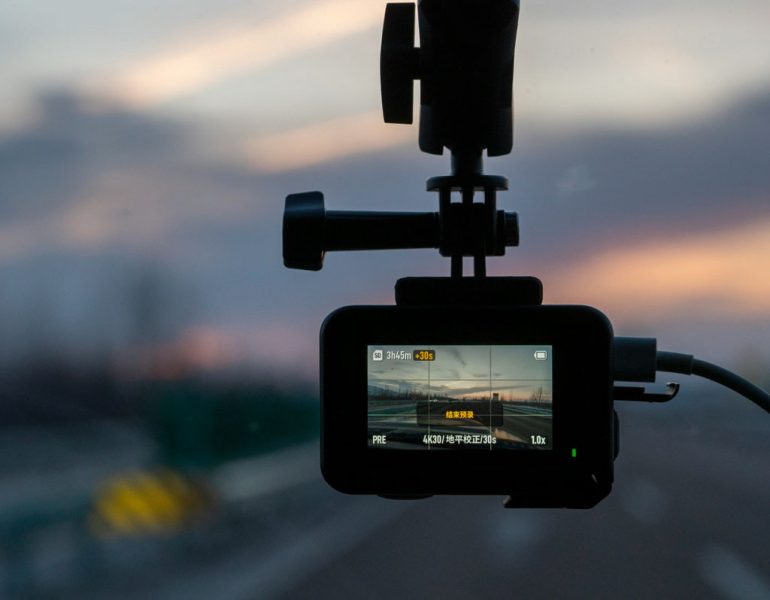
Alt text: A camera on a suction mount recording the road through a car windshield at dusk
CHP reports are available to drivers, owners and their representatives. The agency lets you request a crash report online, in person or by mail.
There is also a state deadline that many drivers miss. You must file an SR-1 form with the DMV within 10 days if anyone was injured or damage tops $1,000. This applies even when police filed their own report.
California uses a pure comparative fault system. Each driver is assigned a share of the blame, and any payout drops by that share. A driver found 30 percent at fault can still recover 70 percent of their losses.
That is why small details matter so much. A rolling stop out of a beach lot, a missing brake light or a hand on a phone can shift the split. Insurers know this and look hard for anything that moves the percentage.
Clear photos and a dashcam clip are your best defense here. They show what happened rather than what each driver remembers.
Enthusiasts often settle for the body shop estimate and leave money on the table. Depending on the policy and the facts, a claim can include more than the repair itself.
Classic owners have extra reasons to keep records. With Leno’s Law adding smog exemptions for some collector cars from 2028, proof of low mileage and collector insurance matters even more.
A lawyer is not needed for every scraped bumper. The picture changes when someone is injured, fault is disputed or the insurer stops responding. California generally allows two years to file an injury lawsuit and three years for property damage.
DiMarco Araujo Montevideo, an Orange County firm based in Santa Ana, takes on crash claims for Huntington Beach drivers. The firm has practiced in Orange County since 1979 and offers free consultations. DiMarco Araujo Montevideo also works on contingency, so there is no upfront fee to talk through a case.
Nothing here is legal advice for your crash. Rules and filing dates shift over time, so a licensed California attorney should review your own facts.
Set up the dashcam, keep insurance details in the glove box and save photos of your upgrades. Those few minutes of prep make any PCH claim faster and cleaner.
You must file an SR-1 with the DMV within 10 days if anyone was hurt or damage exceeds $1,000. Many minor crashes pass that threshold once repair costs are added up.
Yes. California’s pure comparative fault rule lets you recover damages reduced by your share of blame.
It depends on your policy. Many standard policies limit custom parts, so check for special equipment coverage before a crash.
Timing varies by office and case. Ask the officer for the report number and contact the local CHP Area office for status.

Automotive Addicts Contributors are a collective of guest writers, industry professionals, and passionate enthusiasts who bring fresh perspectives to the Automotive Addicts platform. Focused on delivering timely news, in-depth reviews, and unique insights, these contributors help keep the site dynamic and engaging. Many use the platform to expand their reach and build credibility within the automotive media world, adding depth and variety to the content that drives the Automotive Addicts community.


