
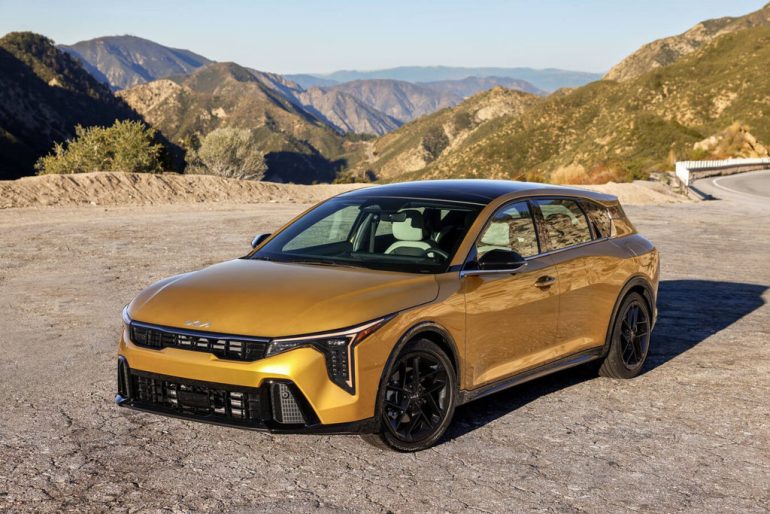
The Kia K4 Hatchback entered the market for 2026 as the five-door complement to the K4 sedan, offering sporty hatchback proportions, a standard Kia Drive Wise safety suite, and the same compelling 10-year powertrain warranty that has made the K4 family one of the stronger value propositions in the compact car segment. The 2027 model carries the recipe forward with minimal changes, keeping the price premium over competitors modest while delivering more standard content than most rivals at comparable price points. Here is what dealers paid and what you should target.
The 2027 K4 Hatchback is available in three trims: EX, GT-Line, and GT-Line Turbo. All are front-wheel drive. Prices below exclude the $1,245 destination charge.
| Trim | MSRP | Invoice | Gap |
|---|---|---|---|
| EX | $25,090 | $24,462 | $628 |
| GT-Line | $26,090 | $25,176 | $914 |
| GT-Line Turbo | $28,990 | $27,976 | $1,014 |
Invoice figures sourced from AutoFinder. Some pricing sources may list different MSRPs. Always verify the current MSRP on the window sticker before making an offer.
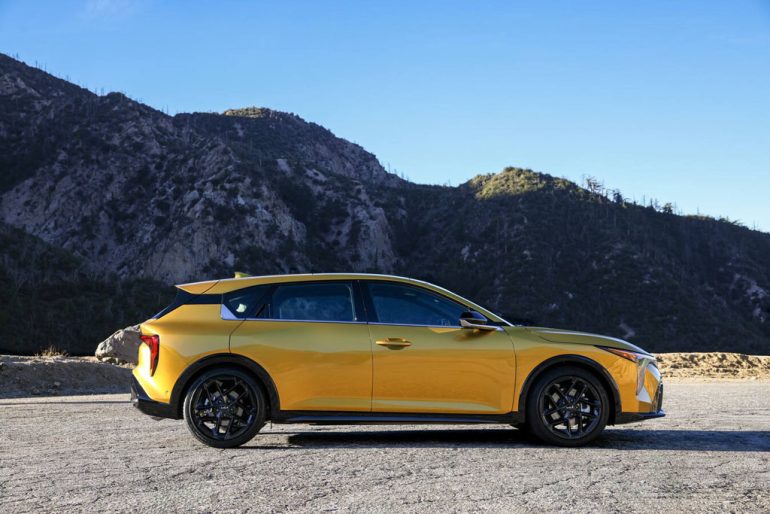
Kia charges $1,245 for destination and delivery on the 2027 K4 Hatchback. With destination included, the range runs from $26,335 on the EX to $30,235 on the GT-Line Turbo.
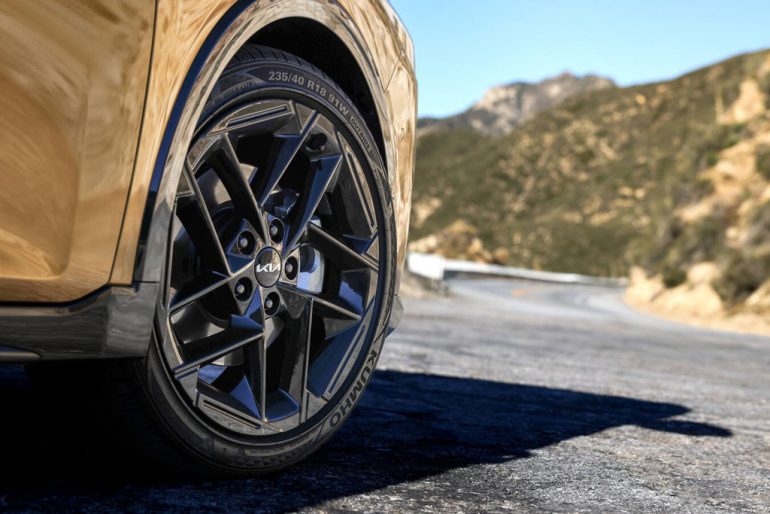
The 2027 K4 Hatchback is a near-carryover update. Across the K4 Hatchback lineup, prices increased by approximately $100 per trim versus the 2026 models. The only equipment change of note is that the optional GT-Line Premium Package now includes 18-inch black alloy wheels, updating the wheel design from the prior configuration. Powertrains are unchanged. The red interior upholstery option, which was introduced on the K4 GT-Line in 2026, remains restricted to the sedan body style for 2027 and is not available on the hatchback.
For buyers, a minimal update year on the K4 Hatchback is a positive signal. The 2026 model was well-received, the powertrain is proven, and the addition of the black wheel option on the GT-Line Premium Package is a meaningful visual enhancement without a significant price impact.
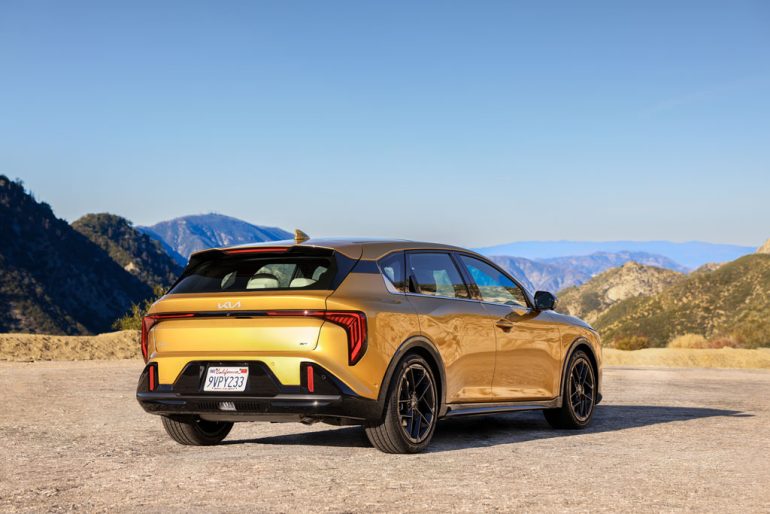
The EX and GT-Line trims use a 2.0-liter naturally aspirated four-cylinder running the Atkinson cycle, producing 147 horsepower and 132 lb-ft of torque through an Intelligent Variable Transmission (IVT) to the front wheels. The GT-Line Turbo steps up to a 1.6-liter turbocharged four-cylinder producing 190 horsepower and 195 lb-ft of torque through an eight-speed automatic transmission with paddle shifters. The turbo’s peak torque arrives earlier in the RPM range, delivering a noticeably more responsive feel in everyday driving and highway merging.
EPA fuel economy (2.0L, EX and GT-Line): 28 city, 34 highway, 30 combined mpg. EPA fuel economy (1.6T, GT-Line Turbo): 26 city, 33 highway, 28 combined mpg. The turbo’s two mpg combined penalty over the 2.0L is a reasonable trade for 43 additional horsepower and 63 additional lb-ft of torque. The 12.4-gallon fuel tank provides a combined range of approximately 336 to 372 miles depending on engine.
Suspension: The EX uses a torsion-beam rear suspension. The GT-Line and GT-Line Turbo both upgrade to a multi-link rear suspension with sport-tuned damping, which is a meaningful handling improvement. The GT-Line Turbo’s suspension is the same multi-link unit but calibrated to manage the additional weight and power of the turbo engine. Drive Mode (Normal and Sport) is standard on the GT-Line Turbo.
Dimensions: 174.4 inches overall length, 72.8 inches width (with mirrors), 107.1-inch wheelbase. The hatchback body adds a modest amount of weight over the sedan: curb weight runs approximately 3,080 lbs on the EX, 3,228 lbs on the GT-Line, and 3,338 lbs on the GT-Line Turbo. Front headroom is 39.0 inches, front legroom is 42.3 inches, and rear legroom is 38 inches.
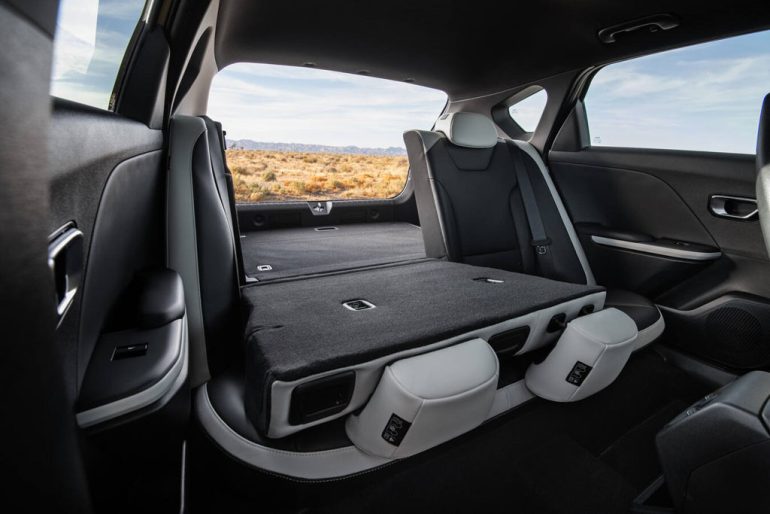
Cargo: 22.2 cubic feet behind the rear seats, expanding to 59.3 cubic feet with the rear seats folded. The hatchback’s cargo advantage over a comparable sedan is the utility of the full cargo floor and the fold-flat access through the rear hatch, making it more practical for bulky items and bike wheels than a trunk-based alternative.
Warranty: Kia backs the 2027 K4 Hatchback with a 5-year/60,000-mile basic warranty, a 10-year/100,000-mile powertrain warranty (original owner; transfers at 5 years/60,000 miles), and a 5-year/100,000-mile corrosion warranty. The 10-year powertrain warranty remains one of the best in the compact car class and is a legitimate ownership advantage for buyers who plan to hold the vehicle long-term.
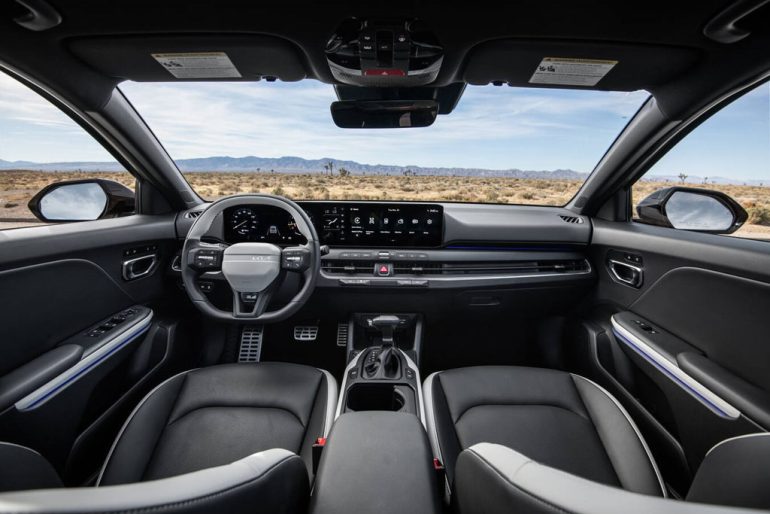
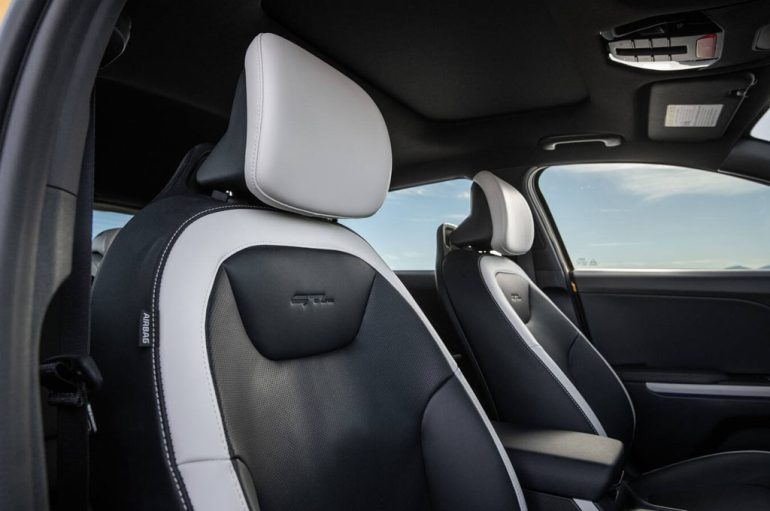
The EX ($25,090) is the entry hatchback trim and arrives meaningfully equipped. Standard content includes synthetic leather upholstery, heated front seats, dual-zone automatic climate control, a wireless charging pad, a 10.25-inch touchscreen with wireless Apple CarPlay and Android Auto, a 4.2-inch digital instrument cluster display, blind-spot monitoring with rear cross-traffic alert, 17-inch alloy wheels, and Kia’s full Drive Wise suite. The Drive Wise suite on all 2027 K4 Hatchback trims includes forward collision warning with pedestrian and cyclist detection, automatic emergency braking, adaptive cruise control with stop-and-go, lane-following assist, driver-attention warning, and automatic high-beam control. Getting all of that standard on a sub-$26,000 car is one of the K4 Hatchback’s genuine selling points.
The GT-Line ($26,090) adds the multi-link rear suspension, 18-inch alloy wheels, paddle shifters, a 10-way power-adjustable driver’s seat, satin-chrome and gloss-black exterior trim, and unique GT-Line interior styling. The suspension upgrade is the most substantive change: the shift from torsion-beam to multi-link meaningfully improves body control and ride quality on broken pavement, and it makes the GT-Line handle noticeably better than the EX in corners. The $1,000 step from EX to GT-Line is one of the better value jumps in the compact segment. The optional GT-Line Premium Package adds the new 18-inch black alloy wheels for 2027, along with a premium audio system, ventilated front seats, acoustic windshield glass, and a memory driver’s seat.
The GT-Line Turbo ($28,990) is the performance-oriented top trim. It replaces the 2.0L with the 1.6-liter turbo, adds the eight-speed automatic, upgrades to a full 12.3-inch digital instrument cluster as standard (optional on the GT-Line), integrates navigation, and includes an eight-speaker Harman Kardon audio system, a moonroof, upgraded LED headlights and taillights, and aluminum pedals. Rear air vents are standard on the turbo trim. The optional Technology Package adds front cross-traffic alert, emergency steering assist, blind-spot intervention, a 360-degree surround view camera, front and rear parking sensors with rear automatic braking, and Highway Driving Assist 2 (which maintains lane centering and speed on the highway without driver steering input).
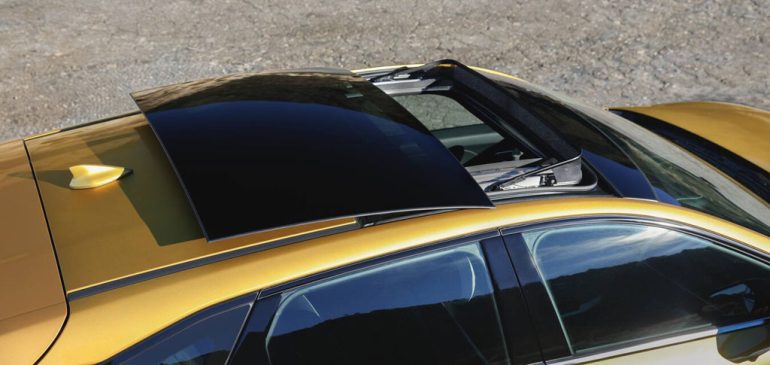
The $2,900 step from the GT-Line to the GT-Line Turbo buys 43 extra horsepower, a more responsive torque curve, the eight-speed automatic, the moonroof, the Harman Kardon audio system, and the full 12.3-inch digital instrument cluster as standard. That is a meaningful bundle of upgrades for $2,900.
The argument for staying on the GT-Line is fuel economy: the 2.0L’s 30 combined mpg versus the turbo’s 28 combined mpg translates to roughly $150 per year in additional fuel cost at average driving. Over five years that is $750, which is a fraction of the $2,900 price difference. Most buyers who can stretch to the GT-Line Turbo will find the powertrain and the Harman Kardon audio worth the premium. The GT-Line is the right choice primarily for buyers on a strict budget who still want the multi-link suspension and the 18-inch wheel upgrade.
As of late October 2026, Kia has not published specific manufacturer incentives for the 2027 K4 Hatchback. The 2026 K4 Hatchback was available with lease deals as aggressive as $269 per month for 24 or 36 months with $3,499 due at signing through November 2, 2026, reflecting end-of-model-year clearance on the prior year’s inventory. Buyers considering a 2027 K4 Hatchback should not expect comparable deals until 2027 inventory matures and the model year advances past its initial weeks on sale.
Kia typically publishes monthly programs that include APR financing, lease rates, and loyalty or conquest bonuses. Conditional bonuses for college graduates, military, and first responders are common across the Kia lineup and are worth asking about at the dealership, as they are not always prominently advertised. Check Kia’s official website or ask your dealer for the current month’s programs before signing any paperwork.
The K4 Hatchback’s invoice gaps run from $628 on the EX to $1,014 on the GT-Line Turbo. These are tighter gaps than you would find on larger vehicles, which reflects a combination of the K4 Hatchback’s competitive pricing and relatively strong demand in the compact hatchback segment.
Invoice is your negotiating anchor. On the GT-Line at $26,090 MSRP with an invoice of $25,176, a realistic opening offer is $25,400 to $25,600 before destination, positioning you clearly above invoice while showing you have done the research. On the GT-Line Turbo, a target in the $28,200 to $28,500 range before destination is a reasonable opening position.
The EX gap is the tightest in the lineup. At just $628 between MSRP and invoice, EX buyers have less room to maneuver than buyers of the higher trims. In a market where the EX is selling near MSRP, a realistic discount may be $200 to $400 off sticker rather than a full invoice-or-below purchase. Dealer competition is the best tool for EX buyers: getting quotes from multiple stores creates downward pressure that invoice data alone cannot.
The GT-Line is the value anchor. The $1,000 step from EX to GT-Line gets you the multi-link suspension, 18-inch wheels, power driver’s seat, and paddle shifters. For most buyers who are going to keep the car three years or more, the GT-Line is the better long-term purchase at a price point that remains under $27,000 with destination. The GT-Line with the Premium Package, which adds ventilated seats, the premium audio system, and the new black wheels, is the most feature-complete option under $29,000 in the hatchback segment.
Email multiple dealers before visiting any. Request a specific trim with or without packages and ask for the out-the-door price including all fees. Dealers in the same region compete for the same buyer pool, and a competing quote is the most reliable way to move a negotiation. Out-the-door is the only number that matters for a fair comparison.
The compact hatchback segment includes the Honda Civic Hatchback, Mazda3 Hatchback, Toyota Corolla Hatchback, and Volkswagen Golf. The Civic Hatchback starts around $24,700 and offers more powertrain options, including a standard hybrid-capable option on Sport Hybrid trims. The Mazda3 Hatchback starts around $26,000 and prioritizes interior quality and driving feel above all else. The Corolla Hatchback starts around $24,000 and emphasizes reliability over feature content. The VW Golf starts around $31,000 and targets buyers who want the European hatchback experience with stronger standard content.
The K4 Hatchback’s competitive advantages are its 10-year/100,000-mile powertrain warranty, the standard wireless charging and synthetic leather on the entry EX trim, the multi-link rear suspension starting at the GT-Line, and the Harman Kardon audio on the GT-Line Turbo, which is not offered on the Civic or Corolla Hatchback at any price. Its fuel economy at 28 to 30 combined mpg is competitive with the naturally aspirated competition but lags behind the Honda Civic Hybrid’s 50 combined mpg by a substantial margin.
For buyers who want a five-door compact car, a class-leading warranty, strong standard content, and a genuine performance option in the GT-Line Turbo, the 2027 K4 Hatchback is one of the most complete choices in the segment under $30,000.

Darryl Taylor Dowe is a seasoned automotive professional with a proven track record of leading successful ventures and providing strategic consultation across the automotive industry. With years of hands-on experience in both business operations and market development, Darryl has played a key role in helping automotive brands grow and adapt in a rapidly evolving landscape. His insight and leadership have earned him recognition as a trusted expert, and his contributions to Automotive Addicts reflect his deep knowledge and passion for the business side of the car world.


