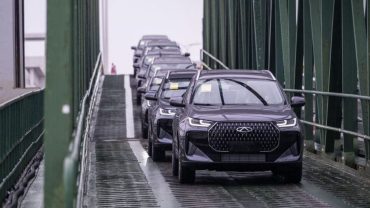
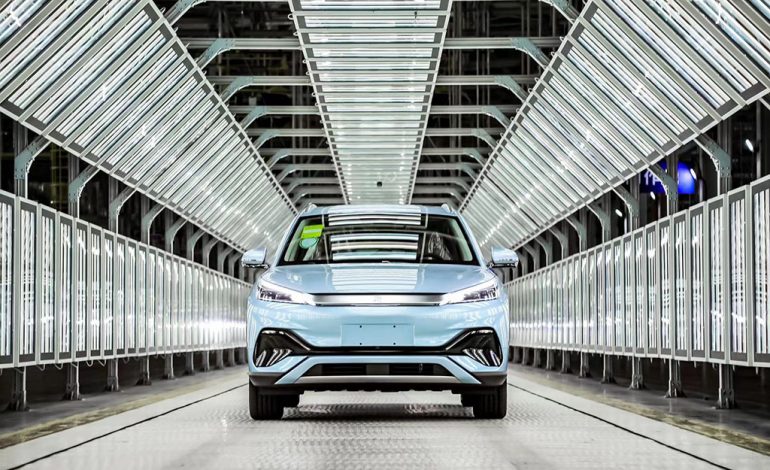
The United States has initiated an investigation into the potential national security risks posed by Chinese vehicle imports, citing concerns regarding the integration of “connected” car technology. The probe, led by the U.S. Commerce Department, aims to address worries that these vehicles could collect sensitive data and utilize cameras and sensors to gather detailed information about U.S. infrastructure. President Joe Biden expressed apprehension about the possibility of flooding the U.S. market with Chinese vehicles, emphasizing his commitment to safeguarding national security interests.
The investigation will also examine the security implications of autonomous vehicles, considering the potential for remote piloting or disabling. While White House officials stressed that it is premature to determine specific actions, they highlighted the broad legal authority of the U.S. government to enact measures with significant impact. Biden characterized the effort as an unprecedented step to prevent foreign vehicles, particularly those from China, from compromising national security.
Industry stakeholders, represented by the Alliance for Automotive Innovation, urged the Commerce Department to collaborate closely with the auto sector to assess any potential actions. They emphasized the importance of targeting transactions that pose genuine risks while avoiding unintended consequences on advanced vehicle safety technologies.
Despite relatively low numbers of Chinese-made vehicles currently imported into the U.S., Commerce Secretary Gina Raimondo emphasized the need for proactive measures to prevent potential threats to privacy and national security. Meanwhile, Chinese electric vehicle (EV) manufacturers have been focusing on markets outside the U.S., such as Southeast Asia, the Middle East, and Europe.
In response to the investigation, Chinese officials have not yet provided comment. Cui Dongshu, secretary general of China Passenger Car Association, criticized singling out vehicles from a specific country for restrictions on intelligent sensors, calling it unfair. Separately, the Biden administration is contemplating imposing new tariffs on Chinese-made vehicles and facing pressure to restrict Chinese EV imports from Mexico.
Furthermore, the U.S. has implemented regulations to reduce reliance on Chinese materials in the electric vehicle battery supply chain. This move has sparked tensions with China, which dominates the EV battery supply chain and has accused the U.S. of violating international trade rules.
In addition to concerns about vehicle technology, the investigation will examine data management practices, echoing previous actions taken against Chinese telecom companies due to data security concerns. Biden questioned why connected vehicles from China should operate in the U.S. without adequate safeguards, citing restrictions imposed by China on foreign autos operating within its borders.
China has recently tightened regulations on data management within the country, requiring industries to seek permission before transferring data abroad. This includes proposed bans on smart vehicles transferring data directly overseas, instead promoting the use of domestic cloud services.

Mike Floyd is a finance executive by trade and a car enthusiast at heart. As a CFO with a keen eye for detail and strategy, Mike brings his analytical mindset to the automotive world, uncovering fresh insights and unique perspectives that go beyond the surface. His passion for cars—especially his favorite, the Porsche 911, fuels his contributions to Automotive Addicts, where he blends a love for performance and design with his professional precision. Whether he’s breaking down industry trends or spotlighting emerging innovations, Mike helps keep the site both sharp and forward-thinking.