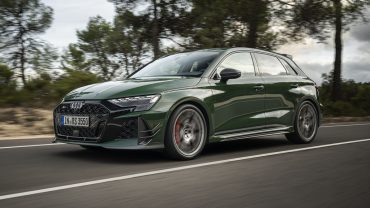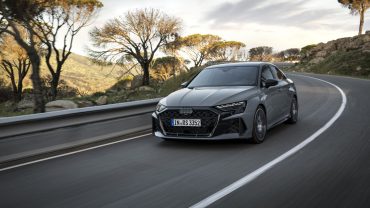

Half a century ago, Audi did something that seemed a bit odd on paper. Instead of going all in on a straight six like everyone expected, it doubled down on a new five cylinder built from the bones of a humble four. That decision, made in the mid 1970s for the second generation Audi 100, has turned into one of the brand’s greatest hits. The original 2.1 liter injected engine made 136 PS and gave the Audi 100 5E the kind of effortless, long legged performance buyers wanted in a more upscale sedan. It also laid the foundation for a family of engines that would define Audi’s “Vorsprung durch Technik” mantra on the street and on the world’s rally stages.
From there, the story escalated quickly. In 1979 Audi bolted a turbo to its five cylinder for the Audi 200 5T, and not long after, the original quattro arrived and changed everything. With turbocharging, intercooling and permanent all wheel drive, the five cylinder in the Ur quattro delivered 200 PS and a soundtrack that echoed through the forests of the World Rally Championship. The flame burned even hotter with the Sport quattro, whose four valve, alloy block version pumped out 306 PS in road trim and far more in Group B rally spec. Those fire breathing cars carried legends like Hannu Mikkola, Stig Blomqvist and Walter Röhrl to championship titles and that record breaking Pikes Peak win in 1987, and they cemented the off beat five cylinder thrum as an Audi calling card.

Even as the Group B era faded and V6 engines arrived in the 1990s, Audi found new ways to use the layout. There were tough, torquey five cylinder diesels like the 2.5 TDI, and wild road cars such as the Avant RS2, which basically invented the idea of a supercar quick family wagon with 315 PS and Porsche involvement in its development. Eventually the configuration stepped out of the limelight, only to roar back in 2009 in the TT RS. That car’s 2.5 liter turbo five brought 340 PS, a huge wave of torque and that unmistakable warble to a new generation of enthusiasts, then spread to the RS 3 and RS Q3. A new evolution in 2016 pushed output to 400 PS and helped the RS 3 scoop up multiple “Engine of the Year” trophies while standing alone in a segment dominated by four cylinders.

Today the story continues in the latest RS 3, which carries what might be the final and most polished version of Audi’s iconic motor. The current 2.5 TFSI, internally known as EA855 Evo Sport, delivers 400 PS and 500 Nm in global spec and sends the compact four door from 0 to 100 km/h in 3.8 seconds, with available top speeds up to 290 km/h when properly optioned. For the U.S., Audi lists the 2026 RS 3 at 394 hp and 369 lb ft, still paired with a seven speed dual clutch and quattro all wheel drive. Beyond the numbers, the engine’s magic trick is its character. The 1 2 4 5 3 firing order and carefully tuned exhaust give it a syncopated, off beat rhythm that no four cylinder can match, and fully variable exhaust flaps in modes like RS Performance let more of that character out when the driver is in the mood.
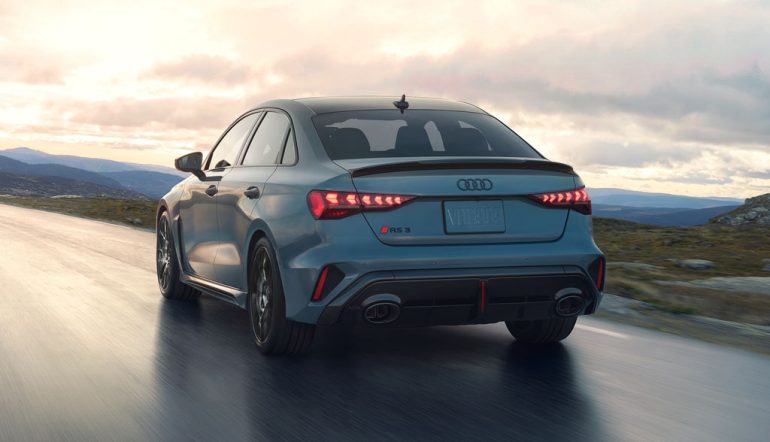
Behind the scenes, it is also a very modern piece of engineering. The aluminum block saves weight, a hollow crankshaft and magnesium oil pan trim more grams, and plasma coated cylinder liners cut friction. Dual injection and Audi’s valvelift system help it punch hard while keeping consumption in check, and every unit is hand assembled by specialists at Audi’s Győr plant in Hungary before making the trip to meet its chassis on the RS 3 line in Ingolstadt. It is an unusually human process in an increasingly automated world, which feels fitting for an engine that has always traded as much on emotion as on data. Fifty years on from that first Audi 100 5E, the five cylinder remains a mechanical signature for the brand, and in cars like the RS 3 it still feels like a greatest hits album playing at full volume.

Lloyd Tobias is a seasoned automotive journalist and passionate enthusiast with over 15 years of experience immersed in the world of cars. Whether it’s exploring the latest advancements in automotive technology or keeping a close pulse on breaking industry news, Lloyd brings a sharp perspective and a deep appreciation for all things automotive. His writing blends technical insight with real-world enthusiasm, making his contributions both informative and engaging for readers who share his love for the drive. When he’s not behind the keyboard or under the hood, Lloyd enjoys test driving the newest models and staying ahead of the curve in an ever-evolving automotive landscape.