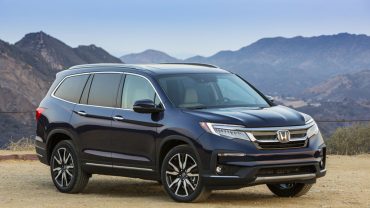
The Honda Pilot sells close to sticker price, and TrueCar’s current transaction data makes that clear: real buyers are paying just 1 percent below MSRP across 96 recent sales, the tightest margin of any vehicle covered in this guide series. That’s not a reason to skip negotiating, it’s a reason to negotiate smarter, since getting even a modest discount on a vehicle that rarely gives them makes shopping multiple dealers more valuable here than on almost anything else in this lineup. The 2026 Pilot spans seven configurations from Sport to Black Edition, all powered by the same 285-horsepower V6 and all sharing the same 5,000-pound tow rating, which means every dollar difference between trims reflects equipment, comfort, and technology rather than capability. Multiple independent sources, including dealer resources and consumer guides, name the EX-L as the strongest value in the lineup. This guide breaks down what Honda dealers actually pay across all seven configurations, the seating trade-off on the TrailSport that’s worth knowing before you compare prices, current incentives, and how to get real competing dealer quotes before you negotiate.
Honda’s official configurator lists the 2026 Pilot at Sport $42,395, EX-L $44,695, TrailSport $50,595, Touring $51,295, Touring Blackout $52,495, Elite $53,695, and Black Edition $55,195, all before the $1,495 destination charge. Front-wheel drive is standard and AWD optional on the Sport and EX-L, while TrailSport, Touring, Touring Blackout, Elite, and Black Edition all come with AWD as standard equipment with no FWD option. Every configuration delivers the same 285-horsepower 3.5-liter V6 with a 10-speed automatic transmission, 22 mpg combined on FWD trims and slightly less on AWD, and a 5,000-pound tow rating across the full lineup regardless of trim.
TrueCar’s own summary frames the Pilot’s appeal directly: every trim gets the same V6 so you don’t have to pay extra for decent power, seating for eight on most trims with 5,000-pound towing lets you carry a full crew and bring a boat, camper, or trailer, and the Bose premium audio on higher trims alongside standard Honda Sensing safety technology makes the Pilot feel well sorted for daily duty and long road trips alike. The Pilot’s closest rivals are the Toyota Highlander, Kia Telluride, Hyundai Palisade, and Subaru Ascent, and Honda dealers know that cross-shopping happens constantly in this segment. That competitive awareness is exactly what our Insider Access to Dealer Pricing tool is built to help you leverage, putting real competing local dealer quotes in front of you before you ever step onto a lot.
The invoice price is what a Honda dealer actually paid American Honda for the vehicle on their lot, and on the 2026 Pilot, that gap from MSRP typically runs approximately $1,000 to $1,800 depending on configuration, narrower in dollar terms than many vehicles covered in this series given how close to MSRP the Pilot actually sells. This invoice figure is still your negotiating anchor, but on a vehicle this close to sticker in real transactions, the more valuable strategy is getting multiple dealers to compete against each other rather than relying primarily on invoice math to do the negotiating work.
Honda’s dealer holdback adds roughly 2 to 3 percent of base MSRP back to the dealer after a sale closes, which on a $51,295 Touring represents approximately $1,025 to $1,540 in additional margin sitting beneath the invoice figure entirely. Even with a tight transaction discount, that holdback is real money, and on a purchase this size, spending an extra few minutes getting a second and third dealer quote can translate directly into a better outcome than accepting the first competitive-sounding number you receive.
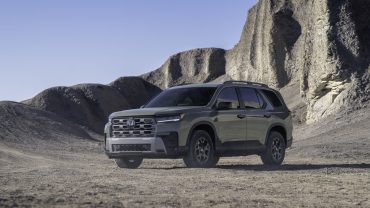
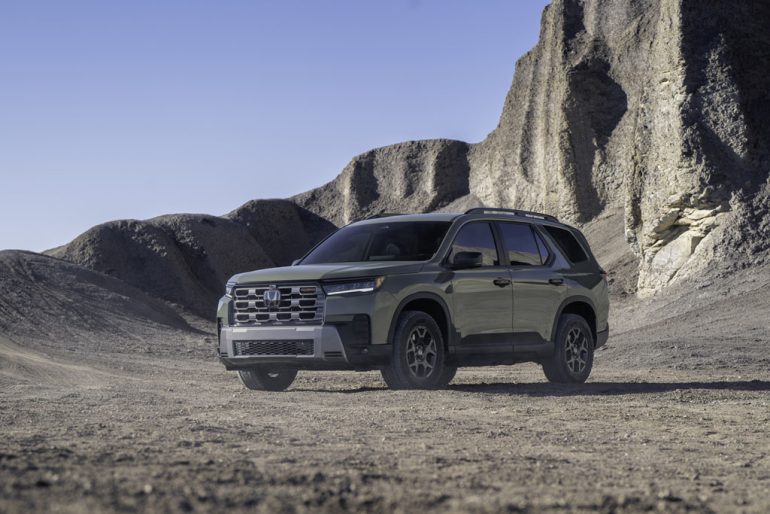
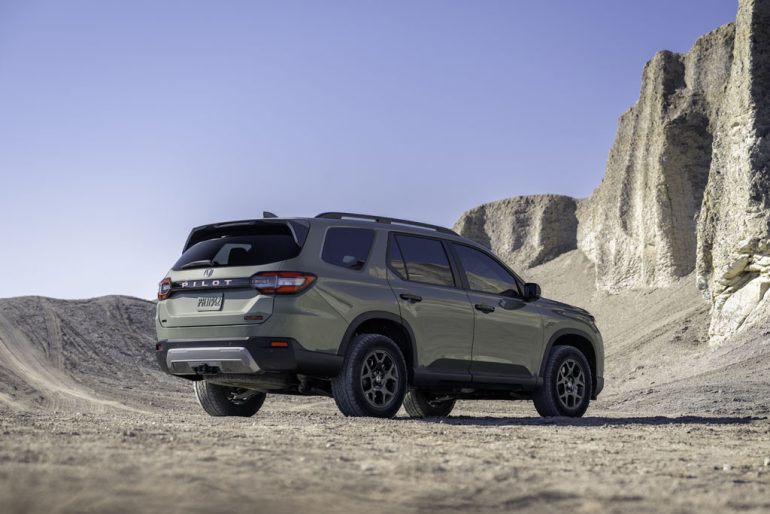
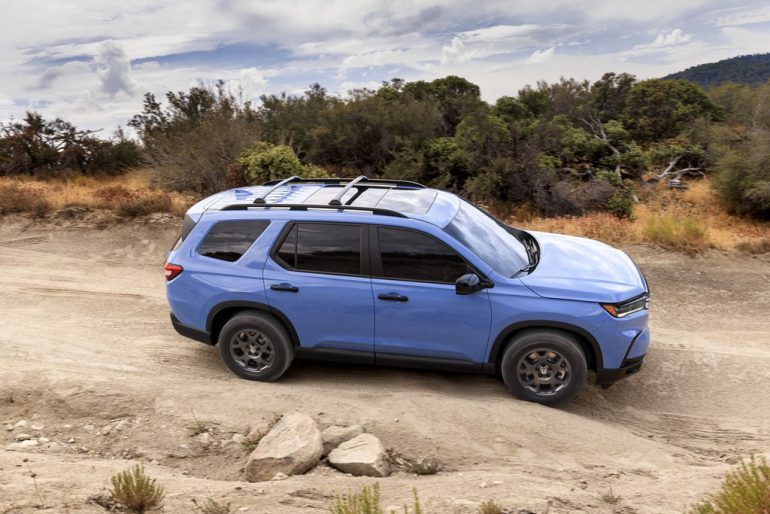
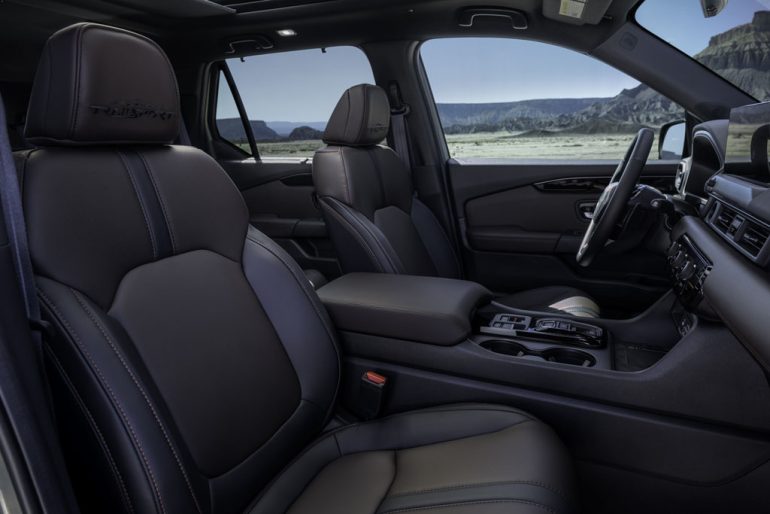
The TrailSport is the most distinctive trim in the lineup and the one most worth understanding before you compare prices, since it makes a trade that no other Pilot configuration does. Standard AWD, all-terrain tires, an off-road-tuned suspension, underbody skid plates, Honda’s Trail Torque Logic system, and a TrailWatch camera that monitors the terrain in front of the vehicle all come standard, giving the TrailSport genuine light-to-moderate off-road credibility rather than just adventure styling. What it gives up to get there is an entire row of seating: while every other Pilot configuration seats eight, the TrailSport is a seven-passenger SUV via second-row captain’s chairs, a configuration change that reduces total capacity meaningfully for larger families.
This matters directly for how you should shop the lineup. If your household genuinely needs eight seats regularly, the TrailSport is off the table regardless of how appealing the capability or styling is, and the Touring, Elite, or Black Edition at similar or slightly higher price points serve you better. If seven passengers covers your needs and you value the AWD and off-road equipment, the TrailSport is the most purposeful and distinctive Pilot available. Deciding which camp you’re in before comparing dealer quotes on these trims prevents the frustration of negotiating the wrong vehicle at the right price.
Here’s how the full lineup divides from entry to flagship.
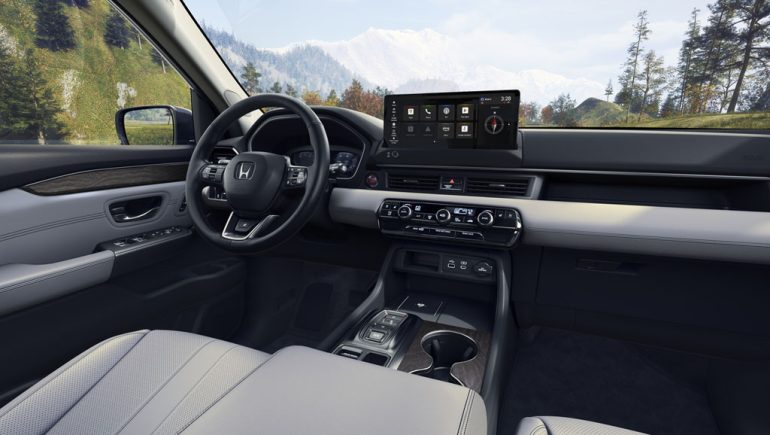
Sport ($42,395) opens the lineup with more standard content than most entry trims in this segment, including the full 285-horsepower V6, an 8-inch touchscreen with wireless Apple CarPlay and Android Auto, a power tailgate, 20-inch alloy wheels, a 10.2-inch digital instrument cluster, and the complete Honda Sensing suite with adaptive cruise control, automatic emergency braking, lane keeping assist, traffic sign recognition, and traffic jam assist, all standard at the base price point.
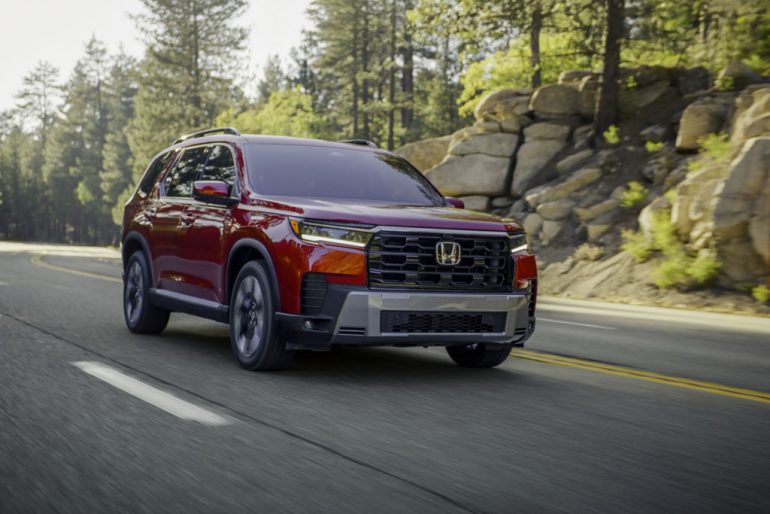
EX-L ($44,695) is the trim most consistently named as the value sweet spot of the entire lineup by multiple independent sources. It adds leather-trimmed seats, an acoustic-glass windshield for a noticeably quieter cabin, wireless device charging, integrated second-row sunshades, front and rear parking sensors, a stowable second-row center seat, and CabinTalk for amplifying the driver’s voice to rear passengers, meaningful quality-of-life upgrades at a modest price premium over the Sport.
TrailSport ($50,595) shifts to seven-passenger captain’s-chair seating, standard AWD, all-terrain tires, off-road-tuned suspension, skid plates, Trail Torque Logic, and the TrailWatch camera system, making it the capability-focused choice for buyers whose needs include genuine unpaved terrain, trail access, or serious all-weather performance.
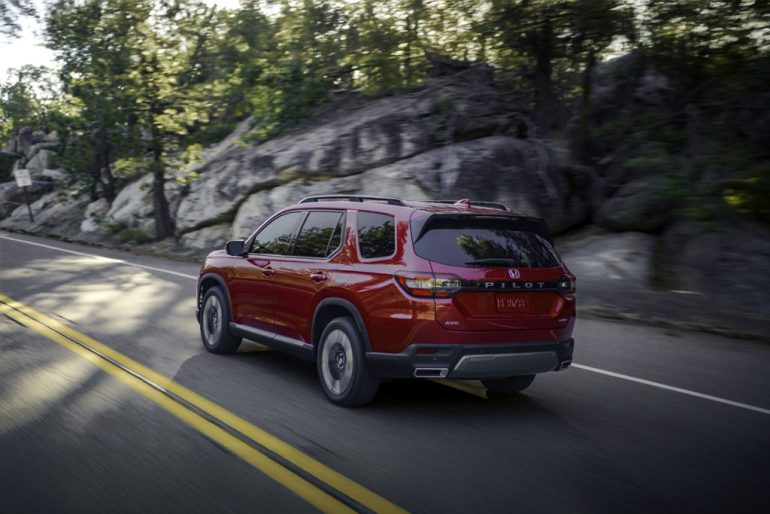
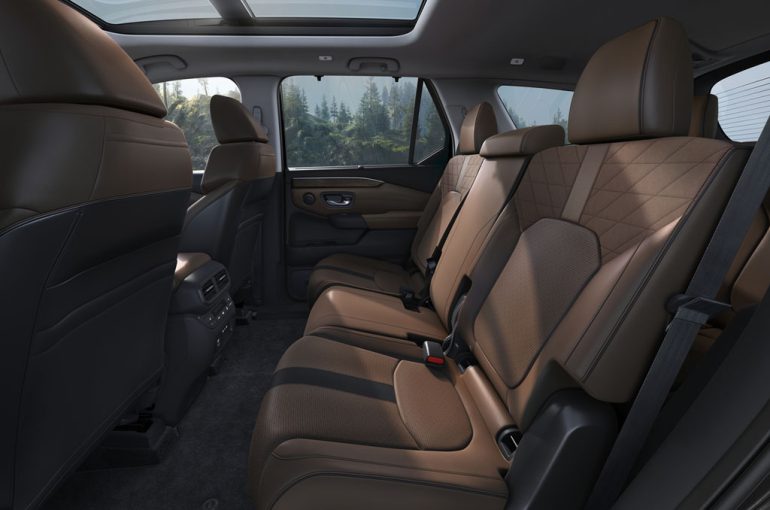
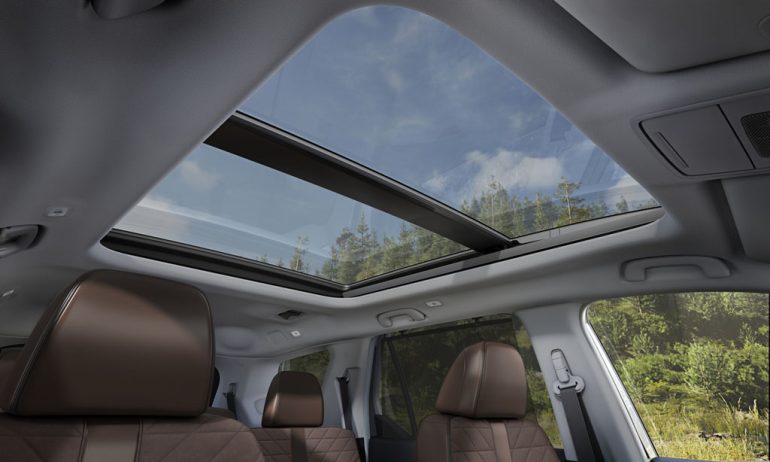
Touring ($51,295) is the comfort-focused complement to the TrailSport at a nearly identical price, with eight-passenger seating retained, standard AWD, a panoramic moonroof, a 12-speaker Bose premium audio system, and a 360-degree surround-view camera system for easier parking and maneuvering, making it the natural choice for families who prioritize long-haul refinement over off-road credibility.
Touring Blackout ($52,495) takes the Touring’s full feature set and wraps it in 20-inch black alloy wheels and blacked-out Honda badges, giving buyers who prefer the Touring’s comfort profile a more distinctive, darker exterior appearance for $1,200 more than the standard Touring.
Elite ($53,695) adds a head-up display, rain-sensing windshield wipers, a heated leather-wrapped steering wheel, perforated leather-trimmed seats with quilted Alcantara accents, ventilated front seats, and heated outboard second-row seats on top of the Touring’s feature set, representing the most complete family-comfort Pilot available short of the Black Edition.
Black Edition ($55,195) tops the lineup with 20-inch gloss-black alloy wheels, blacked-out exterior trim, exclusive Black Edition leather interior with red ambient LED lighting, and a head-up display, combining the Elite’s comfort content with a bold, distinct visual statement for buyers who want the flagship Pilot to look the part as much as it performs.
Because every Pilot configuration shares the same engine and the same 5,000-pound tow rating, choosing a less expensive trim genuinely doesn’t cost you any towing or hauling capability. Maximum cargo volume runs approximately 16.5 cubic feet behind the third row, 55.9 with the third row folded, and 87.0 cubic feet maximum with all seats down, consistent across the lineup with the exception of the TrailSport’s seven-passenger configuration, which slightly adjusts the interior layout. Fuel economy stays at 22 mpg combined across most FWD configurations and slightly lower on standard-AWD trims.
This consistency means the trim decision is genuinely about how you want the Pilot to feel and what features matter to your specific household, rather than about unlocking capability. Buyers who can honestly be satisfied with the Sport’s or EX-L’s feature set aren’t giving anything up functionally by choosing one of those trims over the Touring or Elite, which makes the value case for the EX-L in particular as strong as any trim recommendation in this guide series.
Manufacturer incentives on the Pilot stack on top of any negotiated price reduction below MSRP, and Honda Financial Services periodically offers promotional APR financing for well-qualified buyers, with offers varying by region and by how quickly local inventory is moving at any given time.
Honda also maintains military appreciation pricing for active duty and veteran buyers, along with college graduate pricing for recent graduates purchasing or leasing their first vehicle, and first responder discounts for eligible police officers, firefighters, EMTs, and paramedics. These programs stack on top of any negotiated dealer discount and aren’t always advertised prominently, so confirming your eligibility directly is worth the few minutes it takes. The Pilot carries Honda’s standard 3-year/36,000-mile basic warranty and 5-year/60,000-mile powertrain coverage. Getting a real local dealer quote that reflects both negotiated pricing and current incentives through our Insider Access to Dealer Pricing tool gives you the clearest picture of your actual out-the-door cost before visiting a single dealership.
Based on TrueCar’s 1 percent transaction discount and Honda dealer invoice benchmarks, here’s a realistic target range across the 2026 Pilot lineup. On the Sport, $41,700 to $42,400 reflects a strong outcome. On the EX-L, target $44,000 to $44,800. On the TrailSport, $49,800 to $50,700 is achievable with competing quotes from multiple dealers. On the Touring, target $50,500 to $51,400. On the Touring Blackout, $51,700 to $52,600. On the Elite, target $52,900 to $53,900. On the Black Edition, $54,300 to $55,300 represents a fair deal for well-prepared buyers.
These targets assume you’ve gathered competing quotes from multiple local Honda dealers rather than negotiating with just one, confirmed AWD preference and seating configuration before comparing any two quotes, and kept trade-in discussions completely separate from the new vehicle price negotiation. Given how tightly the Pilot holds its price, the multi-dealer approach matters more here than on most vehicles in this series.
On a vehicle that sells this close to sticker price, getting multiple dealers to compete for your business is the single most effective lever available to you. Click the “Get Prices” button above, select the 2026 Pilot configuration you’re considering, and you’ll receive real pricing from local Honda dealers competing directly for your purchase, typically within minutes and without visiting a single showroom.
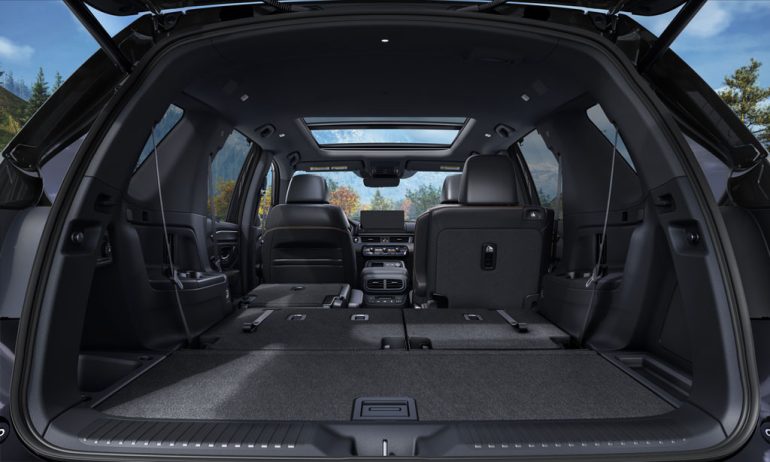
Whether the value-focused Sport, the consistently recommended EX-L sweet spot, the adventure-ready TrailSport, the comfort-first Touring, or the flagship Black Edition fits your family best, getting competing offers first means you walk into any final negotiation already knowing what other dealers in your area are willing to offer for the exact Pilot that fits how you’ll actually use it.

Darryl Taylor Dowe is a seasoned automotive professional with a proven track record of leading successful ventures and providing strategic consultation across the automotive industry. With years of hands-on experience in both business operations and market development, Darryl has played a key role in helping automotive brands grow and adapt in a rapidly evolving landscape. His insight and leadership have earned him recognition as a trusted expert, and his contributions to Automotive Addicts reflect his deep knowledge and passion for the business side of the car world.