
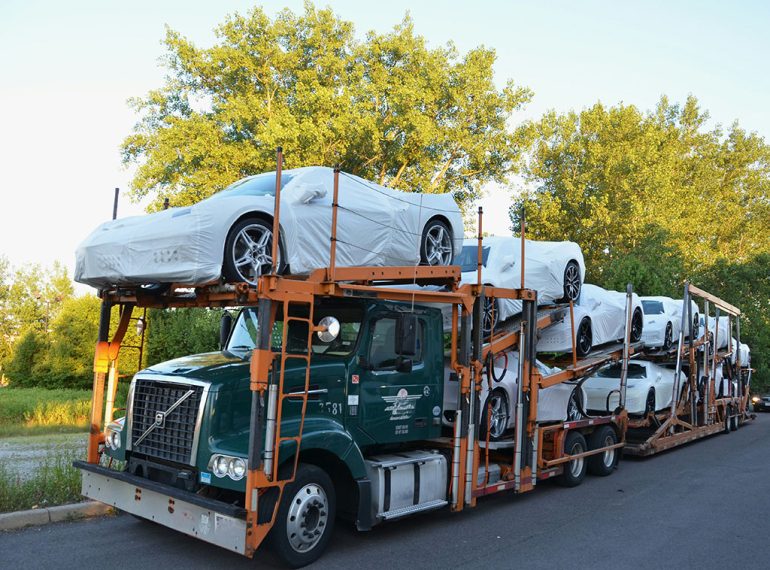
Car buyers have gotten a lot smarter about chasing the best deal, no matter where it happens to be. A trim that’s sold out locally might be sitting on a lot three states away. A private seller in another region might be asking thousands less than the going rate at home. And with dealer inventory now searchable nationwide, “out of state” barely feels like a barrier anymore — until it’s time to actually get the car home.
That’s where a lot of buyers hit a wall they didn’t budget for. The deal looked great on paper, but nobody factored in what it actually costs — or how it actually works — to ship a vehicle across the country. Here’s what to know before you commit to a car that isn’t within driving distance.
It’s an easy mistake to make. Most car-buying research goes into invoice pricing, dealer fees, and negotiating leverage — exactly the kind of numbers covered in most buying guides. Shipping tends to be an afterthought, something buyers assume they’ll “figure out later” once the deal is done.
The problem is that shipping cost isn’t a flat fee. It moves based on distance, vehicle type, time of year, and how quickly you need it delivered — and depending on those variables, it can swing by hundreds of dollars for the exact same route. A buyer who assumes shipping will cost roughly the same as a tank of gas and a few days off work is often in for a surprise.
Two vehicles making the same cross-country trip can cost noticeably different amounts to ship, and it usually comes down to a handful of predictable factors. Vehicle size and weight matter — a full-size truck or SUV takes up more space on a carrier than a compact sedan, and haulers price accordingly. Distance and route matter too, but not in a simple per-mile way: a route between two major metro areas is typically cheaper than a similar distance to a rural or hard-to-reach address, simply because carriers can fill their trucks more efficiently on high-traffic corridors.
Season plays a bigger role than most buyers expect. Shipping a car out of the Midwest or Northeast right before winter, or into Florida or Arizona during snowbird season, tends to cost more simply because demand spikes. Timeline flexibility also swings pricing — needing a vehicle picked up within 48 hours costs more than being able to work within a standard multi-day pickup window. It’s worth getting familiar with the specific factors that determine what you’ll actually pay before you start comparing quotes, since two quotes that look wildly different are often just reflecting different assumptions about timing and flexibility.
The smartest move for anyone eyeing an out-of-state deal is to price out shipping before making an offer, not after. This does two things: it protects you from a deal that only looks good until shipping eats the savings, and it gives you leverage — a buyer who knows the true landed cost of a vehicle is in a much stronger position to negotiate than one who’s just guessing.
A realistic starting point is understanding what a cross-country shipment typically runs, since national averages give you a baseline to sanity-check any quote you receive. From there, get quotes from at least two or three transport companies for the specific route and vehicle in question — a listed “national average” is a starting point, not a promise, and your actual number will move based on the factors above.
An out-of-state deal can absolutely be the better deal — but only if the math holds up once shipping is in the picture. Buyers who treat transport as a real line item, priced out before the offer goes in rather than after the paperwork is signed, are the ones who end up actually saving money instead of just thinking they did.

Automotive Addicts Contributors are a collective of guest writers, industry professionals, and passionate enthusiasts who bring fresh perspectives to the Automotive Addicts platform. Focused on delivering timely news, in-depth reviews, and unique insights, these contributors help keep the site dynamic and engaging. Many use the platform to expand their reach and build credibility within the automotive media world, adding depth and variety to the content that drives the Automotive Addicts community.


