
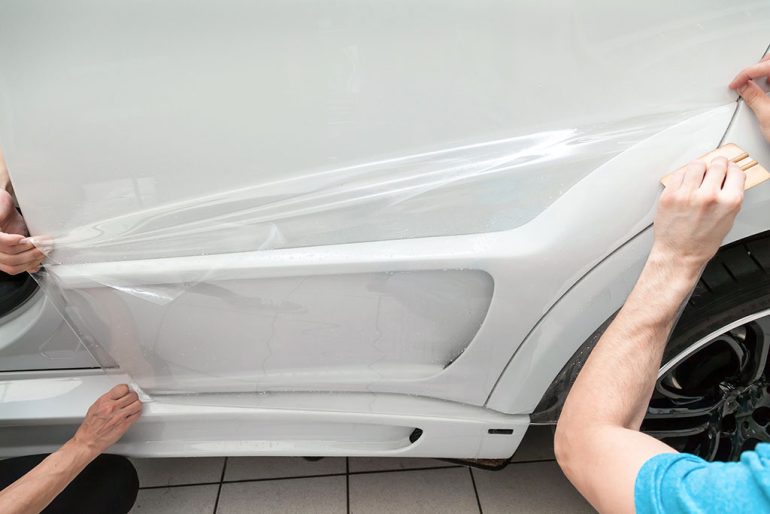
When people begin to consider paint protection film, the front bumper is the part they think about first. That is logical since it is located at the very front of the car and is the first area to come into contact with gravel, sand, bugs and bits of road debris. What’s interesting about bumper PPF is that it’s one of the most difficult areas to fit the film properly.
An installer has plenty of room when working on a hood, whereas with a bumper he does not. There are curves in various directions, air intakes, parking sensors, sharp corners and some small sections which are easy to miss. Plus, on some cars, the shape changes so much that installers have to stretch one part of the film and loosen another.
Installation Starts With the Paint
The surface has to be clean before the film gets close to the bumper, and it must be really clean. A normal wash isn’t always sufficient since road dirt, old wax, polish residue and other contaminants can get trapped under the film, where they become very easy to see.
The installer should also examine the paint itself, since PPF is not a magic eraser. Any existing chips or scratches will still be visible after the film is on, and the owner has the opportunity to fix these imperfections before the installation. This stage may be a time-consuming part of the job, but it does save a lot of trouble later on.
Don’t Try to Force the Film
When the bumper is ready, the installer uses a slip solution to move the film into place. It seems simple until you are working around a deep curve or in a tight recess. Excessive tension can cause the film to want to move back after it has been installed, and it may result in lifting or distortion.
An experienced installer never struggles against the film. They secure certain areas first and slowly shape the film into the form of the bumper. A squeegee helps push out the fluid
without pulling the film out of position. There is no single way to handle every curve and corner, so installers have to adjust on the go.
The Edges Tell the Story
Edges are a quality indicator. Experienced installers always wrap the film along the edge instead of ending exactly on the visible surface. This way, they achieve a cleaner appearance for the bumper and also prevent dirt accumulation along the edges. In the case of a tight corner, they make a relief cut and deal with a deep recess separately.
That is the reason why bumper fitting isn’t simple. It demands many small decisions taken as the installer works on the panel. If you happen to observe PPF installation on the front bumper, you will be impressed by the number of steps an expert must follow during the process.
Is This a DIY Project?
It all comes down to your experience. A person who has previously worked on PPF or vinyl should probably cope with this task. However, it shouldn’t be the panel to select if it’s your first acquaintance with PPF. Even a slight error can have a big effect on part of the film, and attempts to correct it with more effort will only make the situation worse.
Professional installers don’t have secret techniques. They mainly rely on adequate preparation, an understanding of how the material behaves, and patience when a difficult section requires a different method.
The front bumper suffers a lot during ordinary driving, so it does make sense to have PPF installed to protect it. But remember that the film only performs its function properly when it is fitted correctly. On a complex panel such as this, experience is what leads to the difference between a piece of film that has just been fitted and one that looks as though it should be there.


