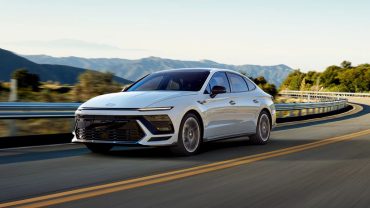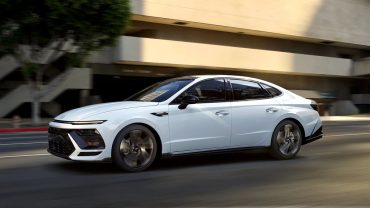
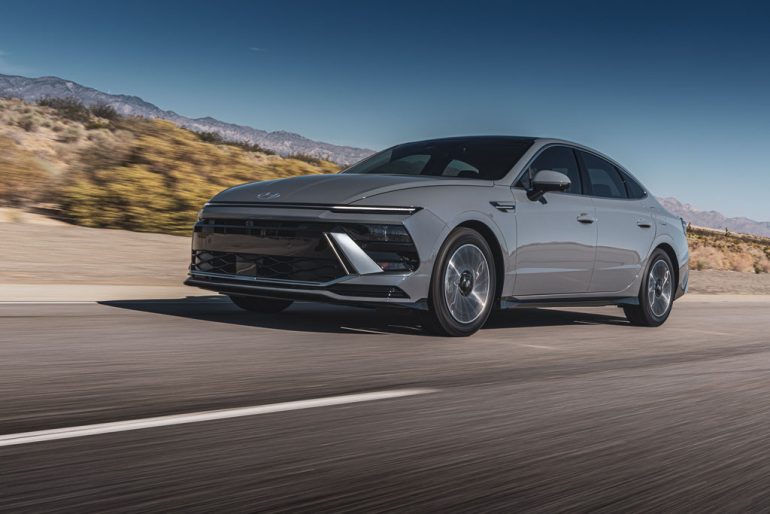
The Hyundai Sonata Hybrid is one of the most fuel-efficient mid-size sedans you can buy without plugging in, delivering up to 56 highway mpg while carrying a fully-loaded interior and Hyundai’s class-leading 10-year powertrain warranty. The 2027 model year is a carryover from 2026, which works in buyers’ favor: inventory is well-established, pricing has settled, and Hyundai is running strong incentives including low APR financing and lease deals. Here is what dealers actually paid and what you should be targeting to spend.
The 2027 Sonata Hybrid is available in three trims: Blue, SEL, and Limited. All three are front-wheel drive only. Prices below exclude the $1,095 destination charge.
| Trim | MSRP | Invoice | Gap |
|---|---|---|---|
| Hybrid Blue | $29,450 | $28,449 | $1,001 |
| Hybrid SEL | $32,700 | $31,589 | $1,111 |
| Hybrid Limited | $38,500 | $37,192 | $1,308 |
Note: Invoice figures are sourced from AutoFinder. Some pricing databases, including KBB and Cars.com, list higher MSRPs for the 2027 Sonata Hybrid — the Blue at $30,745, the SEL at $33,995, and the Limited at $39,795. Always verify the current MSRP on the window sticker before making an offer.
Hyundai charges $1,095 for destination and delivery on the 2027 Sonata Hybrid. With destination included, the range runs from $30,545 on the Hybrid Blue to $39,595 on the Hybrid Limited.
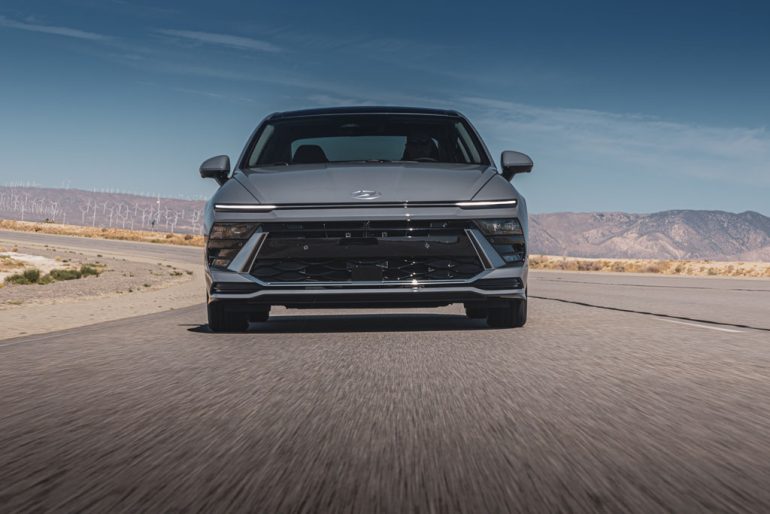
The 2027 Sonata Hybrid is a carryover year for the US market. Powertrain, feature content, and trim structure are unchanged from 2026. A “Black N Line” variant with black exterior badges and 19-inch matte wheels was introduced for the Korean market but has not been confirmed for US sale.
For buyers, a carryover year is straightforward: the 2027 Sonata Hybrid is a proven product with a well-established reliability track record and no first-year unknowns. Dealer inventory has had time to build, and the pricing structure is competitive and predictable.
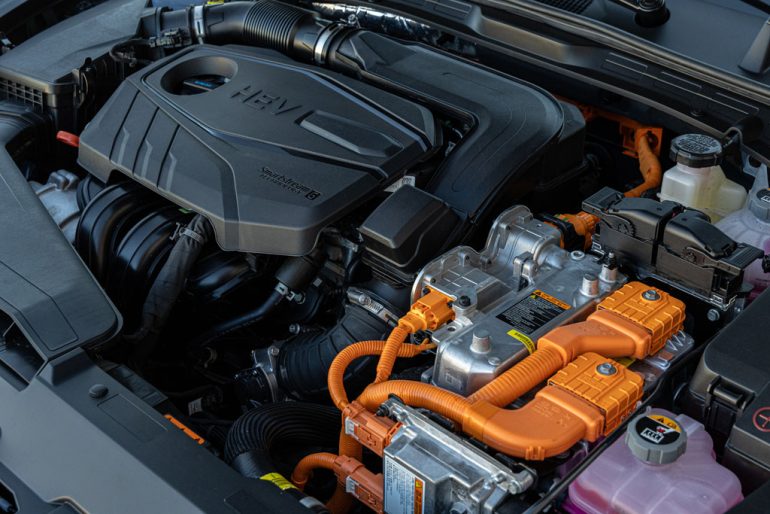
All three 2027 Sonata Hybrid trims use the same powertrain: a 2.0-liter four-cylinder gasoline engine paired with an integrated electric motor and a 1.6 kWh lithium-ion battery pack. Combined system output is 192 horsepower at 6,000 RPM and 139 lb-ft of torque. The hybrid drives through a six-speed automatic transmission to the front wheels. AWD is not available on the Sonata Hybrid.
EPA fuel economy: The Hybrid Blue delivers 47 city and 56 highway mpg. The Hybrid SEL and Hybrid Limited are rated at 44 city and 51 highway mpg. The Blue trim’s higher ratings reflect its lighter feature content and lower curb weight. At 47-56 mpg, the Sonata Hybrid outperforms the Toyota Camry Hybrid on city fuel economy and matches or exceeds it on the highway depending on trim.
Curb weight ranges from 3,439 lbs on the Hybrid Blue to 3,687 lbs on the Hybrid Limited. The Sonata Hybrid seats five with a trunk that is slightly smaller than the gas Sonata’s 15.6 cubic feet due to battery packaging, though Hyundai has engineered the hybrid system to minimize the cargo impact relative to the gas model.
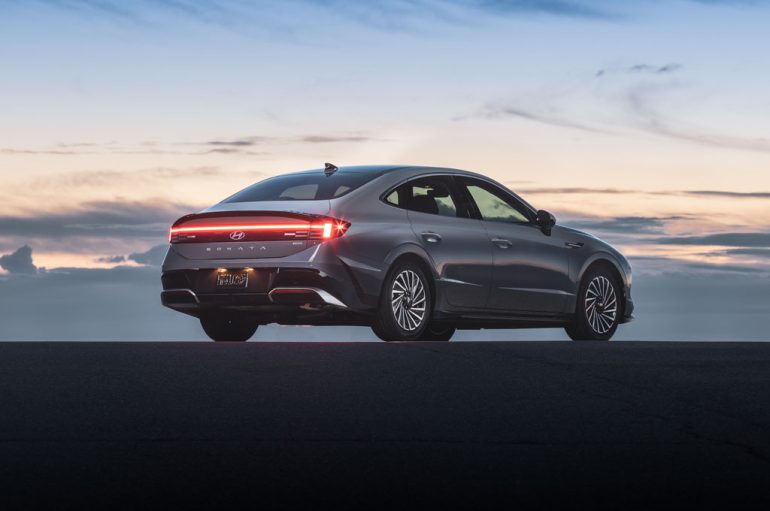
The Sonata Hybrid carries a 5-star overall NHTSA safety rating. Standard safety technology across all hybrid trims includes Hyundai SmartSense: forward collision avoidance assist with pedestrian and cyclist detection, lane keeping assist, driver attention warning, and high beam assist.
The Hybrid Blue ($29,450) is the efficiency-focused entry point. Standard equipment includes the full Hyundai SmartSense safety suite, a 12.3-inch digital instrument cluster, an 8-inch touchscreen with wireless Apple CarPlay and Android Auto, dual-zone automatic climate control, 17-inch alloy wheels, and hybrid-specific instrumentation showing energy flow and charge status. The Blue is the trim for buyers whose priority is maximum fuel economy at the lowest entry price.
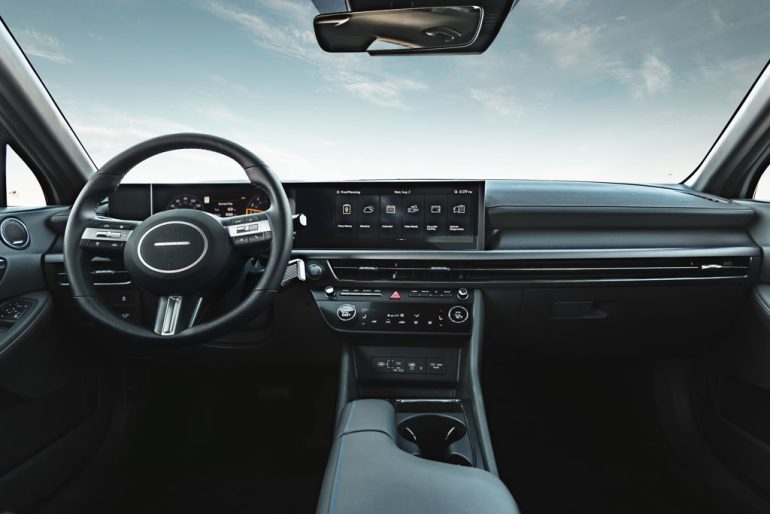
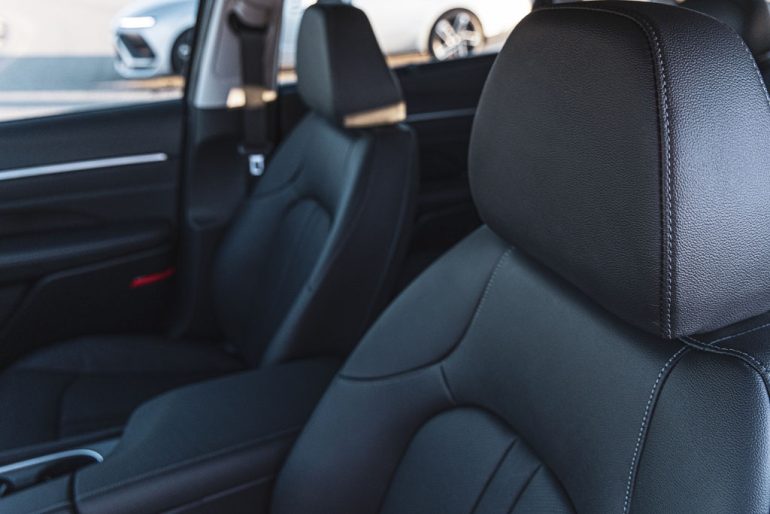
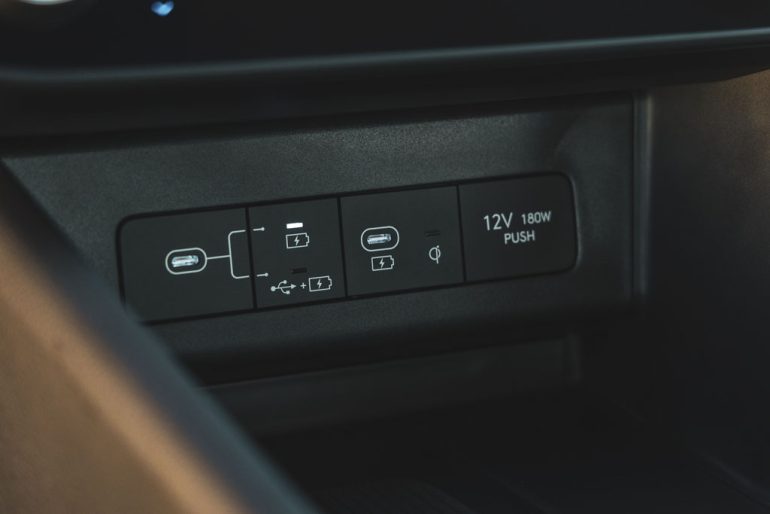
The Hybrid SEL ($32,700) is the volume trim and the best overall value in the Sonata Hybrid lineup. It adds leather seating, heated and ventilated front seats, a panoramic sunroof, blind-spot collision avoidance assist with rear cross-traffic alert, and a larger 10.25-inch touchscreen. The SEL also includes a wireless charging pad and additional driver assistance features. The $3,250 step from the Blue to the SEL brings a significant feature jump, and most buyers who test both trims back-to-back find the SEL’s added comfort content worth the premium.
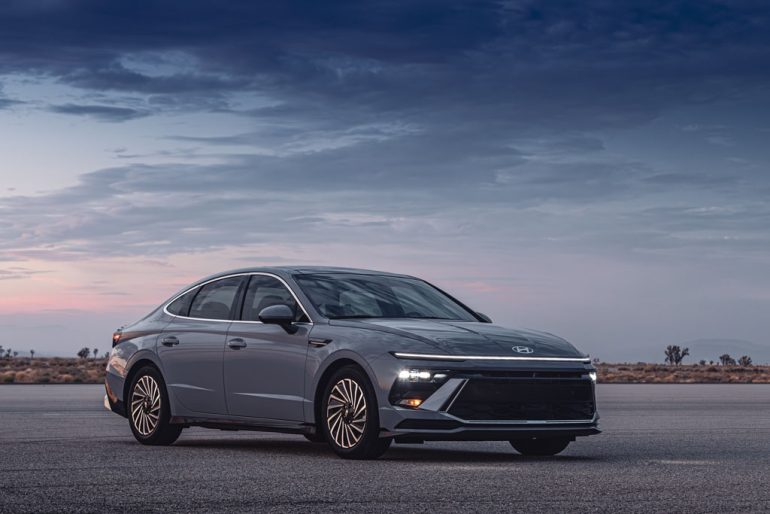
The Hybrid Limited ($38,500) is the fully-equipped top trim. It adds a head-up display projecting speed and navigation directions onto the windshield, a 12-speaker Bose premium audio system, a digital rearview mirror, Highway Driving Assist 2 for semi-autonomous highway driving, a surround-view monitor, a rear passenger alert system, and additional soft-touch interior materials. The Limited competes directly with top trims of the Toyota Camry Hybrid XSE and Honda Accord Hybrid Touring on content.
The 2027 Sonata Hybrid is covered by Hyundai’s industry-leading warranty package: 5 years/60,000 miles on the basic vehicle, 10 years/100,000 miles on the powertrain, 7 years on anti-perforation, and 5 years/unlimited miles of roadside assistance. The hybrid battery and electrical components carry their own separate warranty coverage.
The 10-year/100,000-mile powertrain warranty is the strongest in the mid-size class. No competitor at this price point — Toyota, Honda, or Nissan — matches it. For buyers who plan to own the car for seven or more years, the warranty difference has real financial value that does not show up in a side-by-side MSRP comparison.
Hyundai is running active incentives on the 2027 Sonata Hybrid through November 2, 2026. Finance APR for hybrid trims is 2.9% for 60 months through Hyundai Motor Finance. A $1,750 finance rebate is available on the Hybrid SEL and Hybrid Limited when financing through Hyundai.
Lease deals at $0 down and 10,000 miles per year:
Conditional bonuses available on all 2027 Sonata Hybrid trims:
Incentives change monthly. Verify current offers at Hyundai’s website or through a dealer before finalizing any purchase or lease agreement.
The Sonata Hybrid’s invoice gap runs from $1,001 on the Blue to $1,308 on the Limited. These gaps are tighter than many non-hybrid vehicles, which reflects both the higher content per dollar on hybrid trims and the stronger buyer demand that hybrid powertrains typically attract. That said, the Sonata Hybrid is a mainstream vehicle with broad national availability, not a supply-constrained specialty product, and dealers in competitive markets will negotiate.
Use invoice as your opening anchor. On the Hybrid SEL, the gap between MSRP and invoice is approximately $1,111. A realistic opening offer is $31,800 to $32,000 before destination, which lands the dealer above invoice while demonstrating you have done the research. If the dealer is also receiving the $1,750 finance rebate on your purchase, that margin is even more workable for them.
The finance rebate changes the math. The $1,750 finance rebate on the SEL and Limited is a manufacturer payment available when you finance through Hyundai Motor Finance. If you plan to finance and can qualify for the 2.9% APR, combining the negotiated vehicle price with the rebate is the most efficient path to the lowest total cost. Negotiate the vehicle price first, then apply the rebate as a separate line item so it does not get folded into dealer margin.
Shop multiple dealers by email. Pricing on the Sonata Hybrid varies meaningfully by region and dealer. Dealers in competitive metro markets with multiple Hyundai franchises will typically offer better pricing than a market with a single Hyundai store. Sending the same inquiry to three or four dealers and asking for their best out-the-door price on a specific trim creates real competition without requiring you to visit each store.
The Blue versus SEL decision is worth working through. The Blue’s 47/56 mpg versus the SEL’s 44/51 mpg is a real but modest difference. At 12,000 miles per year and current gas prices, the Blue’s fuel savings over the SEL amount to roughly $150 to $200 annually. The SEL’s leather seating, ventilated seats, panoramic roof, and larger touchscreen add meaningful daily comfort for a $3,250 MSRP premium. Most buyers who drive both will find the SEL’s comfort package worth the cost, but buyers focused purely on value and fuel economy will be satisfied with the Blue.
Apply conditional bonuses at the end. The military, college grad, and first responder bonuses are manufacturer-to-buyer payments. Disclose eligibility after agreeing on the vehicle price so the bonus passes through directly rather than being absorbed into dealer margin.
The Sonata Hybrid’s primary competitors are the Toyota Camry Hybrid and the Honda Accord Hybrid. Each has strengths worth understanding before you shop.
The Toyota Camry Hybrid starts around $32,000 for the LE trim and delivers 51 combined mpg. Toyota’s hybrid system has a longer track record in the US market, and the Camry carries stronger resale values than the Sonata. The Camry Hybrid’s upper trims can be optioned with AWD, which the Sonata Hybrid cannot match. The Camry does not offer a powertrain warranty as long as Hyundai’s, and the Sonata Hybrid Blue undercuts the Camry Hybrid LE on entry price while delivering competitive fuel economy.
The Honda Accord Hybrid starts around $32,000 and delivers 44 city and 41 highway mpg, which trails the Sonata Hybrid Blue on both numbers. The Accord Hybrid’s 204-horsepower system is slightly more powerful than the Sonata’s 192 hp, and the Accord has a reputation for a more engaging driving character. Honda’s warranty (3 years/36,000 miles basic, 5 years/60,000 miles powertrain) is significantly shorter than Hyundai’s 10-year/100,000-mile powertrain coverage.
The Sonata Hybrid’s strongest arguments are its fuel economy at the Blue trim level, its feature content per dollar at the SEL level, and the 10-year powertrain warranty across all trims. Buyers who prioritize long-term ownership cost and fuel efficiency in a fully-equipped mid-size sedan will find the Sonata Hybrid a compelling package at its current pricing and incentive levels.

Darryl Taylor Dowe is a seasoned automotive professional with a proven track record of leading successful ventures and providing strategic consultation across the automotive industry. With years of hands-on experience in both business operations and market development, Darryl has played a key role in helping automotive brands grow and adapt in a rapidly evolving landscape. His insight and leadership have earned him recognition as a trusted expert, and his contributions to Automotive Addicts reflect his deep knowledge and passion for the business side of the car world.