
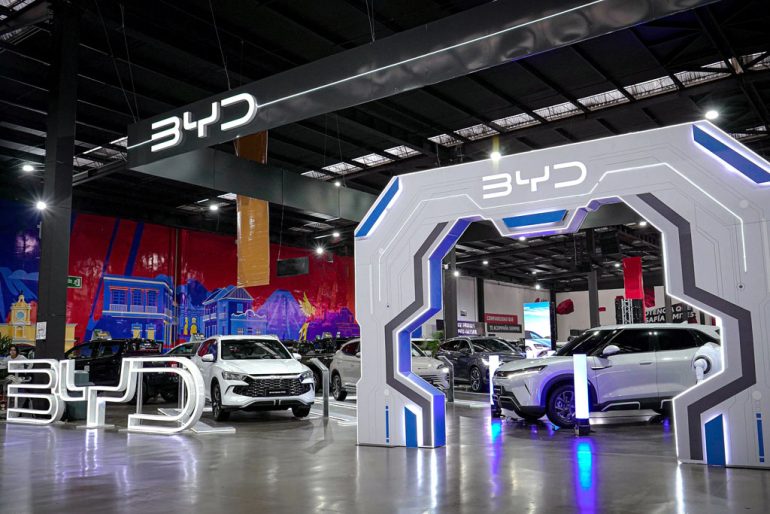
President Trump took his message straight to the heart of the auto industry with a Detroit-area visit on January 13, telling executives and investors he wants more vehicles built in the U.S., even if the badges eventually include Chinese brands. The headline line, “Let China come,” landed like a curveball in Motor City, but the subtext was familiar: build here, hire here, and play by American rules if you want access to American buyers. The twist is that once you publicly frame it that way, you also open the door to Chinese automakers looking for ways to enter the market by doing exactly what’s being demanded.
The catch is that Trump signaled there is no plan to ease the current 100% tariff on Chinese-imported cars, which keeps the simplest path of shipping finished vehicles into the U.S. effectively blocked. But that doesn’t automatically mean “not anytime soon.” Big automakers are experts at playing the long game, and if the U.S. market is attractive enough, the incentive to localize production becomes real even if it takes time. The moment a brand commits to building vehicles inside the U.S., the timeline stops being theoretical and becomes a race to get facilities, suppliers, and sales channels ready, and that can move faster than most people assume once the money is on the table.
Investors seemed to take the speech in stride, at least for the day, with the auto stocks mentioned in the report barely budging. Part of that is because tariff fears that swirled in early 2025 didn’t end up detonating profits the way many predicted, even if profitability still cooled compared to 2024. But the calmer market reaction can also be read another way: investors may already believe the competitive landscape is changing, and that new entrants are not some distant threat, but something the industry should be planning for now.
The “build it here” drumbeat also highlights something shoppers often forget: “American-made” is not as simple as a logo on the grille. Roughly half of new vehicles sold in the U.S. are assembled domestically, and even many of those rely on global parts content. That’s why lists like the Cars.com American-Made Index keep getting traction, and why it matters that vehicles from foreign automakers assembling in the U.S. can rank alongside domestic brands. If the rule becomes “build here to sell here,” Chinese brands have a clear blueprint to follow, and a lot of precedent to point to.

Then there’s the elephant in every showroom: affordability. The average new-car price climbed from $37,824 in 2019 to $49,368 in 2025, and that pressure creates opportunity for anyone who can bring compelling value without feeling cheap. If Chinese automakers believe they can compete on price, tech, or both while meeting the build-in-America expectation, the idea of seeing Chinese-branded cars on U.S. roads may be closer than most people think. Not because tariffs vanish, but because the industry adapts, and the moment competition is invited to set up shop, it tends to find a way to show up.

Lloyd Tobias is a seasoned automotive journalist and passionate enthusiast with over 15 years of experience immersed in the world of cars. Whether it’s exploring the latest advancements in automotive technology or keeping a close pulse on breaking industry news, Lloyd brings a sharp perspective and a deep appreciation for all things automotive. His writing blends technical insight with real-world enthusiasm, making his contributions both informative and engaging for readers who share his love for the drive. When he’s not behind the keyboard or under the hood, Lloyd enjoys test driving the newest models and staying ahead of the curve in an ever-evolving automotive landscape.