
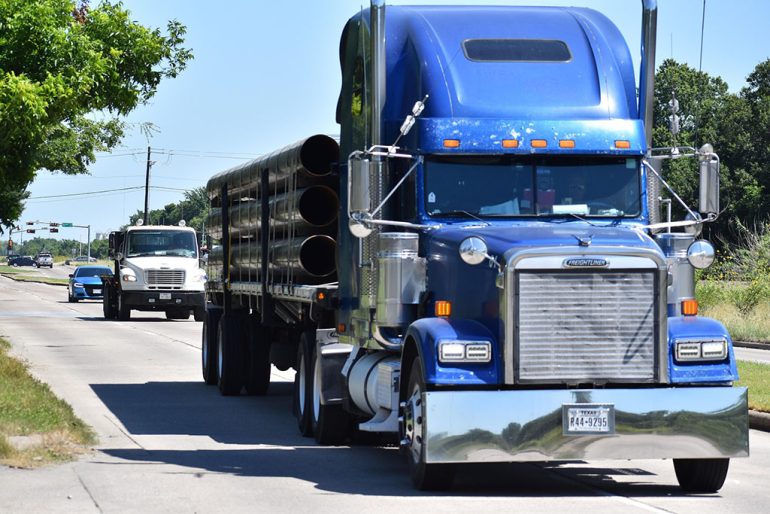
You want to enhance fleet productivity. You don’t want to spend any money. The good news: achieving that goal doesn’t always require additional investment. In fact, in many cases, all it takes is to make better use of the resources you already possess to unlock greater efficiency levels.
For proof, below are five practical strategies to improve fleet productivity without increasing costs.
When exploring the most common causes of wasted time and fuel, there’s one reason at the top of the list: inefficient routing.
Fortunately, it’s an issue that can be rectified without much trouble. By reviewing delivery schedules and analysing traffic patterns, you can identify quicker, more cost-effective routes. Even minor adjustments, such as avoiding peak traffic hours, can result in major savings for your business.
Over time, consistently optimised routes enhance delivery reliability. They also allow drivers to complete more jobs within the same working hours.
Implementing advanced fleet tracking technology supplies your business with valuable insight into day-to-day operations. With access to real-time vehicle locations and historical journey data, fleet managers can quickly identify – and resolve – inefficiencies.
This data can highlight various issues. These issues include unnecessary mileage, underutilised vehicles, and repeated delays on certain routes. It also supports better planning by enabling more accurate ETAs and greater communication with customers.
By acting on these insights, your company can streamline operations and raise output without expanding your fleet.
Unplanned vehicle downtime can quickly disrupt operations and reduce productivity. To avoid this situation, a preventative maintenance approach assists in keeping vehicles on the road and performing efficiently.
Through regular servicing based on mileage and usage, it means minor issues are addressed before they become major problems. Also don’t underestimate the value of keeping organised maintenance records. These records make it easier to track vehicle performance and plan servicing schedules without interrupting daily operations.
Driver behaviour has a direct impact not just on productivity but also operating costs. Inefficient driving habits, such as excessive idling and harsh acceleration, can increase fuel consumption and cause more frequent maintenance issues.
How can you enhance driver performance? To do this successfully, it’s wise to provide ongoing driver training and clear performance guidelines. When smoother driver techniques are implemented, this promotes safer driving while reducing wear and tear. In turn, this naturally minimises delays caused by incidents and vehicle damage.
Ah, the dreaded partially filled vehicles. When you make multiple trips with half a load (or less), it causes an avoidable drain on time and resources. Want to reduce the number of journeys required? It’s important to review delivery schedules and group jobs by location.
By maximising load capacity, it guarantees each trip delivers greater value. This could involve coordinating more closely between teams for instance. Another tactic is to adjust delivery windows to allow for better consolidation.
Over time, fewer trips equal lower fuel costs, reduced vehicle wear, and more efficient use of driver time.

Automotive Addicts Contributors are a collective of guest writers, industry professionals, and passionate enthusiasts who bring fresh perspectives to the Automotive Addicts platform. Focused on delivering timely news, in-depth reviews, and unique insights, these contributors help keep the site dynamic and engaging. Many use the platform to expand their reach and build credibility within the automotive media world, adding depth and variety to the content that drives the Automotive Addicts community.


