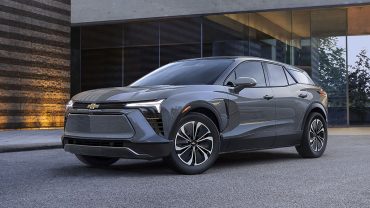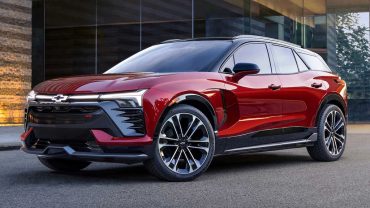
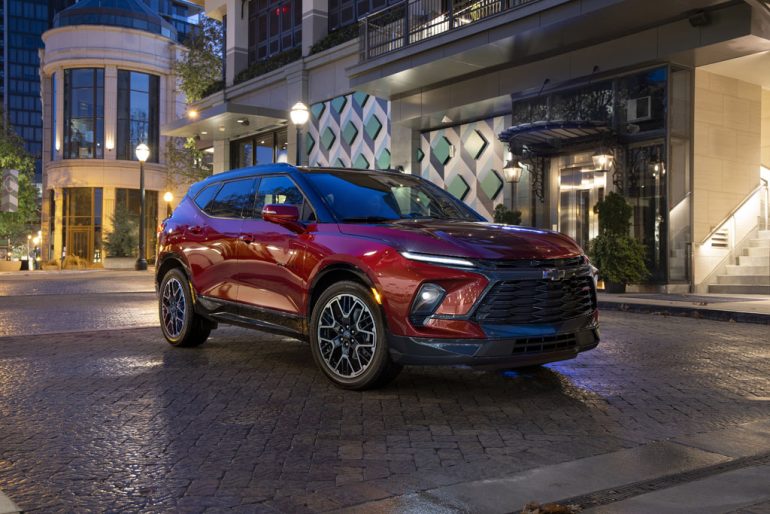
The Blazer occupies an interesting spot in Chevrolet’s SUV lineup, and it’s worth clearing up before talking pricing: this guide covers the gas-powered, two-row Blazer, not the all-electric Blazer EV, which is a completely separate model with its own pricing structure. The gas Blazer leans into sportier, Camaro-inspired styling rather than off-road capability or third-row practicality, which puts it in direct competition with the Honda Passport, Ford Edge, and Nissan Murano rather than larger three-row SUVs. For 2026, Chevrolet simplified the lineup, dropped the old Premier trim, and made the turbocharged four-cylinder standard across every trim while reserving the V6 exclusively for the RS. This guide breaks down what Chevrolet dealers actually pay for each 2026 Blazer trim, what changes as you move up the lineup, current incentives worth asking about, and how to get real competing dealer quotes before negotiating in person.
The 2026 Blazer starts at $36,095 for the front-wheel-drive 2LT, moves up to roughly $41,495 for the 3LT, and tops out at $45,395 for the RS in front-wheel-drive form, all before the $1,995 destination charge. All-wheel drive adds approximately $2,700 to $2,900 depending on trim, pushing a fully equipped RS AWD to around $48,295. Every Blazer comes standard with a turbocharged 2.0-liter four-cylinder producing 228 horsepower and 258 lb-ft of torque, while the RS alone offers an optional 3.6-liter V6 making 308 horsepower and 270 lb-ft for buyers who want noticeably stronger acceleration. Kelley Blue Book’s Fair Purchase Pricing currently shows real transactions landing $2,395 to $2,595 below MSRP depending on trim, which makes clear that the window sticker is a negotiating starting point rather than a fixed number.
The Blazer competes against the Honda Passport, Ford Edge, Nissan Murano, and Hyundai Santa Fe, and Chevrolet positions it as the style-forward choice in a class where most competitors lean toward boxier, more utilitarian designs. That positioning matters when you’re negotiating, because dealers selling a vehicle that competes primarily on looks rather than category-leading cargo space or off-road capability tend to have more room to move on price than dealers selling something with a genuine functional advantage. That’s exactly the kind of leverage our Insider Access to Dealer Pricing tool is built to help you use, putting real local dealer quotes in front of you before you ever step onto a lot.

The invoice price is what a Chevrolet dealer actually paid General Motors for the vehicle on their lot, sitting below the MSRP on the window sticker by a meaningful margin that the dealer has no incentive to volunteer. On the 2026 Blazer, that gap typically runs from approximately $1,200 on the 2LT up to $1,800 or more on the RS, particularly when configured with the optional V6 and AWD, where added equipment widens the dollar spread between invoice and sticker. This invoice number, not the MSRP, is what should set your opening offer, since the MSRP already has the dealer’s intended profit margin fully built into it.
Dealer holdback adds another layer of margin sitting beneath the invoice price that most shoppers never account for. GM pays Chevrolet dealers back approximately 2 to 3 percent of base MSRP once a vehicle sells, meaning a $41,495 3LT carries roughly $830 to $1,245 in additional dealer margin that exists entirely separate from the invoice figure. Combine the invoice gap with holdback, and a dealer can sell at or close to invoice and still turn a solid profit on the transaction. Buyers who understand this consistently come away with better numbers than those negotiating purely against the sticker price, because they’re working from the dealer’s actual cost rather than a number designed to make even a modest discount feel like a win for the buyer.
Chevrolet kept the 2026 Blazer lineup to three trims this year, and the gaps between them are more pronounced than in past years now that the Premier trim has been discontinued.
2LT (starting at $36,095) is the entry point and, according to Edmunds’ own recommendation, the smartest value in the lineup. It comes standard with a 10.2-inch HD touchscreen, wireless Apple CarPlay and Android Auto, dual-zone automatic climate control with rear vents, heated front seats, LED lighting front and rear, and the full Chevy Safety Assist suite including automatic emergency braking and lane keep assist. Maximum cargo capacity reaches 64.2 cubic feet, and an available power liftgate with programmable height settings is offered for easier loading.
3LT (starting at approximately $41,495) builds on the 2LT with additional comfort and convenience equipment, though Edmunds specifically notes the 3LT doesn’t add a large number of standalone features relative to its price jump, and both trims share the same driver-assist technology. For buyers deciding between 2LT and 3LT, the practical advice from independent reviewers is that the 2LT delivers nearly equivalent value for considerably less money unless a specific 3LT-exclusive feature is a must-have.
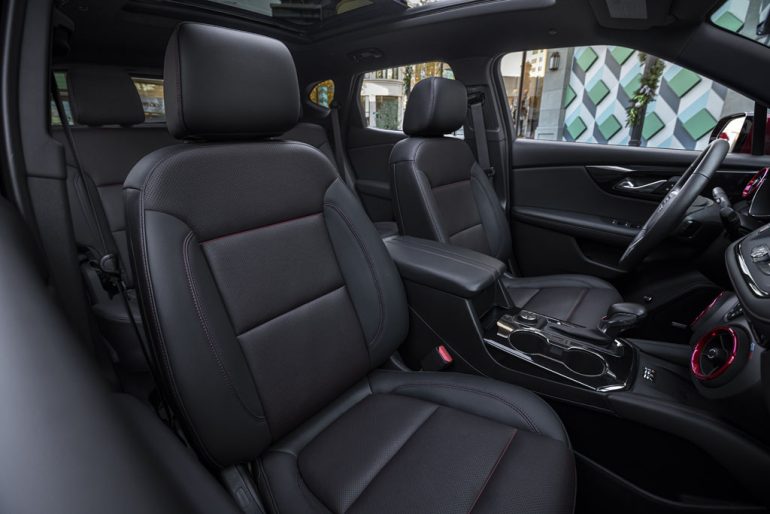
RS (starting at $45,395) sits at the top of the lineup and is built for buyers who want the Blazer to look and perform like its Camaro-inspired styling suggests. It rides on 20-inch gloss black wheels, adds a blacked-out grille with chrome accents, red contrast interior stitching, a heated steering wheel, leather seating, and a Bose premium audio system with built-in navigation. The RS is also the only trim offering the 3.6-liter V6, which Edmunds notes delivers genuinely better acceleration than the standard turbo-four, making this the trim to choose specifically if performance matters more to you than value.

One detail that distinguishes Blazer shopping from many other SUVs in this class is that the biggest functional difference in the lineup isn’t really about trim level, it’s about engine choice. The standard turbocharged four-cylinder, found on every 2LT and 3LT and as the base engine on RS, delivers smooth, adequate power for commuting and everyday driving along with the better fuel economy of the two options. The optional 3.6-liter V6, available exclusively on the RS, trades some efficiency for a meaningfully stronger driving experience and unlocks the Blazer’s maximum towing capacity of 4,500 pounds when paired with the available trailering package, something the standard turbo-four cannot match regardless of trim.
This means a shopper who wants real towing capability or a noticeably quicker SUV has to go all the way to the RS and add the V6, since that combination isn’t available anywhere else in the lineup. It’s worth factoring into your price comparison: the gap between a 2LT and an RS with the V6 isn’t just a trim upgrade, it’s effectively two different vehicles wearing the same body, and the invoice math should be evaluated separately for each configuration rather than assuming a flat percentage discount applies evenly across the lineup.

Manufacturer incentives on the Blazer stack on top of whatever price reduction you negotiate below MSRP, and GM Financial frequently offers promotional APR financing for qualified buyers, particularly on the 2LT and 3LT trims given their volume in the lineup. Conquest cash for buyers trading in a non-GM vehicle also appears periodically on the Blazer and is worth asking about directly, since it isn’t always advertised prominently at the dealership level.
Chevrolet also maintains standing discount programs for military members and veterans, recent college graduates, and first responders including police officers, firefighters, EMTs, and paramedics. These programs stack directly on top of any negotiated dealer discount, and because they require the buyer to ask rather than being offered automatically, many eligible shoppers simply never claim them. Getting a real local dealer quote that already factors in negotiated pricing alongside current incentives through our Insider Access to Dealer Pricing tool gives you the clearest possible read on your actual out-the-door cost before stepping into a single showroom.

Based on current invoice benchmarks and typical negotiating outcomes in this segment, here’s a realistic target range across the 2026 Blazer lineup. On the 2LT, $33,800 to $34,600 reflects a strong outcome in competitive markets, which lines up closely with the $34,250 average transaction price TrueCar currently reports for the base trim. The 3LT should be achievable between $38,700 and $39,700. The RS, in its standard turbo-four front-wheel-drive configuration, typically lands between $42,300 and $43,300 for well-prepared buyers, while an RS configured with the V6 and AWD will run several thousand higher given the added equipment cost on top of the trim price. Add the $1,995 destination charge to any of these figures to estimate your full pre-tax total.
These targets assume you’ve gathered competing quotes from multiple local Chevrolet dealers, kept any trade-in negotiation completely separate from the new vehicle price discussion, and walked into the conversation already aware of the invoice price rather than learning it for the first time at the dealership. Buyers who follow this approach consistently land at or below these benchmarks.
The most effective way to buy a 2026 Chevrolet Blazer below sticker price is to find out what dealers near you are actually willing to offer before you contact any of them yourself. Click the “Get Prices” button above, select the Blazer trim and engine configuration you’re considering, and you’ll receive real pricing from local Chevrolet dealers competing directly for your purchase, typically within minutes.

There’s no showroom visit required and no obligation to buy. You get genuine competitive offers from dealers in your area, combined with the invoice benchmarks in this guide, which together give you everything needed to negotiate from a position of real knowledge rather than guesswork. Whether the value-driven 2LT, the middle-ground 3LT, or the performance-leaning RS with the available V6 fits what you’re after, use the pricing tool above before stepping onto any lot. A few minutes of preparation now can translate directly into real savings on the final number you sign for.

Darryl Taylor Dowe is a seasoned automotive professional with a proven track record of leading successful ventures and providing strategic consultation across the automotive industry. With years of hands-on experience in both business operations and market development, Darryl has played a key role in helping automotive brands grow and adapt in a rapidly evolving landscape. His insight and leadership have earned him recognition as a trusted expert, and his contributions to Automotive Addicts reflect his deep knowledge and passion for the business side of the car world.