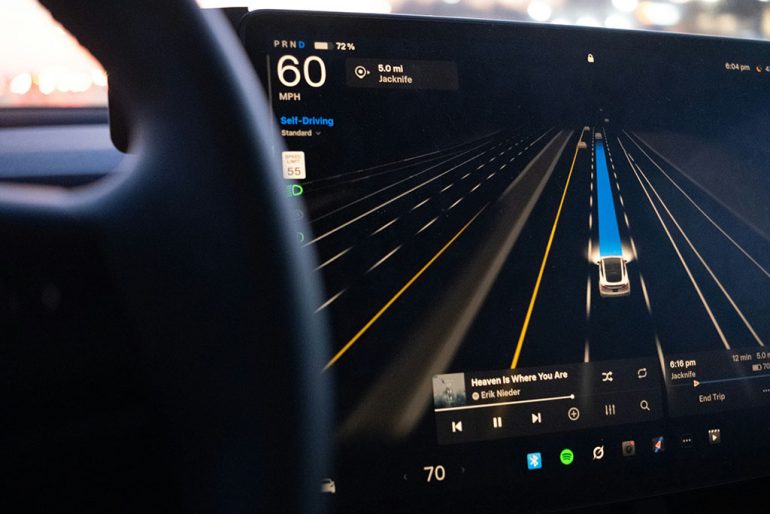
Tesla’s Full Self-Driving (FSD) technology represents one of the automotive industry’s most ambitious ventures into autonomous driving. While the system promises to revolutionize how we navigate roads, federal investigations have revealed a troubling pattern of accidents involving the technology. As FSD-equipped vehicles become more common on Florida roads, a critical question emerges: when these systems fail and cause crashes, who bears legal responsibility?
The National Highway Traffic Safety Administration has opened multiple investigations into Tesla’s Full Self-Driving system, signaling serious safety concerns. In October 2025, NHTSA launched an investigation, PE25012 after receiving complaints that FSD executed dangerous maneuvers at intersections, including turning from through lanes or failing to follow lane markings and traffic signals. More concerning, the system reportedly provided no warnings before making these potentially hazardous decisions.
A separate 2026 investigation (EA26002) examined FSD performance in reduced visibility conditions. One of these crashes tragically resulted in a pedestrian fatality when the Tesla vehicle failed to detect and avoid the victim in poor visibility. These investigations highlight that even advanced sensor technology can fail in real-world conditions that human drivers navigate daily.
The statistics from NHTSA’s broader Autopilot investigation paint an even more sobering picture. Reviewing 956 crashes where Tesla’s driver assistance systems were allegedly in use, investigators identified 211 frontal collisions where the Tesla struck another vehicle or obstacle. These crashes resulted in 13 fatalities and numerous serious injuries. According to NHTSA’s analysis, driver disengagement combined with system design limitations was a key contributor to these accidents.
Florida has established specific statutes addressing autonomous vehicle operation and liability. Under Florida law, when an automated driving system is engaged, the system itself is legally deemed the “operator” of the vehicle, regardless of whether a person is physically present. This distinction becomes crucial when determining fault after an accident.
The state requires autonomous vehicles to carry minimum liability coverage of $1 million for death, bodily injury, and property damage, significantly higher than standard vehicle insurance requirements. This elevated insurance mandate acknowledges the unique risks and potential complexities involved in autonomous vehicle crashes.
Florida law also addresses manufacturer liability in conversion scenarios. If a third-party company converts a conventional vehicle into an autonomous one, the original vehicle manufacturer cannot be held liable for defects caused by the conversion equipment. However, this protection doesn’t extend to vehicles like Teslas that come equipped with autonomous capabilities from the factory.
Despite the legal designation of the automated system as the “operator,” liability in FSD-related crashes isn’t always straightforward. Multiple parties may share responsibility depending on the circumstances. Tesla could face liability if the FSD system malfunctions due to design defects, inadequate testing, or failure to properly detect road hazards. The company has issued recalls addressing some FSD shortcomings, including the system’s tendency to run stale yellow lights and make improper lane changes.
Drivers retain significant responsibility even when using FSD. Tesla markets the technology as requiring active driver supervision, and NHTSA investigations have noted that driver inattention played a role in many crashes. If a driver fails to monitor the system and intervene when necessary, they may bear partial or full liability.
In some cases, other factors contribute to accidents involving autonomous vehicles. Road maintenance issues, defective traffic control devices, or actions by other drivers can all play roles. When injuries occur in these complex scenarios, determining fault requires a thorough investigation of vehicle data logs, witness statements, and accident reconstruction. Orlando traffic collision attorneys who understand both Florida’s autonomous vehicle statutes and emerging case law can help navigate these complicated claims.
Accidents involving Tesla’s Full Self-Driving technology introduce unique challenges to the claims process. Unlike conventional crashes, these cases may involve analyzing complex vehicle telemetry data, understanding software capabilities and limitations, and potentially pursuing claims against corporate manufacturers rather than just individual drivers.
Insurance companies may dispute whether the autonomous system or the human driver was in control at the moment of impact, affecting liability determinations. Florida’s higher insurance requirements for autonomous vehicles mean more coverage is available, but accessing those funds often requires legal knowledge specific to this emerging area of law.
As autonomous driving technology continues to evolve, so too will the legal frameworks governing it. For now, Florida law attempts to balance innovation with accountability by designating automated systems as legal operators while maintaining human oversight requirements. If you’re involved in a crash with a Tesla or other autonomous vehicle, understanding these distinctions and your legal rights becomes essential to protecting your interests and obtaining fair compensation for any injuries sustained.

Automotive Addicts Contributors are a collective of guest writers, industry professionals, and passionate enthusiasts who bring fresh perspectives to the Automotive Addicts platform. Focused on delivering timely news, in-depth reviews, and unique insights, these contributors help keep the site dynamic and engaging. Many use the platform to expand their reach and build credibility within the automotive media world, adding depth and variety to the content that drives the Automotive Addicts community.


