Trucking companies are drowning in disconnected tools, and the best fleet management software platforms exist to fix exactly that problem.
Between rising fuel costs, driver safety liability, ELD mandate headaches, and real-time tracking demands, running a fleet without the right software is genuinely expensive. After reviewing dozens of platforms across dispatch automation, DOT and FMCSA compliance, and telematics capabilities, the difference between a good fit and a wrong one becomes obvious fast.
This guide breaks down five platforms worth serious consideration, covering what each does well and who they’re actually built for.
How this ranking was put together
Public information drove every decision here. Each platform was assessed through user reviews, published case studies, feature documentation, and ratings pulled from software directories and official company websites. Only platforms with a real, verifiable track record in fleet management made it through.
→ See the full research breakdown
Picking the wrong platform doesn’t just cost money upfront. It costs time, compliance exposure, and driver trust over the long run.
Fleet managers deal with fuel inefficiencies that quietly drain budgets, accident liability that spikes without proper behavior monitoring, and DOT Hours of Service rules that change faster than most back-office systems can keep up with.
A well-matched platform gives you real visibility into where vehicles are, how drivers are performing, and where money is leaking. That kind of clarity shows up directly in lower total cost per mile, stronger fleet utilization rates, and fewer surprise breakdowns that wreck mean time between failures metrics.
The right software changes how confidently a team can operate.
Note: All data in this table is sourced from review platforms and the official websites of the listed companies.
| Company Name | Established | Headquartered In | Best For |
| TenTrucks | 2024 | Oshkosh, WI | Owner-operators and small-to-mid-sized fleets |
| Truckbase | 2021 | Oakland, California | Growing trucking carriers |
| AscendTMS | N/A | Brandon, Florida | Freight brokers and logistics shippers |
| TruckLogics | 2014 | Rock Hill, SC | Small to medium-sized trucking companies |
| Samsara | 2015 | San Francisco, California | Enterprise fleet management |
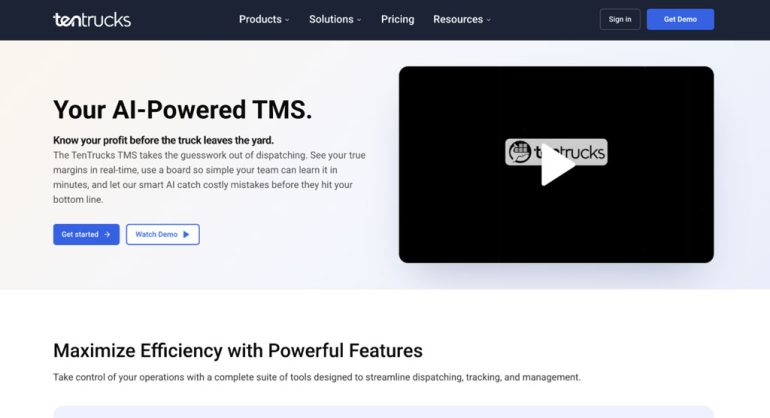
How Is TenTrucks Positioned in Its Industry?
TenTrucks is a fleet operations platform built for owner-operators and small-to-mid-sized carriers running anywhere from one truck to fifty. It combines TMS, dispatch, FMCSA-registered ELD compliance, automated IFTA reporting, settlements, invoicing, and a mobile driver app into one system. The platform connects with QuickBooks and major ELD providers like Motive and Samsara, so smaller operations don’t need a separate IT stack to get serious capabilities. The flat-rate pricing with no setup fees or long-term contracts is genuinely rare in this space.
What Sets TenTrucks Apart from Other Fleet Management Software Platforms?
Small carriers often get stuck choosing between enterprise software that’s too much and simple tools that leave compliance gaps wide open. TenTrucks sits squarely in the middle, giving owner-operators real fleet management muscle without the enterprise price tag or the setup hassle (not cheap for enterprise, but genuinely affordable here).
What Users Are Actually Saying:
TenTrucks was founded in 2024, so the public review pool is still building. From what the early positioning shows, the focus on error-catching AI and an intuitive interface suggests the platform was designed to cut the kind of costly mistakes that hit small fleets hardest. That kind of thoughtful design is rare at this price point.
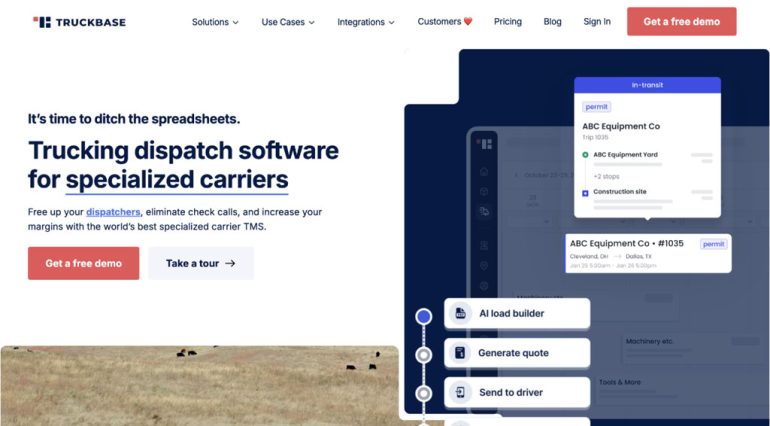
How Is Truckbase Positioned in Its Industry?
Truckbase is a web-based TMS designed for carriers that are actively scaling. It automates dispatch, truck tracking, invoicing, and driver settlements through intelligent features and connections with over 30 ELDs. The platform supports long haul, regional, cross-border, heavy haul, specialized, and LTL operations, which makes it more flexible than most platforms at this size. The fact that dispatchers can get up to speed in about 30 minutes says a lot about how seriously they’ve thought about the way the software works.
What Sets Truckbase Apart from Other Fleet Management Software Platforms?
Carriers growing fast need back-office automation that doesn’t create more manual work in disguise, and Truckbase’s dispatch-to-settlement pipeline addresses that friction point directly. Cutting manual data entry across that entire chain is what separates faster-scaling carriers from ones that plateau because admin work catches up with them.
What Users Are Actually Saying:
Truckbase has earned customer-support awards on Software Advice and Category Leaders recognition on GetApp, which tells you something real about how they handle the post-sale relationship. Clients like Herlache Truck Lines and Wallis Transport consistently point to ease of use and automation depth as the reasons they stuck around. Repeat praise around two specific qualities is a solid signal.
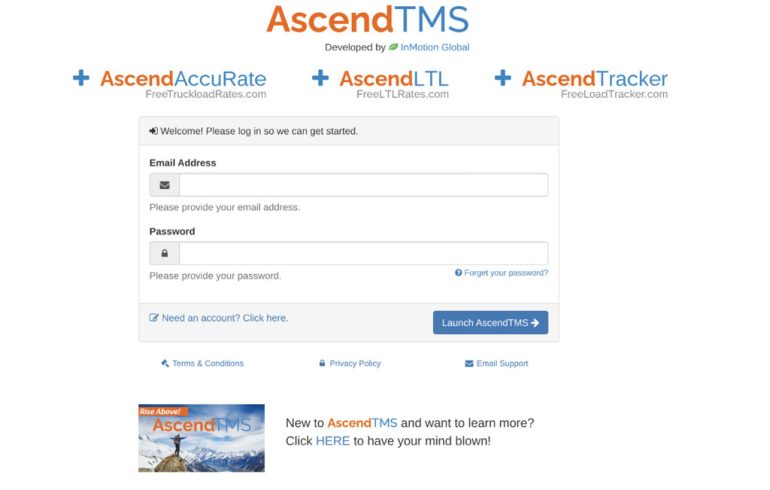
How Is AscendTMS Positioned in Its Industry?
AscendTMS, developed by InMotion Global, serves over 6,000 logistics companies and shippers across North America. It covers load planning, tracking, billing, payroll processing, accounting, tax support, insurance quotes, carrier payments, and even legal services, all through a web platform that needs no downloads or installations. The free tier stands out because it genuinely lowers the barrier for smaller freight operations to get started without any budget commitment upfront. That breadth of on-demand services goes well beyond what most TMS platforms attempt.
What Sets AscendTMS Apart from Other Fleet Management Software Platforms?
Most TMS platforms stop at dispatch and billing, but AscendTMS extends into financial services and legal support, which addresses the full operational burden that freight brokers actually carry. The backing by a publicly traded bank holding company gives the platform a financial stability profile that’s genuinely uncommon in this space (think enterprise reliability, not startup risk).
What Users Are Actually Saying:
The scale of adoption here, over 6,000 North American logistics companies, speaks for itself. Users tend to point out the platform’s no-contract accessibility and the range of services available under one login. Companies often start on the free tier and expand as their operational needs grow, which suggests the product earns trust over time rather than just at sign-up.
How Is TruckLogics Positioned in Its Industry?
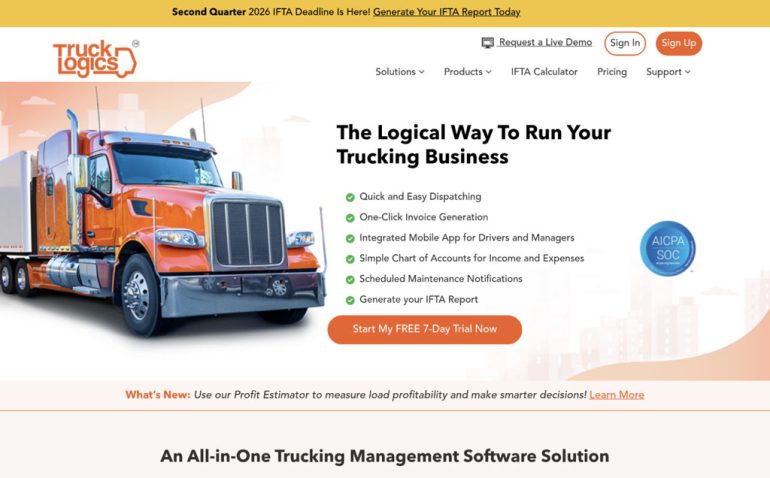
TruckLogics is an all-in-one TMS built for the daily realities of small and mid-sized trucking operations. The platform covers dispatch, IFTA reporting, driver management, maintenance tracking, real-time tracking, and automated billing. What makes it stand out is the built-in Form 2290 e-filing through its sister product ExpressTruckTax, which delivers an IRS-stamped Schedule 1 in minutes, a detail that matters a lot during HVUT filing season. Parent company SPAN Enterprises has landed on the Inc 5000 and Charlotte Fast 50 lists, which shows there’s real organizational credibility behind the product.
What Sets TruckLogics Apart from Other Fleet Management Software Platforms?
Compliance coverage is often sold as an add-on, but TruckLogics builds IFTA, HVUT, and dispatch automation into the same package starting at a price point most small carriers can actually afford (around $35.96/month annually, which is genuinely competitive). That combination of affordability and compliance depth is hard to match without moving up to enterprise pricing.
What Users Are Actually Saying:
Users running smaller fleets tend to appreciate that TruckLogics doesn’t feel like a stripped-down version of something bigger. The customizable features and real-time tracking get consistent positive mentions. The reporting tools are a recurring highlight in reviews, especially for fleet managers who need clean data without paying for a dedicated analyst.
How Is Samsara Positioned in Its Industry?
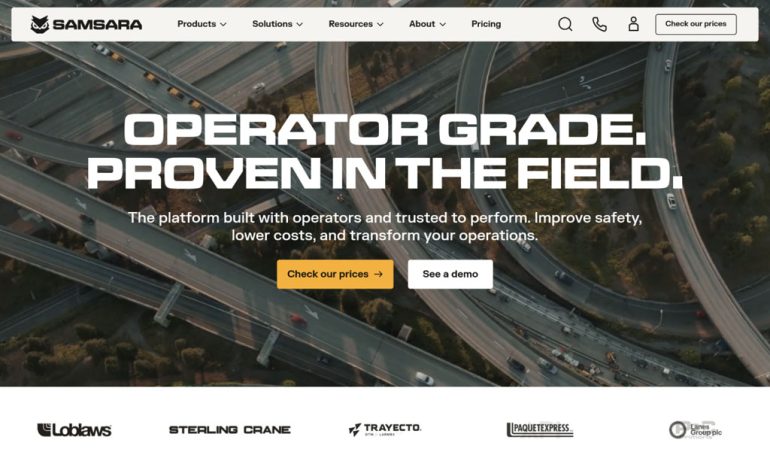
Samsara runs a Connected Operations Platform built on data from over 100 billion miles of operator experience. It covers fleet telematics, intelligent cameras, equipment management, workforce management, and connected workflows, all in one system of record. Major clients like DHL have adopted the platform, and the company went public in 2021, reflecting the confidence institutional investors placed in its trajectory. The $1B+ invested in R&D is visible in the depth of the product, especially in its video intelligence and driver safety scoring capabilities.
What Sets Samsara Apart from Other Fleet Management Software Platforms?
Enterprise fleets need a platform that can prevent incidents at scale, not just report on them after the fact, and Samsara’s intelligent cameras and real-time behavior monitoring address that directly. The numbers back it up: the platform has been credited with preventing over 380,000 accidents and generating documented savings like $3M in maintenance costs for Sterling Crane Canada. That’s the kind of proof that’s hard to argue with.
What Users Are Actually Saying:
Samsara holds the number one ranking for fleet management on G2 for seven consecutive quarters with over 4,800 reviews, so the review volume alone sets it apart from every other option on this list. Driver app ratings and overall platform satisfaction are consistently high. Larger operations tend to appreciate the single dashboard view across vehicles, equipment, and workers, especially when managing fleets across multiple regions.
Building this list started with a broad sweep of the fleet management software space, not a shortlist that was worked backward from a predetermined outcome.
The process began by pulling platform names from transportation-focused software directories, logistics industry publications, and review aggregator sites. Case studies published by the companies themselves were included alongside third-party write-ups and fleet operations forums where actual users discuss what they’re running. This created a working list wide enough to catch platforms that don’t always appear in mainstream tech media but have strong adoption among trucking operators.
From that broader pool, platforms without verifiable adoption across real fleets were set aside. Review patterns were analyzed across multiple sources rather than relying on any single platform’s rating. Platforms where reviews concentrated around a single feature while ignoring operational depth were treated with more scrutiny. The goal was to identify platforms that hold up across multiple use cases, not just ones that score well on one narrow dimension.
Each company’s claims were checked against what actual users reported. When a platform described a feature in its marketing, the review record was checked to see whether users confirmed it in real-world situations. Where gaps appeared between stated capabilities and actual results, those discrepancies influenced the final assessment. Real-world outcomes, like documented maintenance savings or accident prevention data, were weighted more heavily than feature lists.
Platforms that appeared in fleet management publications, earned recognition from software review organizations, or held verified awards were noted. Recognition from sources like Software Advice, GetApp, and G2 was treated as a signal of consistent performance rather than a definitive ranking. Public company status, institutional backing, and parent company track records were also factored in where applicable, since operational longevity matters a lot when a fleet is building its core software stack.
Each platform’s history in fleet management was assessed separately from general software quality. Dedicated service pages covering ELD compliance, IFTA reporting, driver safety, and dispatch automation were checked. Verified reviews from fleet managers, owner-operators, and logistics directors were given the most weight. Case studies that named specific clients and quantified results, rather than generic testimonials, were treated as the strongest form of evidence available.
No single platform is the right call for every fleet. The best fit depends on fleet size, operational complexity, compliance needs, and how much your team can realistically take on at once. Here’s what to think through before committing.
Fleet management software is not a one-size-fits-all category, and picking based on brand name alone tends to backfire.
Samsara makes sense at enterprise scale. Truckbase fits carriers that are actively growing. AscendTMS covers the broadest feature range for brokers and shippers. TruckLogics delivers solid compliance tools at an accessible price. And TenTrucks brings real fleet management capability to owner-operators and small carriers who need a platform that doesn’t require an IT team to run.
The fleet management software space will keep getting smarter, and the platforms that stay ahead will be the ones worth building your operations around.

Automotive Addicts Contributors are a collective of guest writers, industry professionals, and passionate enthusiasts who bring fresh perspectives to the Automotive Addicts platform. Focused on delivering timely news, in-depth reviews, and unique insights, these contributors help keep the site dynamic and engaging. Many use the platform to expand their reach and build credibility within the automotive media world, adding depth and variety to the content that drives the Automotive Addicts community.

Automotive Addicts Contributors are a collective of guest writers, industry professionals, and passionate enthusiasts who bring fresh perspectives to the Automotive Addicts platform. Focused on delivering timely news, in-depth reviews, and unique insights, these contributors help keep the site dynamic and engaging. Many use the platform to expand their reach and build credibility within the automotive media world, adding depth and variety to the content that drives the Automotive Addicts community.


