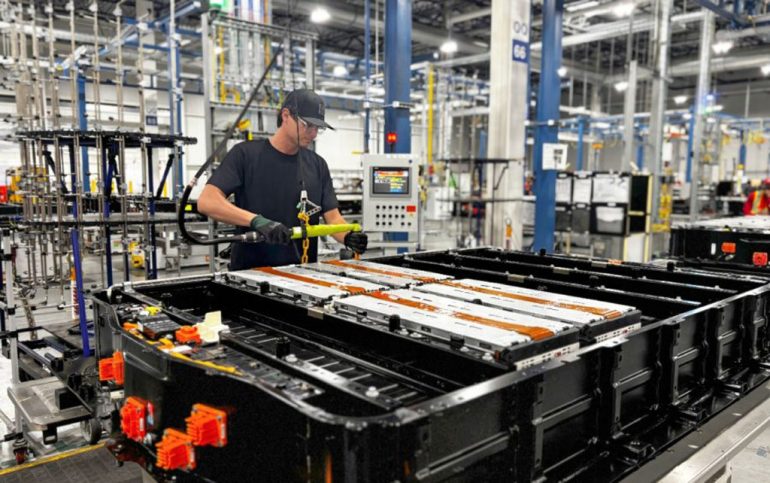
Battery chemistry rarely grabs headlines like horsepower or driving range, but General Motors believes its latest battery bet could help make future electric trucks and SUVs both more affordable and more capable. GM and longtime battery partner LG Energy Solution are preparing to upgrade their Ultium Cells manufacturing facility in Spring Hill, Tennessee, to produce lithium manganese-rich, or LMR, prismatic battery cells. Work on the conversion is expected to begin later this year, with construction scheduled for completion in 2028. The project is also expected to create around 500 new jobs, further expanding GM’s domestic battery manufacturing footprint at a time when controlling battery costs remains one of the biggest challenges facing EV makers.
LMR chemistry could prove especially important because it aims to find a middle ground between inexpensive battery cells and the high energy density needed for large, long-range EVs. GM says its LMR cells can deliver about 33 percent greater energy density than leading lithium iron phosphate, or LFP, cells at a comparable cost. That’s a potentially big deal for electric trucks and full-size SUVs, where massive battery packs can add considerable weight and expense. LMR chemistry relies more heavily on relatively affordable manganese while dramatically reducing the need for expensive cobalt, and GM’s rectangular prismatic cell design should also simplify battery packs by reducing the number of components needed compared with more complex pouch-cell arrangements.
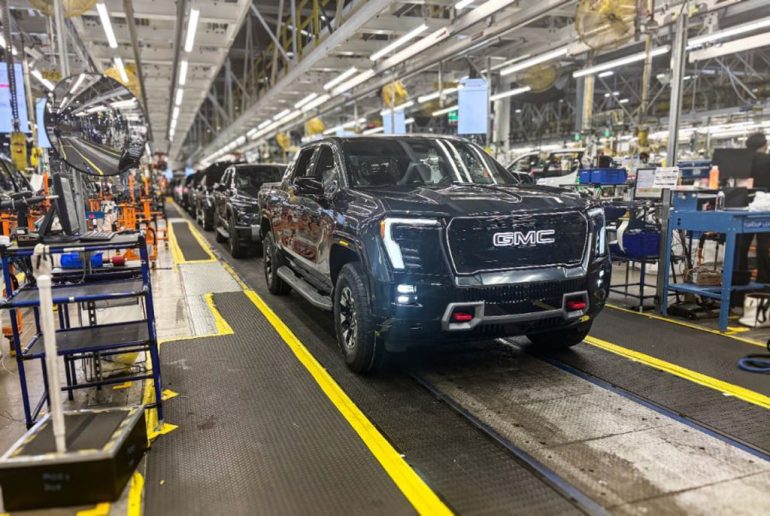
The Tennessee move is particularly interesting because Spring Hill had previously been positioned for lower-cost LFP battery production. GM has increasingly signaled that LMR could play a larger role in its long-term battery plans, particularly if the chemistry can deliver better range without sending vehicle prices climbing. GM and LG Energy Solution have been developing LMR technology for years, with GM researching manganese-rich lithium-ion cells since 2015. The automaker has said it intends to become the first automaker to deploy LMR prismatic batteries at commercial scale, with the technology eventually destined for future electric trucks and full-size SUVs. GM has previously suggested that combining LMR chemistry with the packaging advantages of prismatic cells could support electric trucks capable of more than 400 miles of range while lowering battery pack costs compared with today’s high-nickel designs.
For EV buyers, developments like this matter far more than the alphabet soup of battery chemistry might suggest. Battery cost, energy density, weight and packaging all have a direct effect on how far an EV can travel and, ultimately, how much it costs in the showroom. GM’s approach is increasingly centered on matching different battery chemistries to different vehicles rather than relying on one solution across its entire lineup. If LMR cells can deliver the combination of lower cost and strong energy density GM expects, the Tennessee plant could become an important piece of the company’s next generation of electric vehicles. The real test will arrive when those batteries move from development labs and factory lines into production EVs, but the promise of longer-range electric trucks at more approachable prices certainly makes this technology worth watching.

Lloyd Tobias is a seasoned automotive journalist and passionate enthusiast with over 15 years of experience immersed in the world of cars. Whether it’s exploring the latest advancements in automotive technology or keeping a close pulse on breaking industry news, Lloyd brings a sharp perspective and a deep appreciation for all things automotive. His writing blends technical insight with real-world enthusiasm, making his contributions both informative and engaging for readers who share his love for the drive. When he’s not behind the keyboard or under the hood, Lloyd enjoys test driving the newest models and staying ahead of the curve in an ever-evolving automotive landscape.