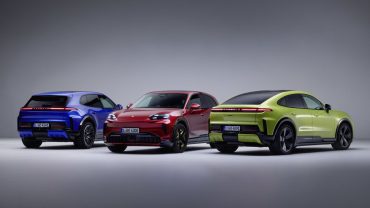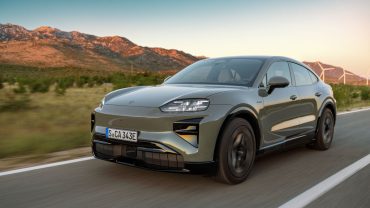

Porsche just took the Cayenne nameplate somewhere entirely new. The 2026 Cayenne Electric has arrived as the fourth generation of the SUV, and it is not shy about its mission. At the top of the range sits the Cayenne Turbo Electric, a family hauler that produces a scarcely believable 1,139 horsepower and 1,106 pound feet of torque, making it the most powerful production Porsche ever. Porsche says it will rip from 0 to 60 mph in 2.4 seconds and clear the quarter mile in 9.9 seconds, the kind of numbers that would shame a lot of supercars.
Of course, not every buyer is chasing drag strip glory. The standard Cayenne Electric feels almost modest by comparison, but its specs are still serious. It delivers 435 horsepower, hits 60 mph in 4.5 seconds, and runs the quarter mile in 13.2 seconds according to Porsche, roughly on par with a current gas fed Cayenne S. If you want more without going all the way to Turbo lunacy, there will be intermediate configurations in between, but the headline is simple. No matter which version you pick, this SUV is going to feel properly quick.

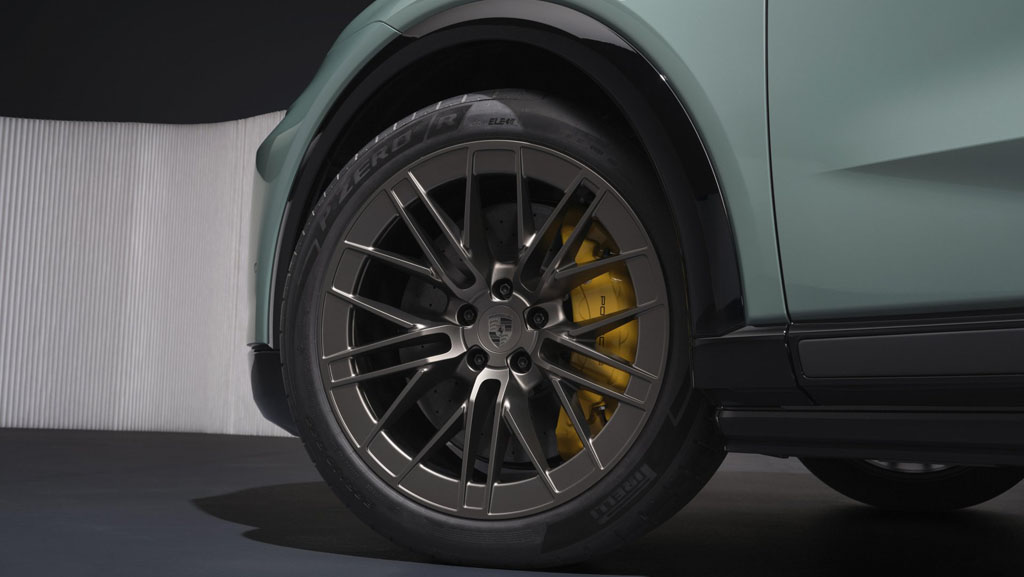
Underneath, Porsche is clearly aiming to keep the Cayenne Electric feeling like a Porsche first and an EV second. Every model gets a two chamber, two valve air suspension paired with PASM adaptive dampers, and Porsche Active Ride is available if you want the brand’s most advanced body control tech. Wheel sizes start at 20 inches on the base model, with 22s optional and standard on the Turbo. The Turbo also adds a locking rear differential and direct oil cooling for its high output electric motors, helping them survive repeated full power runs. Under braking, the Turbo can recuperate up to 600 kW, which Porsche says allows the motors to handle as much as 97 percent of everyday braking without relying heavily on the friction brakes.
All versions share a battery based on an 800 volt electrical architecture with a usable capacity of 108 kWh. That setup allows the Cayenne Electric to accept up to 400 kW from a suitable DC fast charger, and Porsche claims a 10 to 80 percent charge can be done in under 16 minutes if you find the right station. The SUV carries a NACS port on the left side for Tesla style fast charging, and Porsche includes an adapter so you can still take full advantage of 350 kW CCS hardware. Use a Tesla Supercharger directly and the peak drops to around 200 kW, still far from slow. At home, a J1772 connector on the right side supports up to 11 kW, and Porsche will offer a slick inductive charging pad that delivers the same rate just by parking over it.

The battery itself is almost as interesting as the charging numbers. Rather than sealing the entire pack in a single box, Porsche bolts six large modules directly into the floor, then covers them with a reinforced panel. Each module can be serviced individually, which should make repairs less dramatic and less costly than replacing a whole pack. Because the pack becomes part of the structure, it improves rigidity while trimming height, which lets Porsche drop the roofline about an inch compared with the gas Cayenne, lower the floor, and still find extra headroom in the cabin. It is clever packaging that benefits handling, comfort, and practicality all at once.
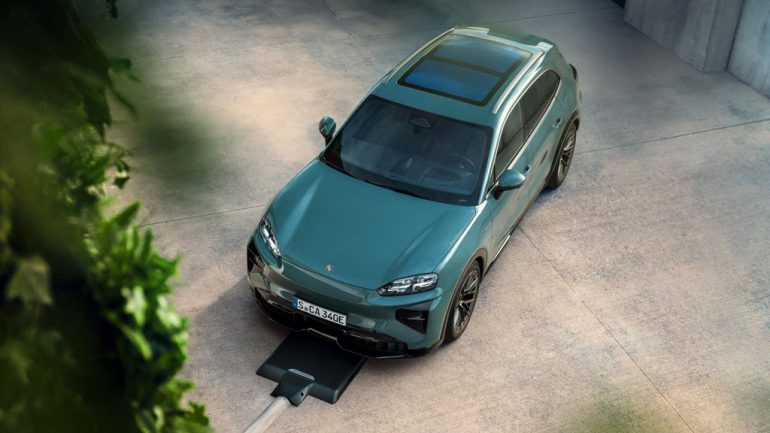
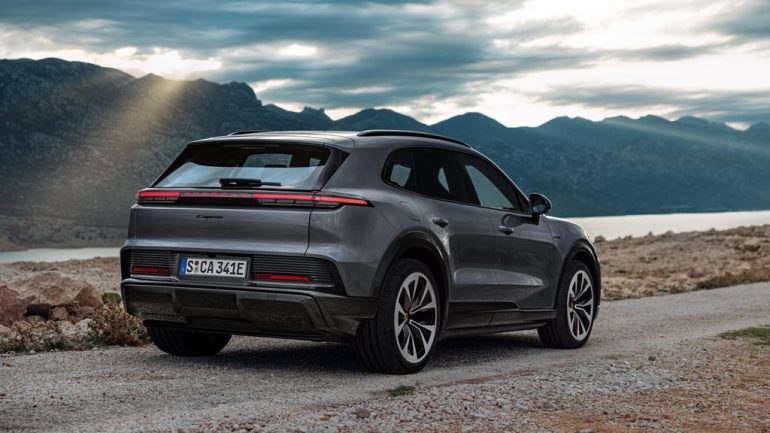
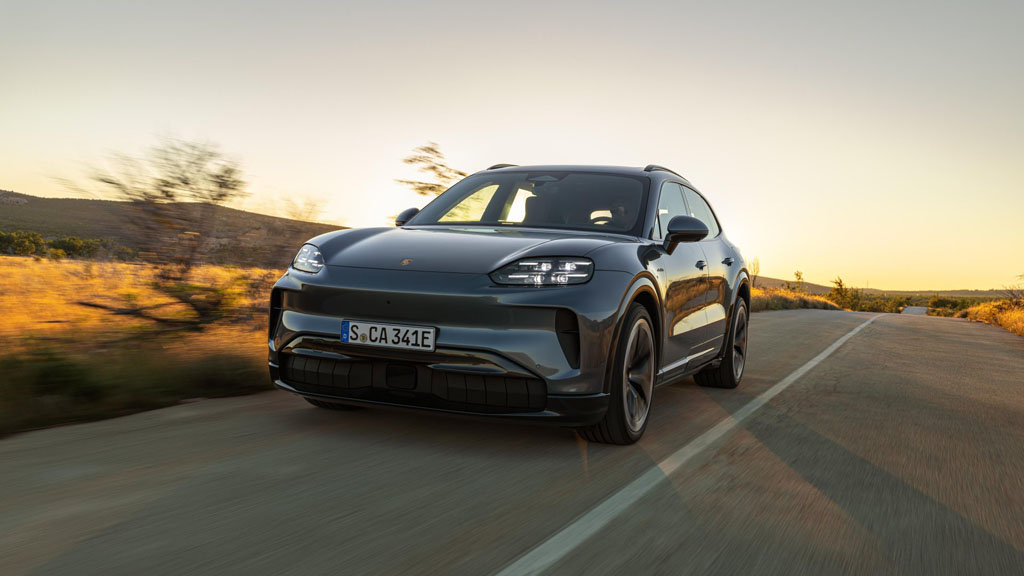
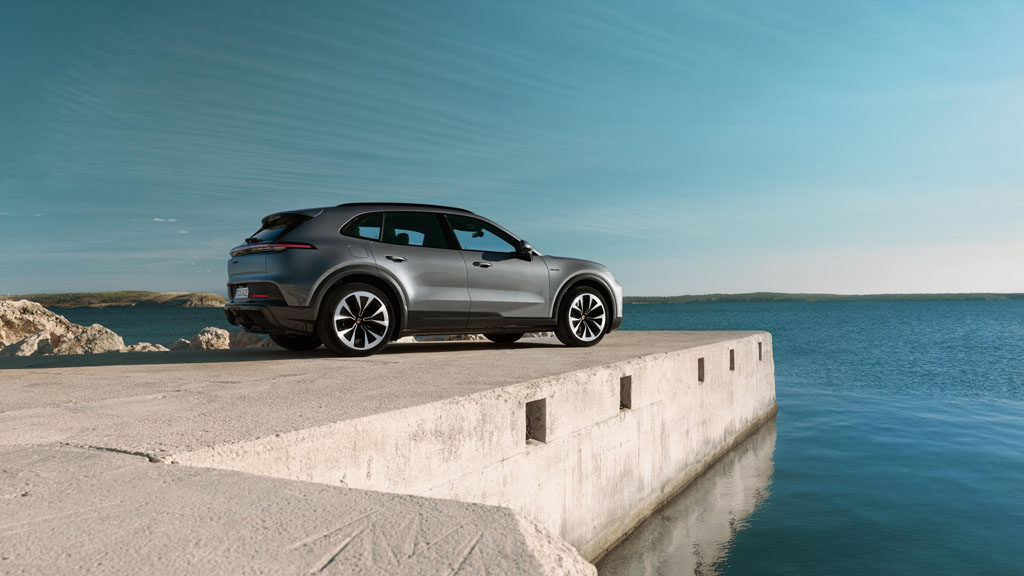
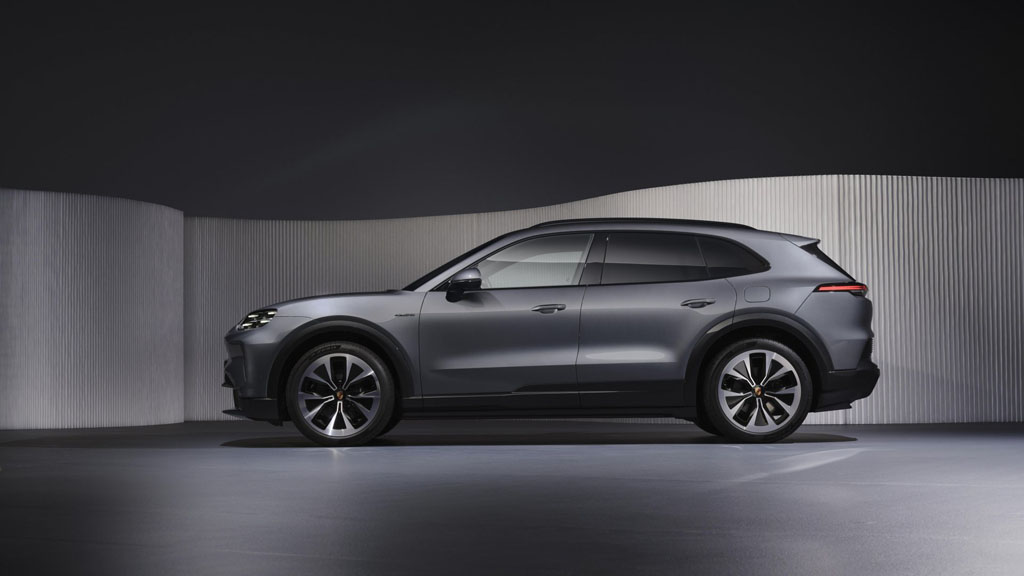
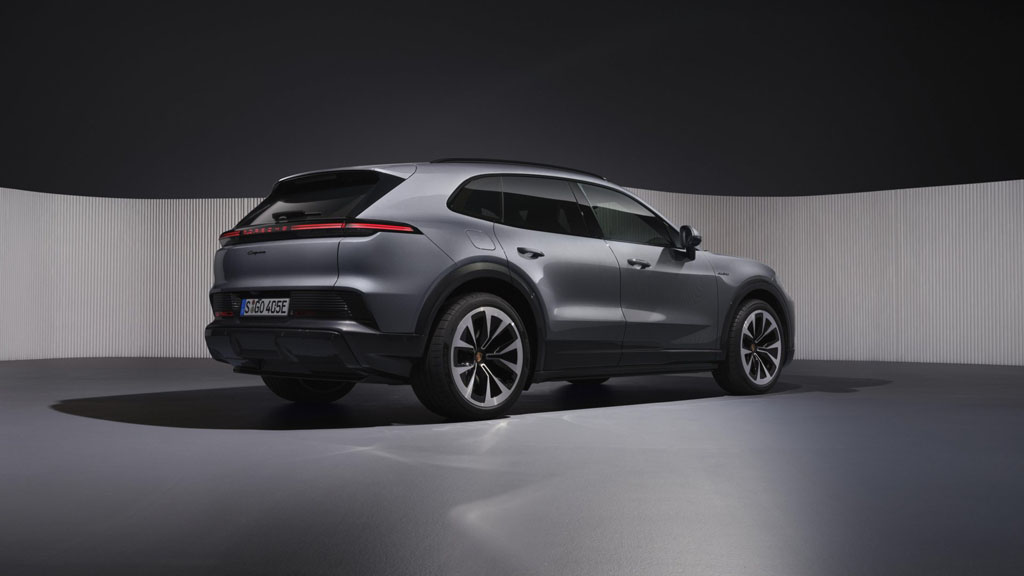
Visually, the Cayenne Electric looks familiar from a distance, but the details tell the story of a clean sheet design. The classic Porsche roof “flyline” is intact, yet the proportions are sleeker because the wheelbase grows by about five inches while overall length only creeps up a little. Without an engine up front, the fender tops sit proud in classic Porsche fashion, and the nose is defined by a strongly emphasized lower intake that gives the impression of a grille. It is not just for show. Those active openings stay shut most of the time to reduce drag, then open wider at high speed or while charging to pull in cooling air. Turbo models add rear “aero blades” that extend at speed and can trim the drag coefficient enough to add several miles of range.
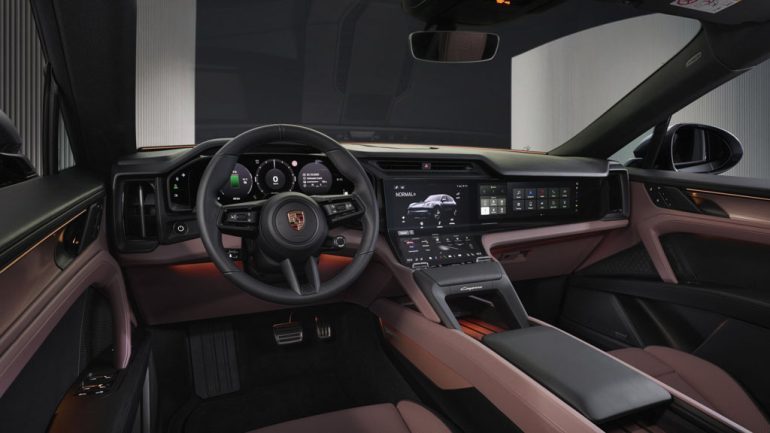
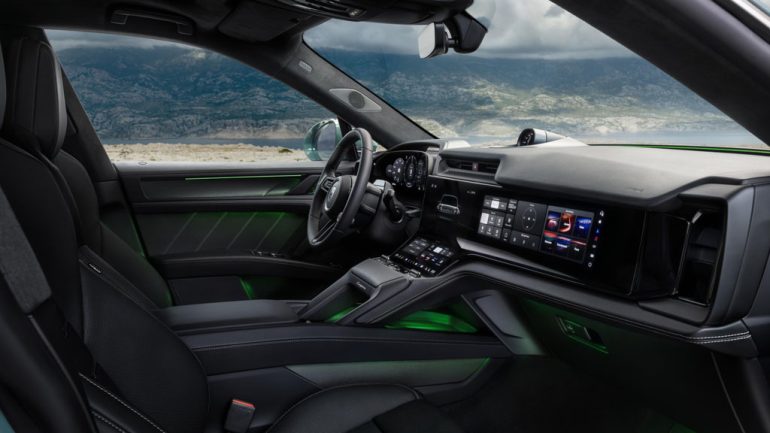
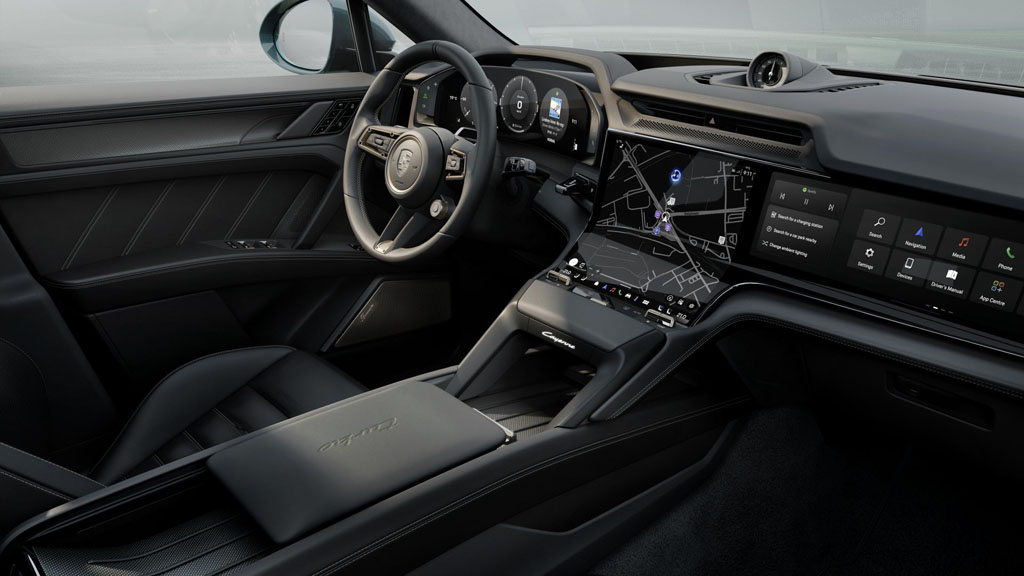
Inside, Porsche is using the Cayenne Electric to debut a very modern interpretation of its cockpit philosophy. The centerpiece is a portrait oriented 12.25 inch central touchscreen with a twist. The bottom portion of the display bends back toward the driver and passenger, flowing into a row of physical shortcut keys and a padded wrist rest on the center console. The idea is to make it easier and more comfortable to brace your hand and tap virtual controls while the car is moving. Ahead of the driver sits a 14.25 inch curved display for the instruments, and buyers can add a 14.9 inch passenger screen that sits under the same sweep of glass as the center display. It feels more like a single digital panel broken into zones than three separate screens, and early impressions suggest the ergonomics have been thought through more carefully than in many rival EVs.
Pricing firmly reminds you that this is still a Porsche. The 2026 Cayenne Electric starts at $111,350, while the Cayenne Turbo Electric opens at $165,350 before you even touch the famously tempting options list. Deliveries are scheduled to begin late next summer, and the electric models will be sold alongside the existing third generation gas powered Cayenne, at least for a while. For buyers who want a high performance luxury SUV that just happens to plug in, the Cayenne Electric looks set to become one of the most compelling and most outrageous entries in the segment. On paper, at least, it is the rare EV that can make both a 911 owner and a family of five raise an eyebrow.










Lloyd Tobias is a seasoned automotive journalist and passionate enthusiast with over 15 years of experience immersed in the world of cars. Whether it’s exploring the latest advancements in automotive technology or keeping a close pulse on breaking industry news, Lloyd brings a sharp perspective and a deep appreciation for all things automotive. His writing blends technical insight with real-world enthusiasm, making his contributions both informative and engaging for readers who share his love for the drive. When he’s not behind the keyboard or under the hood, Lloyd enjoys test driving the newest models and staying ahead of the curve in an ever-evolving automotive landscape.