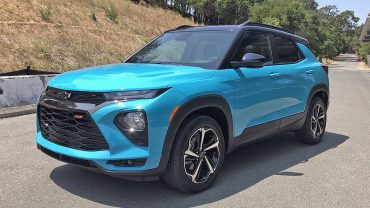
GM has raised Trailblazer pricing three separate times during the 2026 model year, and the most recent adjustment is worth understanding before you negotiate one. A more substantial increase in August added $600 across the board through a combination of higher MSRP and a $400 destination fee jump, and a third round in January added another $100 to every trim, pushing the base LS to $25,095 including destination. Industry analysts point to rising production costs, materials, and import tariffs as the drivers, and the Trailblazer is particularly exposed given it’s built in South Korea as one of GM’s so-called Korean Four. The good news for buyers: Edmunds reports the Trailblazer is currently spending an average of 34 days on dealer lots, with real buyers already paying about 4 percent below MSRP, savings of roughly $972 to $1,275 depending on trim. This guide breaks down what Chevrolet dealers actually pay across all four Trailblazer trims, why this vehicle’s repeated price increases have created real negotiating room, current incentives, and how to get real competing dealer quotes before you negotiate.
Following the third price increase, the 2026 Trailblazer LS now starts at $25,095 with front-wheel drive, the LT follows close behind, with AWD versions reaching $27,095, and the RS and Activ both carry identical MSRPs of $30,090 with front-wheel drive or $31,295 to $31,690 with all-wheel drive depending on source. That matched pricing between RS and Activ is intentional on Chevrolet’s part, letting buyers choose between sporty styling and light off-road capability without any cost penalty either direction. Every Trailblazer offers a choice between a 137-horsepower 1.2-liter turbocharged engine paired with a CVT, or a more powerful 155-horsepower 1.3-liter turbocharged engine paired with a 9-speed automatic in all-wheel-drive models, with the larger engine adding less than $400 to the sticker price regardless of trim.
TrueCar’s transaction data confirms real buyers are paying meaningfully below the current sticker price, with the base LS carrying an MSRP of $25,095 but an average transaction price of just $24,209 across recent sales. The Trailblazer competes against the Honda HR-V, Hyundai Kona, and Kia Soul, and Edmunds is direct about the competitive pressure these repeated price increases have created, noting the Trailblazer’s value proposition now faces stiffer scrutiny against rivals like the HR-V, which offers a more comprehensive suite of standard driver-assist features. That competitive squeeze matters at the negotiating table, since a dealer aware you’re also considering an HR-V has real incentive to make sure the Trailblazer’s price reflects current market reality rather than three rounds of manufacturer increases. That’s exactly the kind of leverage our Insider Access to Dealer Pricing tool is built to help you use, putting real competing local dealer quotes in front of you before you ever step onto a lot.
The invoice price is what a Chevrolet dealer actually paid General Motors for the vehicle on their lot, and given how many times MSRP has moved this model year, it’s worth understanding that dealer inventory built earlier in the cycle likely carries a meaningfully lower actual acquisition cost than current sticker prices suggest. On the 2026 Trailblazer, the typical gap between MSRP and dealer invoice runs approximately $1,000 to $1,700 depending on trim, with the wider dollar gap appearing on RS and Activ given their higher price points.
GM’s dealer holdback adds roughly 2 to 3 percent of base MSRP back to the dealer after a sale closes, which on a $27,095 LT AWD represents approximately $540 to $815 in additional margin sitting beneath the invoice figure entirely. Combine that holdback with Edmunds’ own reporting that the Trailblazer is moving slowly enough to average 34 days on dealer lots, and the case for real negotiating leverage becomes clear: slower-moving inventory combined with a manufacturer that’s raised prices three times in one model year is exactly the kind of situation where a prepared buyer can find genuine room below sticker.
Edmunds notes the LT specifically offers value with the flexibility of adding appealing upgrades, making it worth a close look even if you’re initially drawn to the base LS price point.
LS ($25,095) serves as the value-focused entry point but doesn’t feel stripped down, coming standard with an 11-inch touchscreen, 8-inch digital instrument cluster, wireless Apple CarPlay and Android Auto, and the full Chevy Safety Assist suite including automatic emergency braking, lane keep assist, and forward collision alert, all standard equipment that wasn’t universal at this price point in past model years.
LT (starting around $25,895, $27,095 with AWD) builds on the LS with 17-inch high-gloss black aluminum wheels, deep-tinted rear glass, silver-painted roof rails, and keyless open and start, along with optional heated seats and the available Midnight Edition package for $895, adding blacked-out styling elements for buyers who want a more distinctive look without moving to RS or Activ pricing.
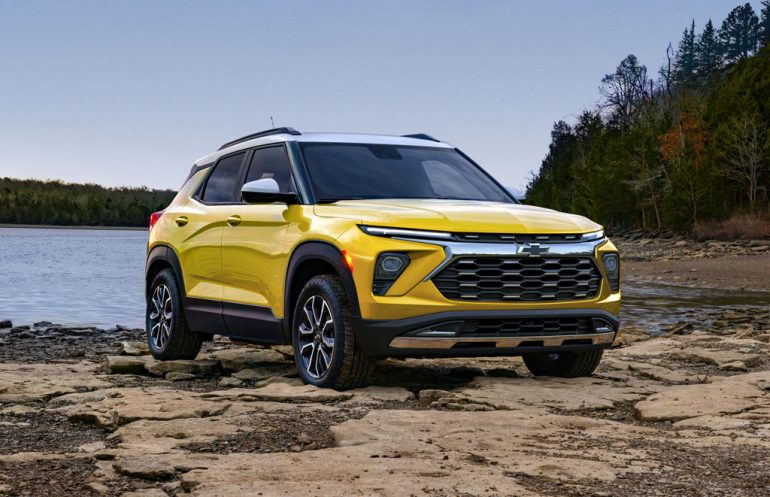
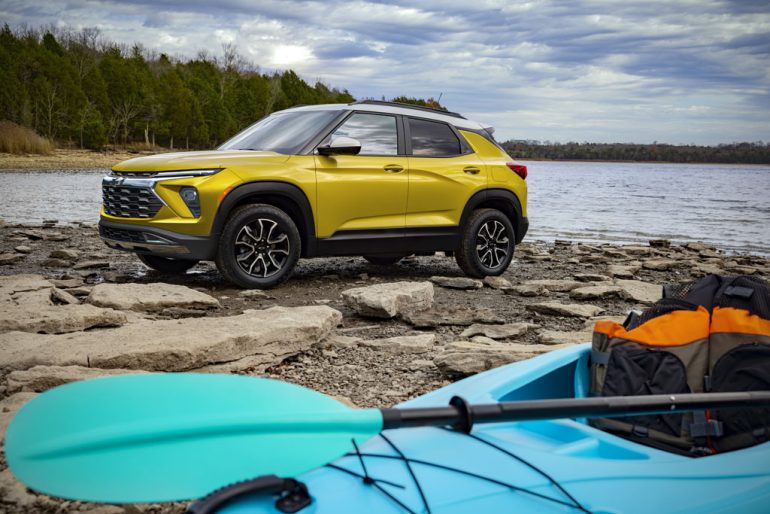
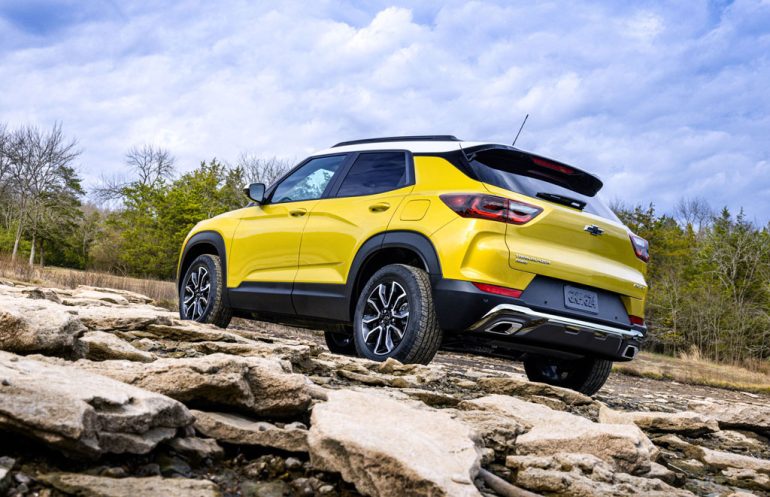
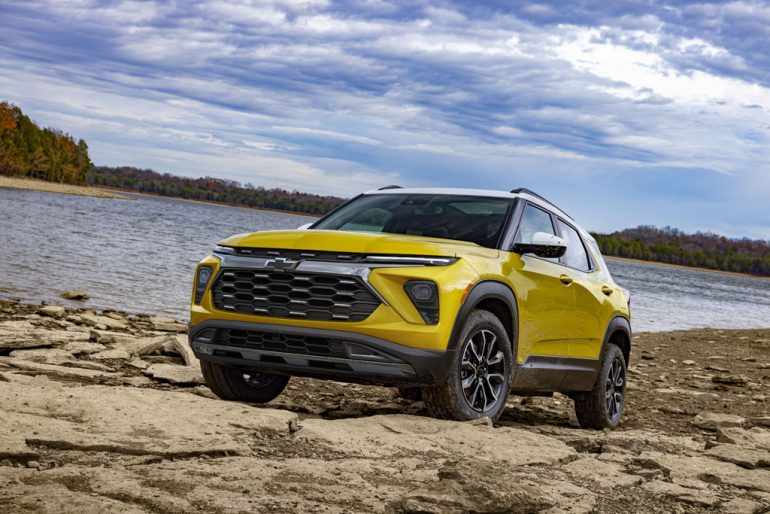
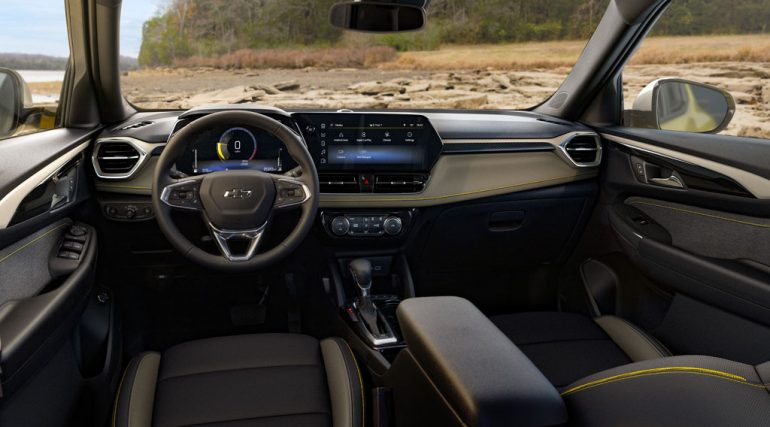
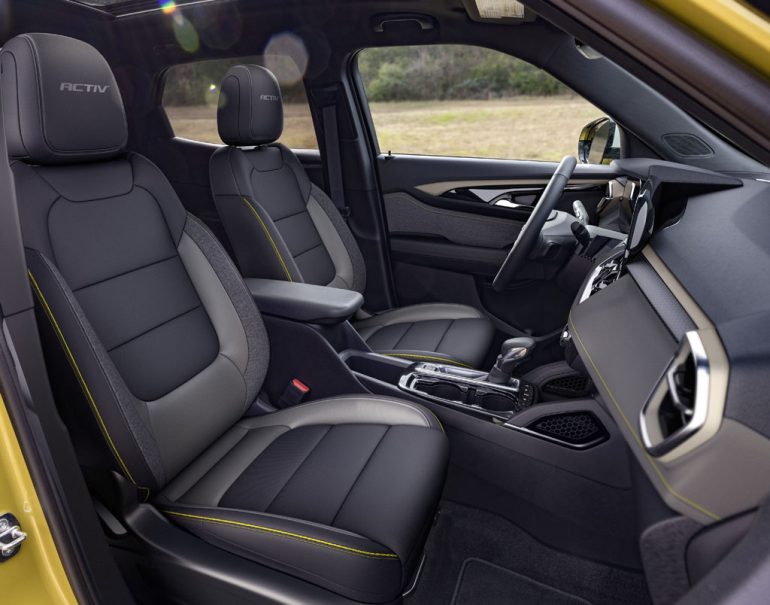
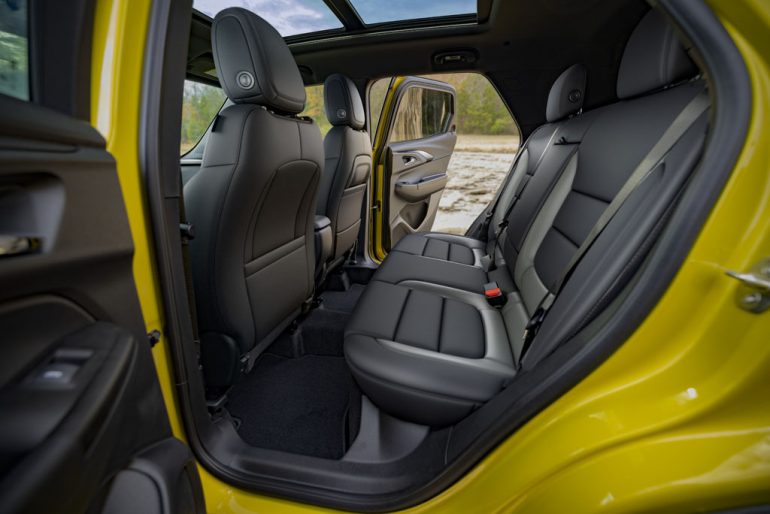
Activ (starting at $30,090 FWD, $31,690 AWD) leans into light off-road adventure styling, with Evotrex synthetic upholstery featuring yellow contrast stitching for a more outdoorsy interior appearance, appealing to buyers who want a rugged look without sacrificing the Trailblazer’s fundamentally efficient, commuter-friendly nature.
RS (starting at $30,090 FWD, $31,295 AWD) takes the same starting price as Activ but pivots toward sporty styling instead, with red accents, a flat-bottom steering wheel, and the same Evotrex upholstery treated with sportier contrast stitching, giving buyers a clear personality choice between RS and Activ without any price difference to complicate the decision.
It’s worth knowing what real ownership experience looks like before you commit to a trim, since reliability data tells a notably positive story here. RepairPal gives the Trailblazer a 4.5 out of 5 reliability rating, ranking it first among the SUVs in its comparison class, a genuinely strong showing that’s worth factoring into your decision alongside the upfront price. Edmunds’ own summary of owner reviews describes overall sentiment as mixed but generally positive, with owners frequently praising the styling, spacious interior, and feature set like heated seats and remote start, while some have reported issues with transmission behavior, infotainment screen connectivity, and the sound system.
None of these reported issues appear severe or widespread enough to be considered a pattern defect, but it’s worth asking your dealer directly about any service bulletins or known issues on the specific configuration you’re considering, particularly if you’re looking at a vehicle built earlier in the model year before any running production changes.
Manufacturer incentives on the Trailblazer stack on top of any negotiated price reduction below MSRP, and Edmunds specifically notes Chevrolet is currently offering promotional APR as low as 5.9 percent for 60 months, about 1.4 percentage points below typical market rates, a real savings over the life of a loan for qualified buyers.
There’s also a specific $500 rebate available for military members and first responders, worth asking about directly and presenting valid ID for when you’re negotiating, since Edmunds flags this as a real, current offer rather than a hypothetical program. These discounts stack directly on top of any negotiated dealer discount. Given how quickly the Trailblazer is reportedly moving off lots despite the recent price increases, it’s worth asking your dealer directly whether they’re working to clear inventory built before the most recent adjustment. Getting a real local dealer quote that reflects both negotiated pricing and current incentives through our Insider Access to Dealer Pricing tool gives you the clearest picture of your actual out-the-door cost before visiting a single dealership.
Based on Edmunds’ own reporting of $972 to $1,275 in average savings and TrueCar’s transaction data, here’s a realistic target range across the 2026 Trailblazer lineup. On the LS, $23,800 to $24,300 reflects a strong outcome, closely matching the $24,209 average transaction price TrueCar already reports. On the LT FWD, target $24,600 to $25,200. On the LT AWD, $25,900 to $26,600 is achievable with competing quotes in hand. On the RS or Activ FWD, target $28,900 to $29,600. On the RS or Activ AWD, $30,000 to $30,800 represents a fair deal for well-prepared buyers.
These targets assume you’ve gathered competing quotes from multiple local Chevrolet dealers rather than negotiating with just one, kept any trade-in discussion completely separate from the new vehicle price negotiation, and acted with reasonable speed once you find a strong offer, since Edmunds notes the Trailblazer is selling quickly enough that hesitation can mean missing out on a specific vehicle or deal.
With three price increases already on the books this model year and real transaction data showing meaningful savings still available, shopping multiple dealers against each other is the most reliable way to find out how much further your specific configuration can move. Click the “Get Prices” button above, select the 2026 Trailblazer trim you’re considering, and you’ll receive real pricing from local Chevrolet dealers competing directly for your purchase, typically within minutes and without visiting a single showroom.
Whether the well-equipped LS, the upgradeable LT, the outdoorsy Activ, or the sporty RS fits what you’re looking for, getting competing offers first means you walk into any final negotiation already knowing what other dealers in your area are willing to offer, especially valuable on a vehicle whose price has moved this many times in a single model year.

Darryl Taylor Dowe is a seasoned automotive professional with a proven track record of leading successful ventures and providing strategic consultation across the automotive industry. With years of hands-on experience in both business operations and market development, Darryl has played a key role in helping automotive brands grow and adapt in a rapidly evolving landscape. His insight and leadership have earned him recognition as a trusted expert, and his contributions to Automotive Addicts reflect his deep knowledge and passion for the business side of the car world.