
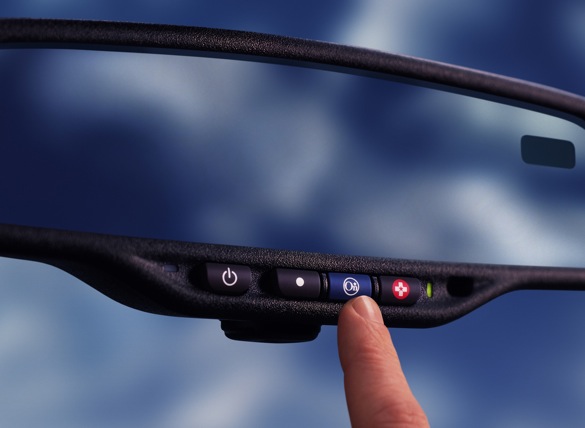
Image: © GM Corp.
If you subscribe to the OnStar telematics system, chances are good that you ignored a recent e-mail about changes to terms and conditions. If you haven’t already binned the e-mail, we suggest you read it carefully: as The New York Times points out, the changes could have a dramatic impact on your privacy behind the wheel.
Two changes to the terms and conditions are significant. First, canceling the OnStar service no longer means the termination of two-way communications between your vehicle and OnStar. In other words, even if you’re not paying for OnStar, the service is still collecting GPS data from your vehicle.
Which brings me to the second change: the data that OnStar collects from your vehicle can be sold to third party companies expressing interest. What data can OnStar collect and sell? How about information on vehicle speed and location, current odometer reading, seat belt usage, and deployment of any vehicle air bags.
Under the latest terms and conditions, OnStar will “aggregate” the data collected to protect user privacy, but that’s likely to be a temporary situation. Language in the new terms and conditions could allow OnStar to sell your specific data to municipalities and companies who specialize in targeted marketing.
I’m not as paranoid as some who believe the information will be used for law enforcement (imagine the fun of automatically generated traffic citations, for each and every violation you commit) or insurance purposes (better: how about a monthly rate adjustment based on your habitual speeding habits), but there’s clearly an ominous tone here. At the very least, you stand to be spam-bombed by marketing companies who now track your every move behind the wheel. At worst, the data collected can be used against you to raise insurance rates, or impact your credit rating or even ticket you for offenses your car is tracked committing.
You can opt out of the OnStar service and terminate vehicle tracking, but you must contact them directly to do so. Even then, there’s no way to tell if the service has been disabled, unless you physically disconnect the (hidden) OnStar antenna, or disconnect its (again hidden) data logger. Clearly, neither GM nor OnStar want to make this an easy process.
I’d be the first to admit that OnStar has its upsides, but to me the privacy concerns overrule any potential benefits. What’s your take? Are the recent changes to the OnStar system no big deal, or is this the start of a dangerous new trend? Do you currently have OnStar in your vehicle, and will the new terms and conditions affect your perception of the service? Would you avoid buying a new vehicle with such a service?

Kurt Ernst has been passionate about automobiles and driving nearly his entire life. His early years were shaped working in the family service station, though his real passion was auto racing. After graduating from the University of Colorado, Kurt spent a year club racing with the Sports Car Club of America, before focusing on a business career in marketing and project management. Later, his passion for writing and the automotive hobby found him freelancing for a variety of automotive news sites, including Automotive Addicts and Motor Authority, where his work was syndicated and appeared in several national publications. Recognized as an expert in the automotive field, Kurt joined Hemmings Motor News as an Associate Editor in 2013, and in the years since has progressed to Editor, Hemmings Daily; Managing Editor for Hemmings Motor News, Hemmings Classic Car, Hemmings Muscle Machines, and the Hemmings Daily; and now, Managing Editor, Hemmings Auctions. Kurt was instrumental in organizing the Hemmings Motor News Concours d’Elegance from 2013-2019, and has served as a judge at this event and The Vintage Racing Stable Concours d’Elegance. A Skip Barber Racing School graduate and prolific writer, Ernst is also skilled in copyediting, project management, brand development, and public relations.